Major Financial Rule Changes Coming in 2026: What Every Indian Must Know:
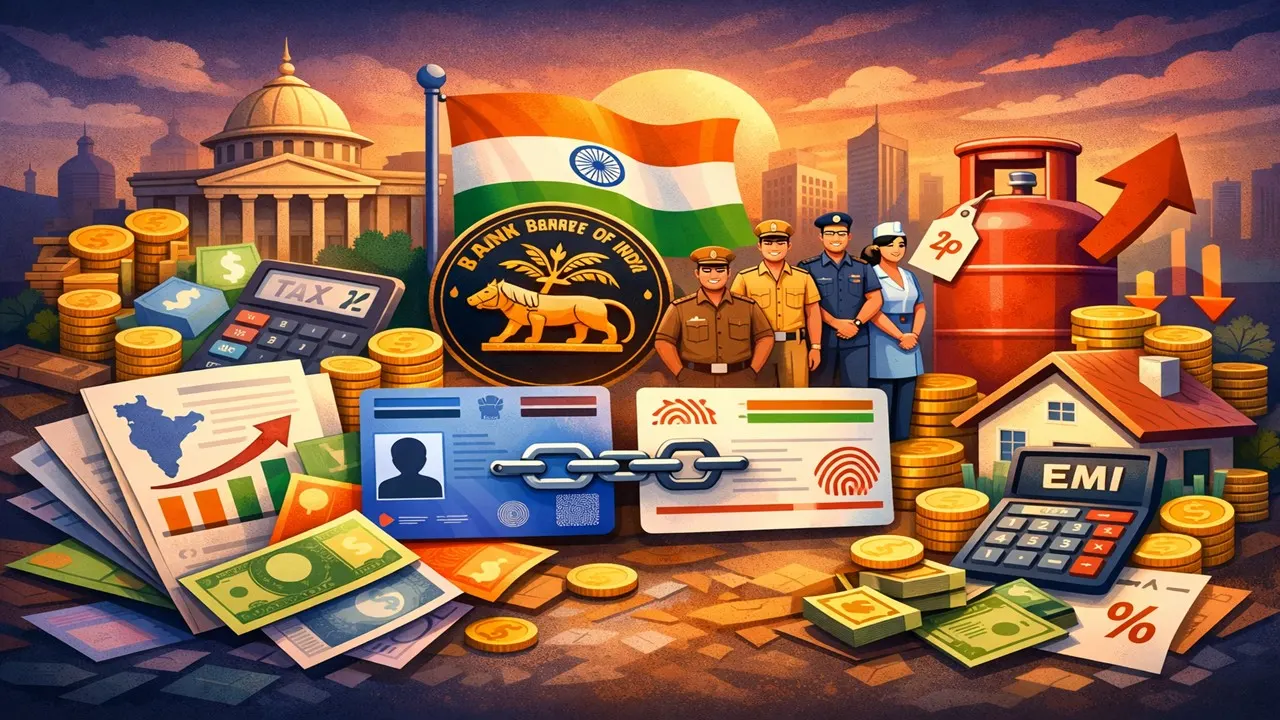
From lower loan EMIs to strict PAN-Aadhaar compliance, 2026 will bring major financial rule changes impacting every Indian’s money.
A Complete Guide to New Financial Rules
 Vanshika verma
 Dec 27, 2025
Major Financial Rule Changes Coming in 2026: What Every Indian Must Know
As 2026 approaches, several important changes in government rules and regulations are expected to come into effect across the country.
These changes will directly influence how people earn, save, spend, and manage their money. From income tax rules and banking procedures to digital payments and compliance requirements, the financial system is evolving to become more transparent, secure, and structured.
Everyone must know these new changes in advance because being aware today will help you to make smarter financial decisions in 2026.
Relief in Loans and interest rates
New Fixed Deposit (FD) interest rates will start from 2026. Recently, RBI reduced the repo rate by 0.25%, which will help in these reductions. This will also provide relief to monthly EMIs.
The 8th Pay Commission is to be implemented
New 8th Pay Commission is expected to be launched on January 1, 2026. The 8th Pay Commission will replace the 7th Pay Commission, which will expire on December 31, 2025. This new 8th Pay Commission may change salaries of government employees and pensioners.
New Rules for Credit Score Updates
Your credit score will now be updated every week instead of once in 15 days. The Reserve Bank of India (RBI) has directed banks and NBFCs to send credit information to credit bureaus at least two times a month.
New Price of LPG and ATF
From January 1, 2026 new prices for LPG and commercial gas cylinders may come into force. Additionally, changes in the price of aviation fuel (ATF) may impact air ticket prices.
PAN-Aadhaar Important dates
If your PAN is not linked with your Aadhaar, then from January 1, you may face problems while using banking services, filing income tax returns, receiving refunds, or doing high-value transactions like buying property or investing money.
Similarly, if you do not complete e-KYC for your ration card by December 31, 2025, your ration card may be temporarily blocked. This means from January 1, 2026, you may not receive subsidised food grains under government schemes until the e-KYC is completed.
About Author


Vanshika verma
Content Writer
Vanshika Verma is a Content Writer with 1+ year of experience at Studycafe.in. A B.Com graduate from Delhi University, She writes articles on Finance, Tax, ICAI, GST, and the latest financial news, with a focus on making complex topics easy for readers and professionals.
Vanshika Verma is a Content Writer with 1+ year of experience at Studycafe.in. A B.Com graduate from Delhi University, She writes articles on Finance, Tax, ICAI, GST, and the latest financial news, with a focus on making complex topics easy for readers and professionals.
 Studycafe
 Delhi, Delhi, India
 2114
2114My Recent Articles
- Rajasthan Police Warns of WhatsApp Account Hacking Scams, Urges People to Beware of Fake QR Codes and OTP Fraud
- Man Carrying Rs 25,000 Reward Arrested in Rs 1.22 Crore GST Evasion Case Involving Fake Firms in Bulandshahr
- Star Paper Mills to Challenge Rs 1.55 Crore GST Demand Order Over Disallowance of Input Tax Credit on Raw Materials Destroyed in Fire
- Delhi CBI Arrests Hospital Doctor and Contractual Nursing Orderly Supervisor for Alleged Rs 1 Lakh Bribery in Tender-Related Case
- ITAT Condones 2,107-Day Delay, Directs CIT(A) to Reconsider Rs 16.54 Lakh Section 80PA Deduction Claim
Up Next
Loading suggestions…


Recent Posts


All Posts

Recent Posts
All Posts