Mistakes in Form 15CA/15CB can lead to heavy penalties, tax disallowances:
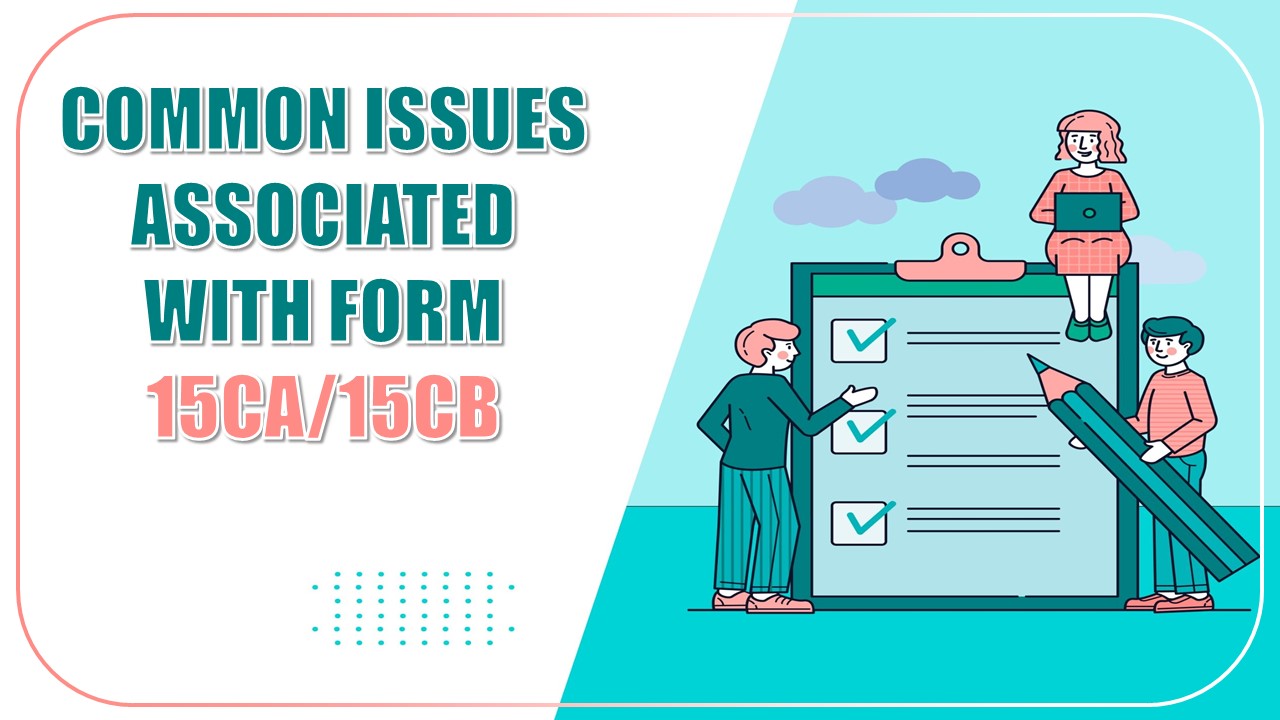
A practical guide on common errors, audit risks, and compliance essentials related to Form 15CA/15CB for foreign remittances under Indian tax and FEMA laws.
Key Compliance Checks for Form 15CA/15CB
 Saloni Kumari
 Jun 10, 2025
Table of Contents

Mistakes in Form 15CA/15CB can lead to heavy penalties, tax disallowances
Individuals consider Form 15CA/15CB just as a formality; however, it’s actually very significant for following tax rules and FEMA (foreign exchange) laws. Mistakes in filing or understanding 15CA/15CB forms can result in penalties, tax disallowances, scrutiny and Departmental audits.
What is Form 15CA and 15CB?
- Form 15CA is a declaration made, wherever an individual is sending money internationally, as to whether tax must be deducted with the payment being sent.
- Form 15CB is a form of certificate issued by a Chartered Accountant (CA) which is required when the foreign payment to be sent is taxable and in case it exceeds the limit of Rs. 5 lakh, certifying the appropriate tax deduction.
Wrong Classification of Remittance
People often make mistakes in judging whether a foreign payment is taxable. This generally occurs when they neglect:- The nature of the service provided
- If a Double Taxation Avoidance Agreement (DTAA) applies
- Whether the foreign entity has a Permanent Establishment (PE) in India.
Missing TRC or Form 10F
One cannot claim Double Taxation Avoidance Agreement (DTAA) relief without a valid Tax Residency Certificate (TRC) and Form 10F (filed online if the TRC lacks details). In case we make a payment to a non-resident or foreign company without a valid TRC, a higher TDS rate would apply. For example, 20% plus cess and surcharge in case of royalty or fees for technical service. One has to either deduct TDS or gross up the Payment. If we gross up the payment, the cost will increase. In case you do not deduct TDS, the following consequences will take place:- Disallowance of expense under Sec 40(a)(i) to Remitter, if TDS is not deducted.
- Applicability of Interest on Late Payment/Deduction of TDS
- The taxpayer may be deemed as assessee in default.
Non Declaration on PE Status
You must get a written confirmation from the foreign party about whether they have a PE in India or not. Tax deduction completely changes once the Non-Resident/ FC declares PE in India.Form 15CB Without Documents
Sometimes, Form 15CB is issued without checking important documents like:- Contracts or invoices
- TRC (Tax Residency Certificate), Form 10F, and PE declaration
- DTAA analysis (to see if tax treaty benefits apply)
Confusion Between Taxable and Chargeable
Even if tax is not payable because of the Double Taxation Avoidance Agreement (DTAA), Form 15CA/CB is still needed if income is chargeable under the Act. Not taking 15CB/15CA will lead to Non-compliance with reporting duties.Key Things Auditors Check
- Matching details between Form 15CA/CB, accounting books, and bank transfers
- Clear reasons if tax is not deducted (i.e., "Not Chargeable")
- Complete set of supporting documents
- Correct details of the person sending and receiving the money
- Timely e-filing

Essential Standard Operating Procedure (SOP) You Should Have:
- A clear chart showing which payments are taxable (Taxability matrix)
- Ready-made templates for tax treaty (DTAA) documents
- Standard formats for Tax Residency Certificates (TRC) and No Permanent Establishment (No-PE) declarations
- A checklist to ensure bank compliance
About Author


Saloni Kumari
Content Writer
Saloni is a Content Writer with 2+ years of experience at studycafe.in. She writes legal, taxation, and finance related content including GST, Income Tax etc. Skilled in translating complex judicial pronouncements and regulatory developments into clear, and reader-friendly articles. Experienced in covering judgements of ITAT, High Court, GSTAT, and news related to Income Tax, GST, and corporate law. She can be reached at [email protected].
Saloni is a Content Writer with 2+ years of experience at studycafe.in. She writes legal, taxation, and finance related content including GST, Income Tax etc. Skilled in translating complex judicial pronouncements and regulatory developments into clear, and reader-friendly articles. Experienced in covering judgements of ITAT, High Court, GSTAT, and news related to Income Tax, GST, and corporate law. She can be reached at [email protected].
 StudyCafe
 Delhi, Delhi, India
 2924
2924My Recent Articles
- Major Relief in Arbitration Case: MCIA Denies Rs 908 Crore Statement Claim Made by Allied Silica Against Tata Chemicals
- MCA and ICSI to Hold User Awareness Session on Form AOC-4 Filing Amid Glitches on MCA-21 Version-3 Portal
- GSTN Introduces New E-Invoicing Facility for Self-Invoices Under Reverse Charge Mechanism
- Flexi Cap vs Multi Cap Funds: What's the Real Difference?
- IBA Recommends Public Sector Banks to Reduce Ambit of Physical Branch Audits to 50% of Total Business
Up Next
Loading suggestions…


Recent Posts
All Posts
Tags
No tags yet.
Recent Posts
All Posts
Tags
No tags yet.