New Income Tax Act 2025: Key Changes and Simplified Tax Rules, Effective from April 2026:
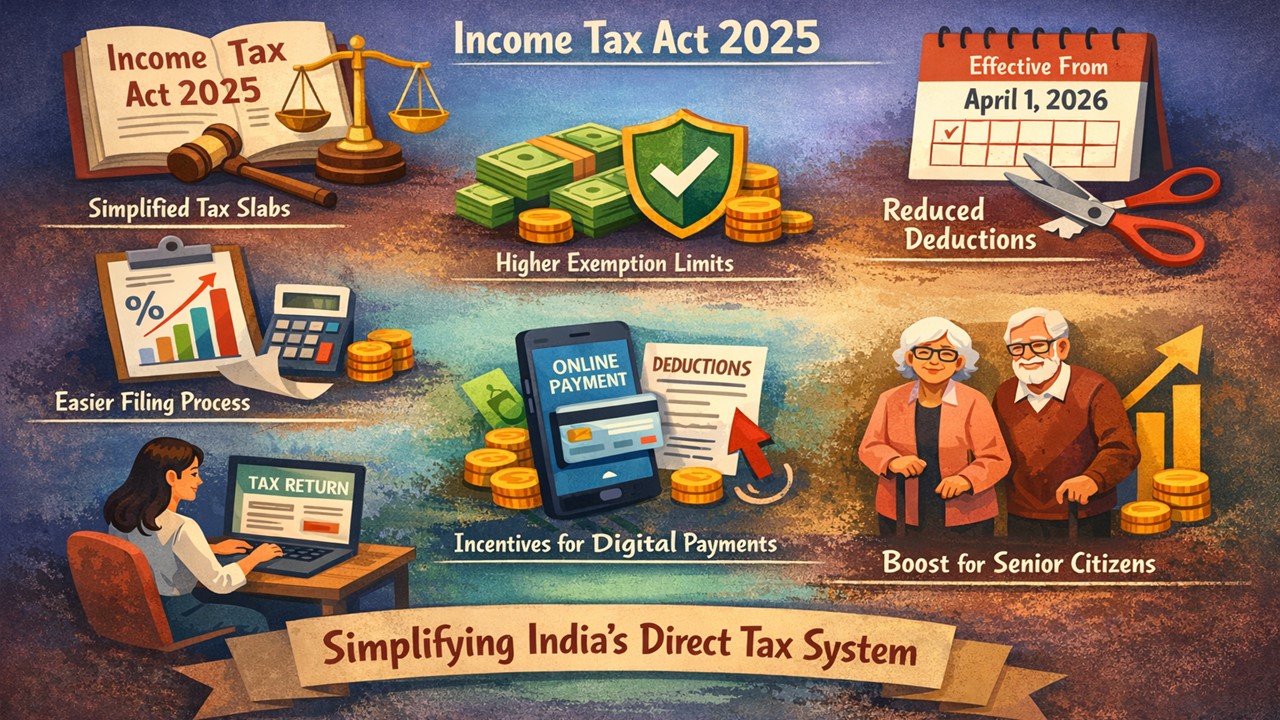
Here's a comprehensive overview of the key changes introduced in the Income Tax Act 2025, aimed at simplifying India’s direct tax system, effective from April 1, 2026.
Key Highlights of the New Income Tax Act 2025
 Saloni Kumari
 Mar 16, 2026
New Income Tax Act 2025: Key Changes and Simplified Tax Rules, Effective from April 2026
The tax authorities have proposed several significant changes in the country's direct tax framework. These proposed changes have been scheduled to take effect from April 01, 2026, along with the new Income Tax Act 2025. The new income tax act will replace the nearly 60-year-old Income Tax Act 1961.
The changes made in income tax rules do not affect existing tax rates; only the direct tax rules have been made simpler to understand, with the aim of reducing the ambit of litigation and removing unclearness in the nation’s tax system. In the new income tax rules, the government has tried to simplify the language and added proposals introduced in the Union Budget 2026.
1. Introduction of New ‘Tax Year’ Concept
This is one of the key changes proposed in the Income Tax Act 1961. The new concept of ‘Tax Year’ has been introduced, with an aim to replace earlier confusion between 'Financial Year' and 'Assessment Year'. In this new concept tax year, income earned within the year in which it is reported and assessed will be amalgamated. Resulted in easier compliance for taxpayers.
2. Income Tax Slabs Remain Unchanged
Under the new Income Tax Act 2025, the government has not made any changes to income tax slab rates under both the new and old tax regimes.
3. Due Dates Changed for Several ITR Forms
Due dates for filing the income tax returns (ITRs) for different categories of taxpayers are prescribed under Section 263(1)(c) of the Act. The government has observed that taxpayers involved in a business or profession whose accounts are not required to be audited and partners of such firms often need additional time to close their books of accounts. Trusts not requiring an audit also face similar difficulties. To reduce hardship and taxpayer complaints, the due dates for filing returns in these cases are proposed to be extended.
Similarly, for taxpayers earning income from a business or profession whose accounts are not required to be audited, partners of such businesses (and their spouses, if Section 10 applies), the due date for furnishing returns is proposed to be extended from July 31 to August 31. However, no due date extension proposal has been given for taxpayers furnishing normal returns like ITR-1 and ITR-2; the due date is the same as before, i.e., July 31.
The amendments introduced in the about 60-year-old Income Tax Act 1961 are scheduled to take effect from March 01, 2026, for the assessment year 2026-27 (previous year 2025-26), and those introduced in the Income Tax Act, 2025, are set to take effect from April 01, 2026, for the tax year 2026-27 and subsequent tax years.
4. Due Date to File Revised Returns Extended
The income tax authorities have extended the due date to file a revised ITR. Presently, under the Income Tax Act 1961, a taxpayer can furnish a revised return within nine months from the end of the relevant tax year or before completion of assessment, whichever is earlier. However, now, as per the proposed changes, the due date has been extended from nine months to twelve months from the end of the relevant tax year.
This change has been implemented because previously, the due date for furnishing both a revised and a belated return was the same, i.e., nine months. Because of this reason, taxpayers filing a belated return were not left with time to file a revised return. However, taxpayers furnishing a revised return after the initial time limit of nine months will need to pay an extra fee of Rs 1000 if the total taxable income does not exceed Rs 5 lakh, and Rs 5000 will be charged in case the income exceeds Rs 5 lakh.
About Author


Saloni Kumari
Content Writer
Saloni is a Content Writer with 2+ years of experience at studycafe.in. She writes legal, taxation, and finance related content including GST, Income Tax etc. Skilled in translating complex judicial pronouncements and regulatory developments into clear, and reader-friendly articles. Experienced in covering judgements of ITAT, High Court, GSTAT, and news related to Income Tax, GST, and corporate law. She can be reached at [email protected].
Saloni is a Content Writer with 2+ years of experience at studycafe.in. She writes legal, taxation, and finance related content including GST, Income Tax etc. Skilled in translating complex judicial pronouncements and regulatory developments into clear, and reader-friendly articles. Experienced in covering judgements of ITAT, High Court, GSTAT, and news related to Income Tax, GST, and corporate law. She can be reached at [email protected].
 StudyCafe
 Delhi, Delhi, India
 2920
2920My Recent Articles
- IBA Recommends Public Sector Banks to Reduce Ambit of Physical Branch Audits to 50% of Total Business
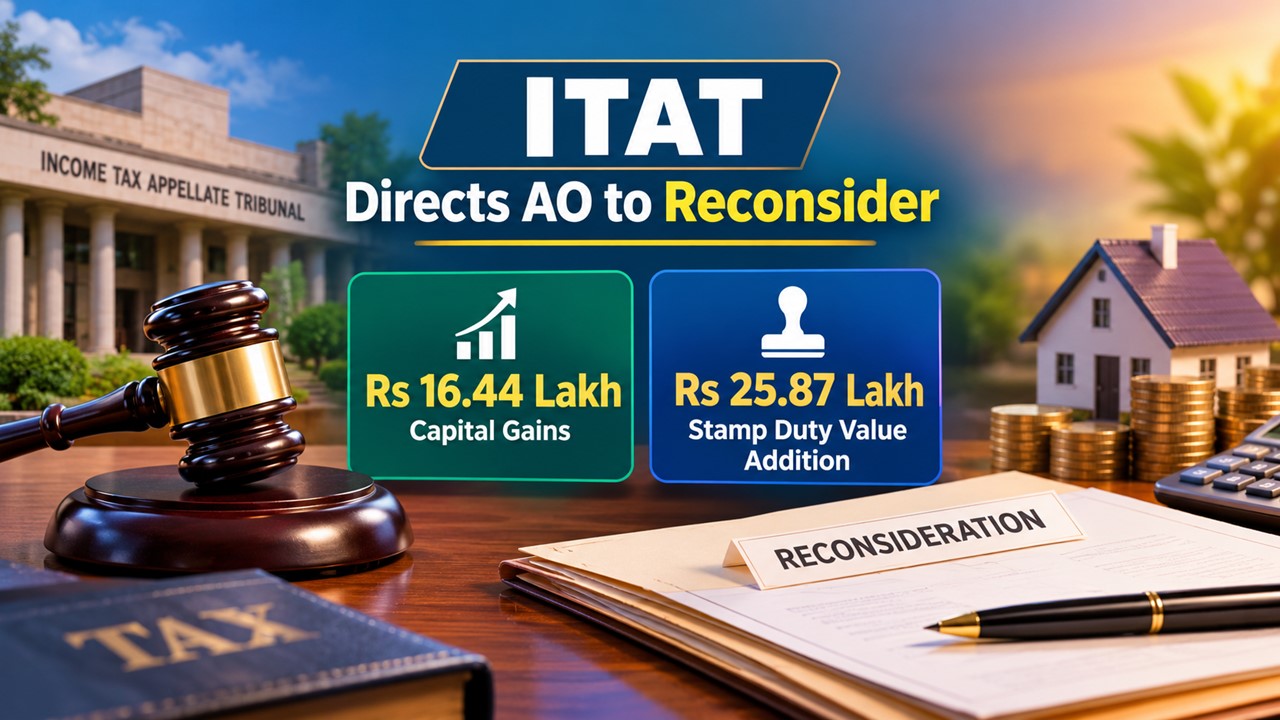
- ITAT Directs AO to Reconsider Rs 16.44 Lakh Capital Gains and Rs 25.87 Lakh Stamp Duty Value Addition
- ITAT Remands Rs 3.33 Crore Demonetisation Cash Deposit Case to AO, Directs Rs 10,000 Relief Fund Payment
- Income Tax Dept Increases Scope for Saksham Nudge Initiative to Further Include Professional Insuring Timely Compliance
- Vedanta Subsidiary ESL Steel Receives GST SCN for Rs. 2.76 Lakh IGST Demand Over Alleged RCM Short Payment
Up Next
Loading suggestions…


Recent Posts

All Posts


Tags
Recent Posts
All Posts