Old Vs New Tax Regime: A Complete Guide to Benefits, Exemptions and Tax Planning:
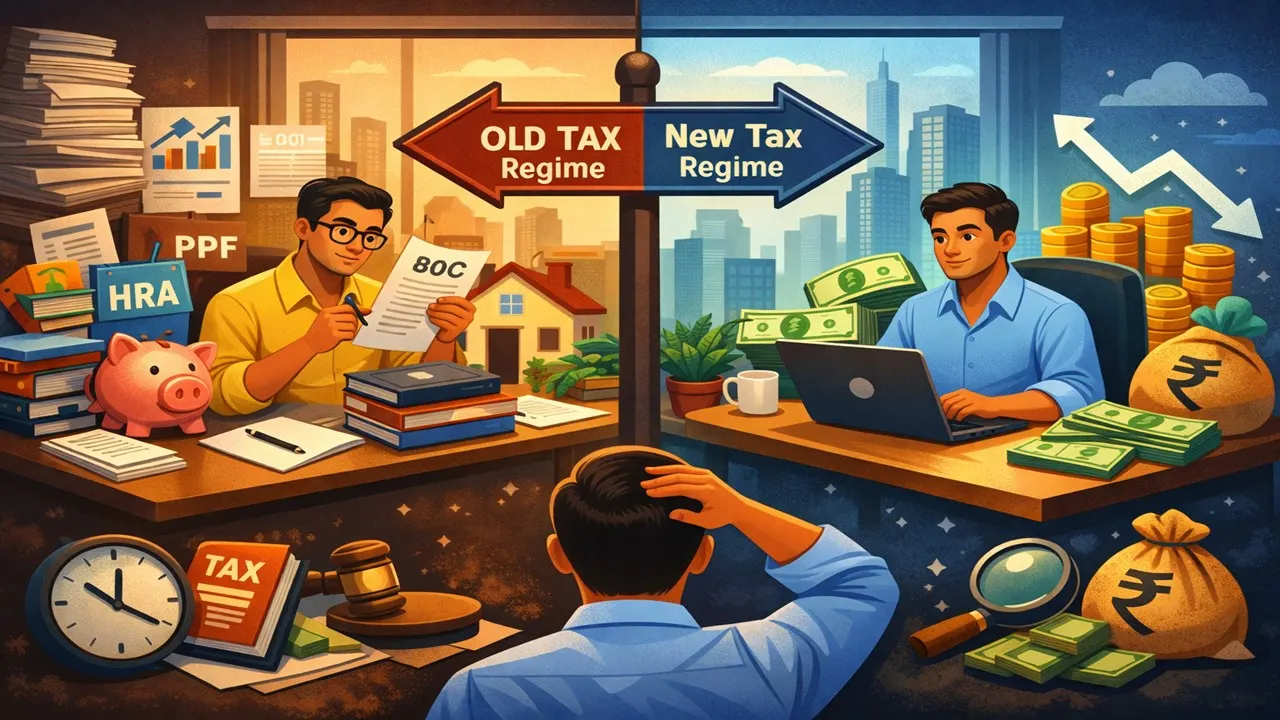
A comprehensive guide on India’s old and new tax systems, deductions, rebates, and practical tips for smart financial decisions.
How to Choose Between Old and New Tax Regimes in India
 Vanshika verma
 Jan 27, 2026
Old Vs New Tax Regime: A Complete Guide to Benefits, Exemptions and Tax Planning
In India, there are currently two ways in which individuals can pay their income tax: the Old Tax Regime and the New Tax Regime. The Old Tax Regime allows taxpayers to reduce their taxable income by claiming various deductions and exemptions. On the other hand, the New Tax Regime offers lower tax rates but does not allow most deductions and exemptions. It is simpler and more straightforward. Taxpayers can choose the regime that best suits their income, expenses, and financial planning goals.
What do you understand by the old tax regime?
The old tax regime allows taxpayers to reduce their taxable income by claiming various deductions, exemptions, and rebates, such as those for savings, insurance, house rent, and home loans. Because of these benefits, people can lower the amount of tax they have to pay. However, the tax rates under this system are higher compared to the new tax regime.
The tax slab rates for the assessment year 2026-27 are as under.
- Income up to Rs 2,50,000 is exempt from tax for resident super senior citizens (above the age of 80), resident senior citizens (60 to 79 years), and all other individual taxpayers.
- Income between Rs 2,50,001 and Rs 3,00,000 is exempt from tax for resident super senior citizens and resident senior citizens. For all other individuals, it is taxable at 5%.
- Income between Rs 3,00,001 and Rs 5,00,000 is exempt from tax for resident super senior citizens, while it is taxed at the rate of 5% for resident senior citizens as well as for all other individuals.
- Income between Rs 5,00,001 and Rs 10,00,000 is taxed at a rate of 20% for resident super senior citizens, resident senior citizens, and all other individuals.
- For resident super senior citizens, resident senior citizens, and all other individuals, income above Rs 10,00,000 is taxed at the rate of 30%.
- The basic exemption limit under the new tax regime is Rs 4,00,000.
- A tax rate of 5% is applicable on income between Rs 4,00,001 to Rs 8,00,000.
- A tax rate of 10% is applicable on income between Rs 8,00,001 to Rs 12,00,000.
- A tax rate of 15% is applicable on income between Rs 12,00,001 to Rs 16,00,000.
- A tax rate of 20% is applicable on income between Rs 16,00,001 to Rs 20,00,000.
- A tax rate of 25% is applicable on income between Rs 20,00,001 to Rs 24,00,000.
- A tax rate of 30% is applicable on income above Rs 24,00,000.
- People who invest in tax-saving options like PPF, ELSS, LIC, etc.
- Those who claim many deductions, such as Home loan interest, Medical insurance (80D), Children’s education fees etc.
- People who like to plan and save taxes through different schemes.
- People who do not invest much in tax-saving schemes.
- Freshers, or new employees, who want simple tax rules.
- Those who prefer lower tax rates and less paperwork.

About Author


Vanshika verma
Content Writer
Vanshika Verma is a Content Writer with 1+ year of experience at Studycafe.in. A B.Com graduate from Delhi University, She writes articles on Finance, Tax, ICAI, GST, and the latest financial news, with a focus on making complex topics easy for readers and professionals.
Vanshika Verma is a Content Writer with 1+ year of experience at Studycafe.in. A B.Com graduate from Delhi University, She writes articles on Finance, Tax, ICAI, GST, and the latest financial news, with a focus on making complex topics easy for readers and professionals.
 Studycafe
 Delhi, Delhi, India
 2114
2114My Recent Articles
- Rajasthan Police Warns of WhatsApp Account Hacking Scams, Urges People to Beware of Fake QR Codes and OTP Fraud
- Man Carrying Rs 25,000 Reward Arrested in Rs 1.22 Crore GST Evasion Case Involving Fake Firms in Bulandshahr
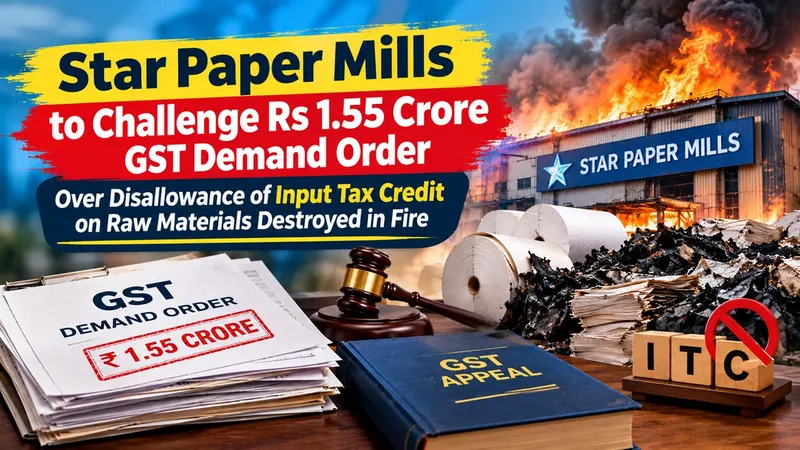
- Star Paper Mills to Challenge Rs 1.55 Crore GST Demand Order Over Disallowance of Input Tax Credit on Raw Materials Destroyed in Fire
- Delhi CBI Arrests Hospital Doctor and Contractual Nursing Orderly Supervisor for Alleged Rs 1 Lakh Bribery in Tender-Related Case
- ITAT Condones 2,107-Day Delay, Directs CIT(A) to Reconsider Rs 16.54 Lakh Section 80PA Deduction Claim
Up Next
Loading suggestions…


Recent Posts


All Posts

Recent Posts
All Posts