Orissa HC Quashes Service Tax Demand Raised Against Deceased Assessee:
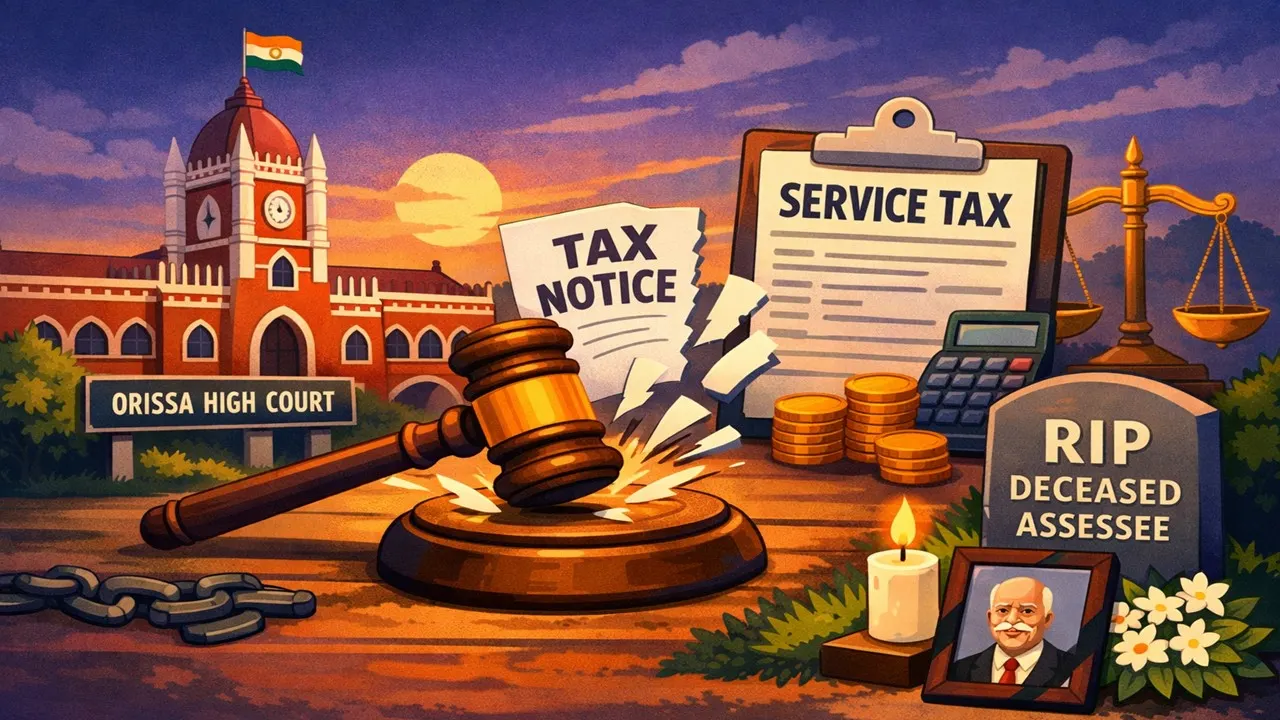
Service Tax proceedings under the Finance Act, 1994 cannot be continued against legal heirs in the absence of an express statutory provision
Orissa HC: Service Tax Order Passed Against Dead Person Is Void
 Meetu Kumari
 Jan 20, 2026
Orissa HC Quashes Service Tax Demand Raised Against Deceased Assessee
Late Atal Bihari Senapati was the proprietor of “Senapati Palace”, a short-stay lodging facility charging room rent between Rs. 500 and Rs. 800 per day. For FYs 2015-16 and 2016-17, the Department issued a Demand-cum-Show Cause Notice alleging non-payment of service tax based on income-tax data. During the pendency of proceedings, Mr Senapati passed away on 04.06.2021. His wife and son duly informed the Department and furnished the death certificate.
The Assistant Commissioner passed an ex parte Order-in-Original dated 30.08.2024 in the name of the deceased and initiated recovery proceedings under Section 87 of the Finance Act, 1994. The widow challenged the action by way of a writ petition.
Main Issue: Whether Service Tax proceedings initiated against an individual can be continued and finalized by passing an assessment order in his name after his death, when the Finance Act, 1994 contains no provision for substitution of legal heirs.
HC Ruled: The Orissa High Court quashed the Order-in-Original and the consequential recovery notices, holding them to be non est and void. The Court noted that, unlike Section 159 of the Income-tax Act, 1961, the Finance Act, 1994 does not contain any provision permitting continuation of proceedings or fastening tax liability on legal representatives of a deceased person.
Relying on the Supreme Court’s decision in Shabina Abraham v. Collector of Central Excise, the Court reiterated that taxing statutes must be strictly construed and liability cannot be extended by implication. Since the order was passed against a non-existent person despite the Department being aware of the death, the entire proceeding was held to have abated.
To Read Full Judgment, Download PDF Given Below
About Author


Meetu Kumari
Content Manager
Meetu Kumari is an Experienced Advocate and Content Writer with 4+ years of demonstrated history of working in the law practice industry. Skilled in Developing Content, Researching, and Drafting. Strong professional with a Bachelor of Science (B.Sc.) focused on Law from Gujarat National Law University.
Meetu Kumari is an Experienced Advocate and Content Writer with 4+ years of demonstrated history of working in the law practice industry. Skilled in Developing Content, Researching, and Drafting. Strong professional with a Bachelor of Science (B.Sc.) focused on Law from Gujarat National Law University.
 Studycafe
 Jodhpur, Rajasthan, India
 2264
2264My Recent Articles
- ITAT Condones 302-Day Delay, Restores Salary Assessment for Fresh VerificationPremium
- ITAT Condones Delay After Tax Consultant's Death, Restores Appeals for Fresh HearingPremium
- ITAT Remands Salary Addition, Says Taxability Depends on Salary Becoming Due, Not Mere ReceiptPremium
- ITAT Deletes TP Royalty Adjustment, Orders Fresh Review of Commission BenchmarkingPremium
- ITAT Quashes Reassessment Over Unsigned Section 148 Notice Issued to AssesseePremium
Up Next
Loading suggestions…


Recent Posts


All Posts


Recent Posts
All Posts