RBI Issues New Draft Rules to Stop Mis-Selling by Banks:
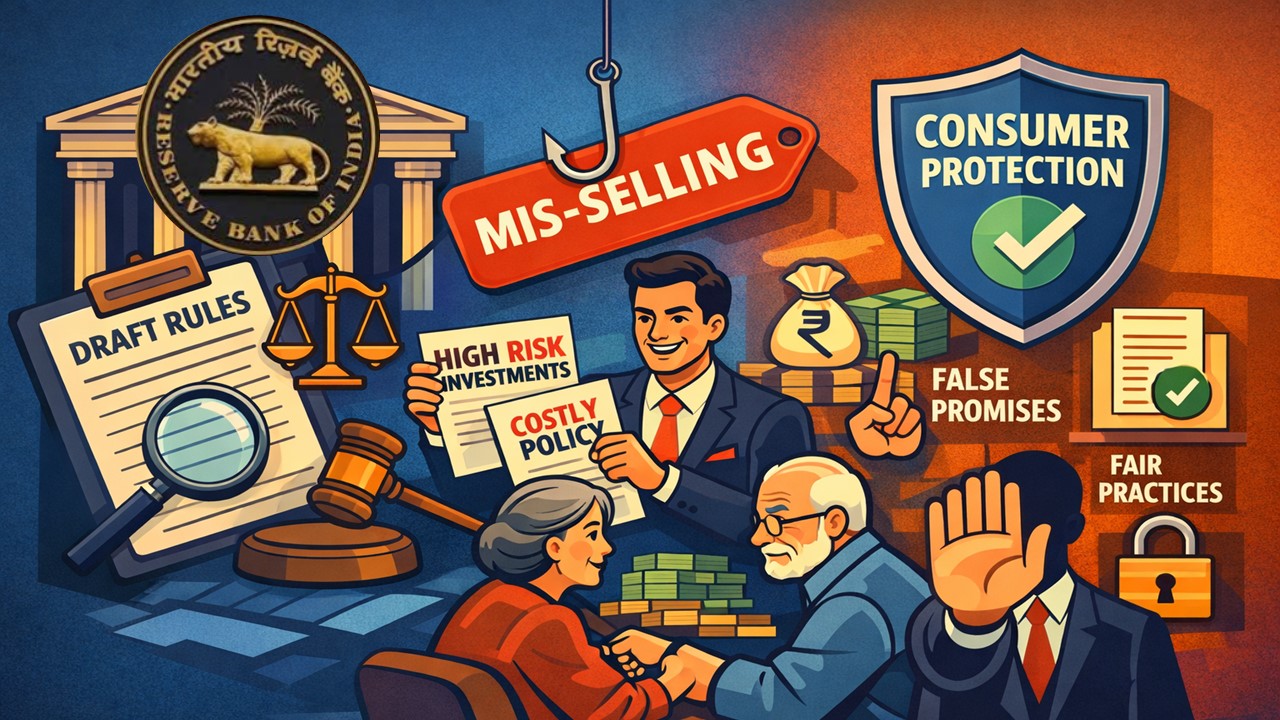
One of the key changes proposed is that the banks will now be required to refund the amount to the customers if the mis-selling is proven.
RBI Draft Rules: Key Proposals to Curb Mis-Selling
 Nidhi
Nidhi Feb 13, 2026
RBI Issues New Draft Rules to Stop Mis-Selling by Banks
The Reserve Bank of India (RBI) has recently issued draft rules to stop the banks from mis-selling financial products to customers. Over the past few years, many customers have raised issues that they were forced to buy insurance, mutual funds, or other third-party products without any clear understanding. The new rules will protect customers from buying any unwanted financial products.
These draft rules, known as the Reserve Bank of India (Commercial Banks-Responsible Business Conduct) Amendment Directions, 2026, will take effect from July 1, 2026. The RBI has invited feedback and suggestions from the public regarding these draft rules.
Why These Guidelines?
As discussed above, issues were raised about customers being forced to buy unwanted financial products without having a full understanding of them. The RBI also identified this issue several times and had directed the banks to focus on their core banking activities.
The Finance Minister, Nirmala Sitharaman, in November 2025, had also urged the banks to stop their mis-selling practices and protect public trust in the banking system.
The draft rules will improve the bank's advertising, marketing and selling practices.
Refund if Mis-Selling Is Proved
One of the key changes proposed is that the banks will now be required to refund the amount to the customers if the mis-selling is proven. Further, if the customer incurs losses due to the mis-selling, the banks will be required to compensate the loss amount to the customers according to their approved policies.
Complaints can be filed by the customers about the mis-selling within 30 days of receiving the signed copy of the terms and conditions, in case the regulator has not specified a time limit.
No More Third-Party Incentives
The RBI has also suggested banning incentives paid by insurance companies or mutual fund houses directly to bank employees for selling their products.
This restriction can affect both the banks and the third parties.
Stopping Force Bundling of Products
Another major proposal in the draft rules is stopping the bundling of financial products. As per this proposal, banks will no longer be allowed to bundle the sale of a third-party product with their own product.
In case the sale of the bank's product relies on the sale of a third-party product, customers must be free to choose any provider they prefer.
Customers' Feedback
To protect the customers, the bank must seek feedback within 30 days of selling a product to confirm that the customers had clear advantages and the risks associated with the product.
Banks will be required to maintain a half-yearly report based on the feedback. Using these reports, the bank must review its current policies and product features.
Dark Patterns Cannot Be Used
The RBI has also warned banks against using "dark patterns" on websites or apps, such as misleading messages or creating false urgency, basket sneaking, confirm shaming and subscription traps.
The draft also proposes that banks recommend an appropriate product to a customer based on the customer's age, income, risk appetite, financial literacy, etc. Banks will be required to check whether the product suits the customer by reviewing the product's risk and return, time horizon, fee, etc.
Customer's Consent
The banks must ensure that the products and services are sold only after receiving the customer's consent.
The draft stops the banks from funding the purchase of a product or service with a loan given to a customer without the customer's consent.
Direct Selling and Marketing Agents
The draft proposes to introduce clear rules for direct selling agents and direct marketing agents. Agents should call or visit customers only between 9:00 a.m. and 6:00 p.m. They can contact customers after these hours only if the customer agrees.
Any bank agent or third-party representative working on the bank premises for sales must be clearly different from regular bank staff. They must always carry and show their ID card.
Banks must set a code of conduct for their employees and agents. Direct selling and marketing agents must follow this code. If they break the rules, strict action should be taken against them.
About Author


Nidhi
Content Writer
Nidhi is a skilled content writer specializing in personal finance. She creates clear, engaging articles on mutual funds, investments, insurance, and wealth-building strategies. With a passion for simplifying complex financial topics, Nidhi helps readers make informed money decisions with confidence. She can be reached at [email protected]
Nidhi is a skilled content writer specializing in personal finance. She creates clear, engaging articles on mutual funds, investments, insurance, and wealth-building strategies. With a passion for simplifying complex financial topics, Nidhi helps readers make informed money decisions with confidence. She can be reached at [email protected]
 Studycafe
 New Delhi, Delhi, India
 1832
1832My Recent Articles
- Karnataka High Court Gives Another Chance in GST Matter Due to Lack of Hearing
- Delay Should Be Condoned if Explanation is Unrefuted: ITAT
- Non-Service of Income Tax Notice, Ill health of taxpayer, ITAT condones Appeal filing delay
- Books of Accounts Cannot be Rejected Without Any Specific Defect: ITAT Kolkata
- Karnataka High Court Sends ITC Matter Back to GST Authorities for Reconsideration
Up Next
Loading suggestions…


Recent Posts
All Posts

Tags
Recent Posts
All Posts