Related-Party Transaction disclosure guidelines for debt-listed entities: SEBI
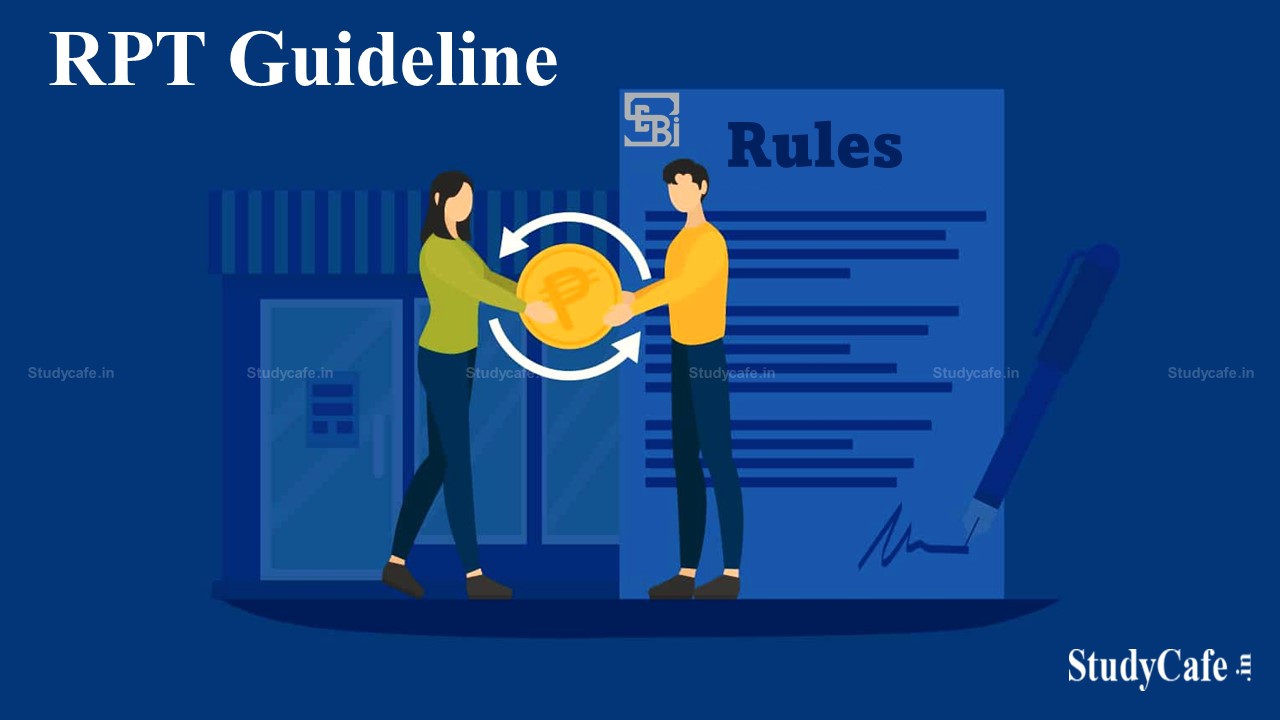
Related-Party Transaction disclosure guidelines for debt-listed entities: SEBI The markets regulator Sebi issued related-party transaction disclosure…
 Sushmita Goswami
 Jan 8, 2022
Related-Party Transaction disclosure guidelines for debt-listed entities: SEBI
The markets regulator Sebi issued related-party transaction disclosure guidelines for listed businesses that have listed their debt instruments on Friday (RPTs).
In a circular, the Securities and Exchange Board of India (Sebi) stated that the new criteria will apply to "high-value debt-listed businesses." Firms that have listed non-convertible debt instruments with an outstanding value of Rs 500 crore or more are classified as high-value debt-listed entities.
According to this, high-value debt-listed firms must present specific disclosure requirements to the audit committee and shareholders for consideration of related party transactions RPTs.
Such entities will be required to justify why the RPT is in their best interests, as well as present a copy of the valuation or other external party report to the audit committee and shareholders for approval. Furthermore, these organizations will be required to voluntarily provide information to the audit committee and shareholders on the percentage of the counter-annual party's consolidated turnover that is represented by the value of the proposed RPT.
RPT disclosures must be provided in the authorized format to stock exchanges.
Sebi said such entities will have to disclose the type, material terms, and particulars of the proposed transaction, the name of the RPT, and its relationship with the high-value debt-listed entity or its subsidiaries, including the nature of its concern or interest, when submitting information to the audit committee for approval of a proposed RPT.
They must also inform the audit committee about their tenure as well as the amount of the proposed transaction, which is the percentage of the listed entity's annual consolidated turnover for the previous financial year reflected by the value of the proposed transaction.
Certain information will be included in the explanatory statement of any notice addressed to shareholders seeking approval for any proposed RPT.
The circular will take effect immediately, according to the regulator.
Sebi made significant adjustments in November to improve the monitoring and enforcement of related party transaction rules.
The definitions of 'related party' and 'related party transactions' had been changed by the regulator.
Prior to this, the Sebi issued corporate governance regulations for high-value debt-listed businesses in September.
About Author


Sushmita Goswami
Content Manager
Sushmita Goswami is a content writer with 2+ years of experience in Finance, Recruitment, Education and career Related Content. She is a Graduate from Delhi University in Journalism and Mass Communication
Sushmita Goswami is a content writer with 2+ years of experience in Finance, Recruitment, Education and career Related Content. She is a Graduate from Delhi University in Journalism and Mass Communication
 Studycafe
  New Delhi , Delhi, India
 886
886My Recent Articles
- What to Consider When Choosing an Online Trading Platform?
- Post Office Franchise Scheme: Take Post Office Franchise at Rs 5000 and Earn Commission upto 20%; Check Details Here
- IAN invests INR 4.5 crore in Fintech NBFC Indium Finance
- UPI a Digital Public Good, No Charges in Consideration: Finance Ministry
- ITR Filing Penalty: Check Taxpayers Exempt from Paying a Late Fee even Missing the Deadline
Up Next
Loading suggestions…


Recent Posts

All Posts

Recent Posts
All Posts