The Newfound Bonhomie Between India And China:
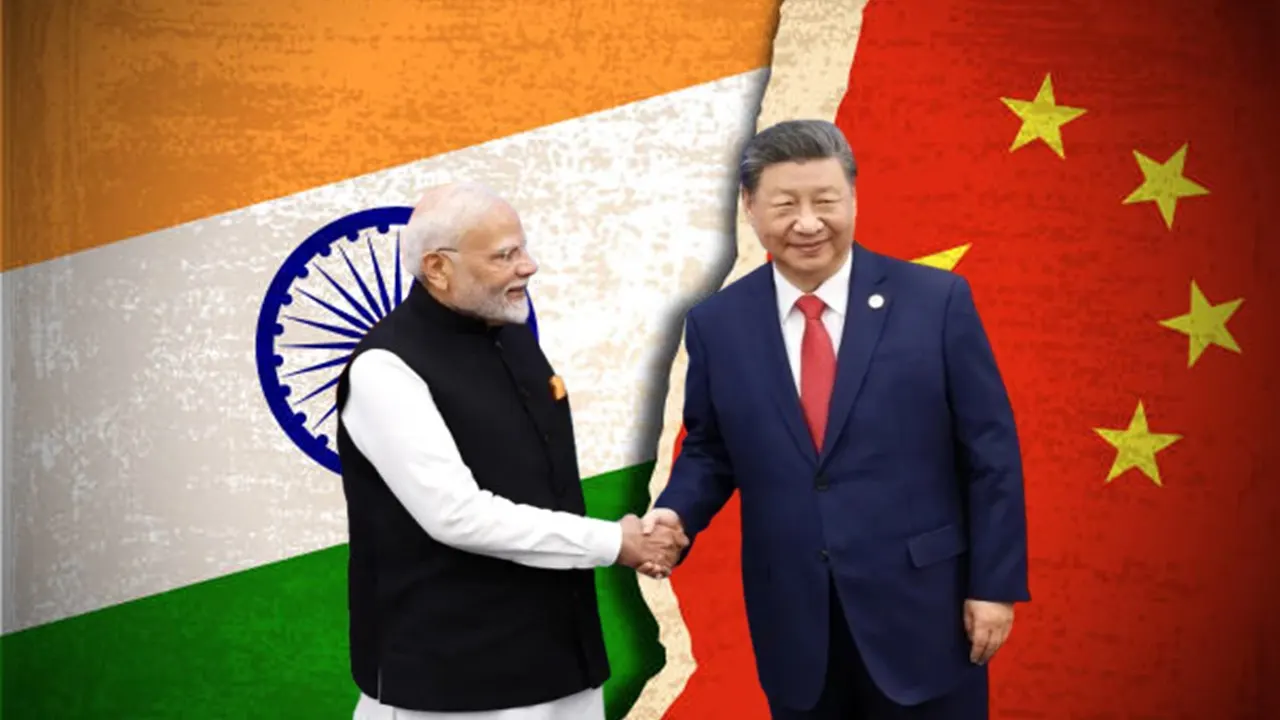
Here's an analysis of the emerging strategic bonhomie between India and China amidst global power shifts and national interest challenges.
Bonhomie or Bargain? A Delicate Diplomatic Rebalancing
 trradhakrishnan
 Oct 8, 2025
The Newfound Bonhomie Between India And China
“The emergence of new influential international actors necessitates a re-evaluation of how we conceptualize and apply these terms. The world, it appears, is not exclusively multipolar, bipolar, or unipolar, but rather a combination of all three. The parameters of political influence are not confined to a single state or a select few; rather, they are contingent upon the varying capacities of these entities.”
Since the collapse of the Berlin Wall and the disintegration of the USSR, the United States became the sole super power of the world. However, the US hegemony has increasingly being questioned in recent years because of the emerging ascent of China’s economic and commercial prowess, alongside that of middle powers such as India and Japan, which have progressively assumed greater roles in economic, political, and military spheres. The formation of political ideological blocs and potential global orders challenge the domination by a single nation. While the United States has played a pivotal role in shaping the current paradigm and retains the greatest capacity to influence, deter, and potentially coerce the behaviour of its peers, power distribution is pragmatically more complicated. “Political, economic, and military power is not uniformly distributed but rather manifests as an imbalanced diffusion among states vying for greater influence”.
International relations should be based on meaningful diplomacy which deploys itself in dialogue, persuasion rather than by coercion. But unfortunately, the American diplomacy prevailing now is not based on meaningful dialogue and persuasion but is being perpetuated through bullying, coercion and arrogance.
In the wake of the unbecoming act of betrayal by President Trump and the U S administration by imposing maximum tariff imposed on India on unacceptable and flimsy grounds, and the subsequent firm rejection of the President Trump’s tariffs by Prime Minister Modi has opened up a challenge to the policy of diplomacy. In the process of facing the new challenge, a new paradigm shift has become inevitable in the relationship with other countries.
“The art of diplomacy is finding a reasonable route among imperfect alternatives” and as Richard Armitage, the British Actor and author said, “Diplomacy is much more than just talking to your friends…You’ve to talk to people who aren’t our friends, and even people you dislike.” It is in this context that P. M. Modi has initiated a dialogue with China knowing well the President Trump like acts of betrayal by them during the Nehruvian era. The only difference is that present India and the present government is not the India of 1960’s and the then government. India is the fourth largest economy of the world poise to occupy the 3rd position overtaking Germany.
There seems to be a paradigm shift in China’s attitude towards India considering some the latest bilateral actions taken by both the countries. India-China relations are multifaceted intricacies, oscillating between strategic opposition and profound economic interdependence. Despite growing geopolitical tensions, bilateral trade between the two countries has surged over the past two decades, making China one of India’s largest trading partners. “However, this trade relationship is marked by structural imbalances, strategic vulnerabilities, and growing calls for diversification and self-reliance”. China openly condemned the high tariff imposed by America as a “bully” which is “using tariffs as a bargaining chip to demand exorbitant prices from various countries”. Xu Feihong, Beijing’s ambassador to Delhi, said that China “firmly opposes” the US decision to impose 50 per cent tariff on India and “will firmly stand with India to uphold the multilateral trading system with the World Trade Organization (WTO) at its core”. China is fully aware of the fact that India is the emerging economic and military power and is a rival to China in the Asia Pacific region.
It worth noting that in the Keynote Speech by H.E. Xi Jinping, President of the People's Republic of China at the Second China-Central Asia Summit in June 2025 elaborated Chinese policy towards other nations as enumerated and quoted here below.
- “We practice mutual respect and treat each other as equals. All countries, big or small, are equal. We handle issues through consultation and make decisions by consensus.
- We seek to deepen mutual trust and enhance mutual support. We firmly support each other in safeguarding independence, sovereignty, territorial integrity, and national dignity. We do not do anything harmful to the core interests of any party.
- We pursue mutual benefit and win-win cooperation and strive for common development. We view each other as priority partners, and share development opportunities together. We accommodate each other's interests, and work to build a win-win and symbiotic relationship.
- We help each other in time of need and stand together through thick and thin. We support each other in choosing development paths suitable to our respective national conditions and in taking domestic matters into our own hands. We work together to address various risks and challenges, and uphold regional security and stability.”
About Author


trradhakrishnan
Chief Consultant, Banking, Management and NPA Resolution.
 freelancer
 Indore, Madhya Pradesh, India
 7
7My Recent Articles
- The Power of Love and Understanding for a World of Tranquillity
- Prevent Employee Alienation For Exhilarating Performance
- Prevention Of Write Off Of Bad Loans Indian Banks Wrote Off Rs. 16.35 Lakh Crore In Bad Loans Over a Decade
- MSME PACKAGE UNDER ATMA NIRBHAR ABHIYAN / SELF RELIANT INDIA MOVEMENT
- IMPACT & CHALLENGES OF COVID 19 ON ECONOMY
Up Next
Loading suggestions…


Recent Posts

All Posts


Tags
Recent Posts
All Posts