Voluntary Disclosure of Income Cannot Be Retracted Without Proof of Coercion: High Court:
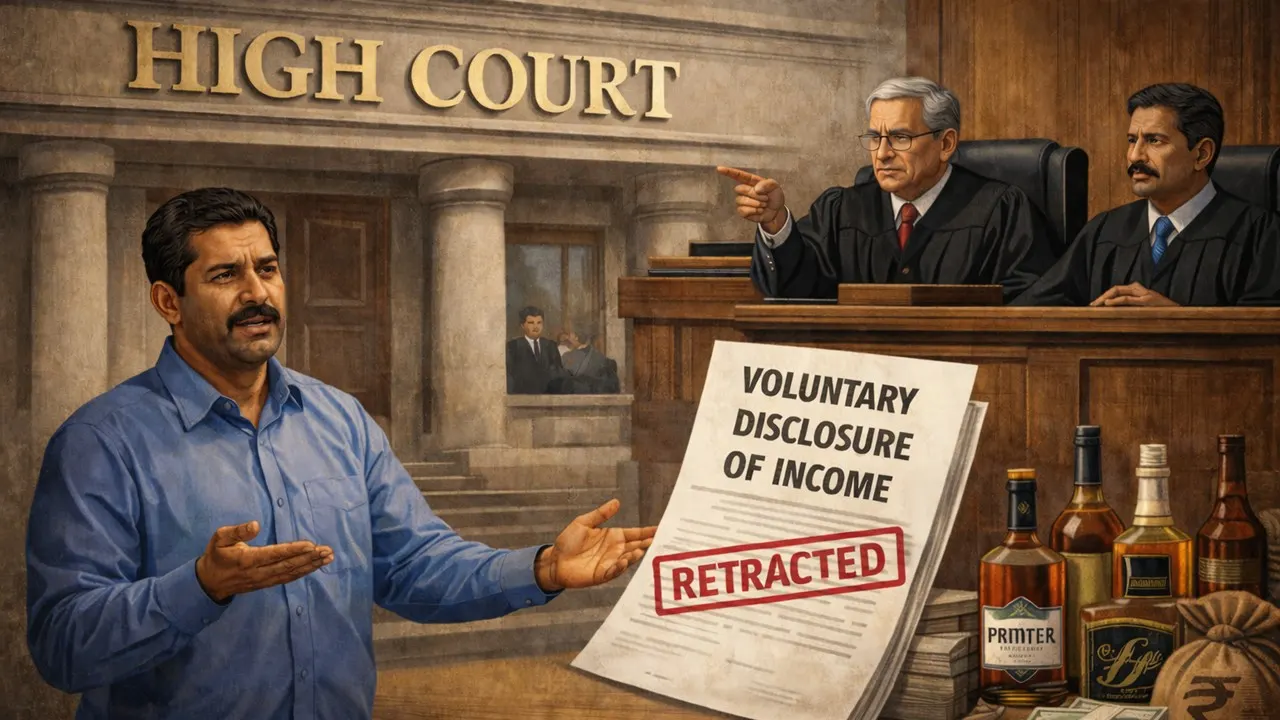
Taxpayer Bound by Self-Assessment; Higher Tax Rate Under Section 115BBE Upheld Taxpayer Bound by Self-Assessment; Higher Tax Rate Under Section 115BBE Upheld
Voluntary Disclosure of Income Cannot Be Retracted Without Proof of Coercion: High Court
 Meetu Kumari
 Mar 1, 2026
Voluntary Disclosure of Income Cannot Be Retracted Without Proof of Coercion: High Court
The appellant, Shri Narayan Rao Hebri, a 71-year-old individual, was subjected to a survey operation under Section 133A of the Income-tax Act. During the survey, the assessee voluntarily offered an additional income of Rs. 1.25 Crores for the Assessment Year 2017-18 through a formal letter dated September 29, 2016. This income was later included in his return of income.
During the assessment proceedings, the taxpayer attempted to argue that this additional income should be taxed at normal slab rates rather than the stringent 60% rate prescribed under Section 115BBE. The Assessing Officer rejected this, applying the higher tax rate. The assessee’s appeals before the CIT(A) and the ITAT were dismissed, leading to this appeal before the High Court.
Main Issue: Whether a taxpayer can retract a voluntary disclosure of income made during a survey and whether the Revenue is obligated to prove the evidentiary basis of income that the assessee themselves admitted in a valid return of income.
HC's Order: The Hon'ble High Court dismissed the appeal, ruling in favor of the Income Tax Department. The Court emphasized that the admission made by the assessee in the letter dated September 29, 2016, was never retracted. Also, the assessee consciously filed a return of income including this amount and verified it, which constitutes a "self-assessment."
The Bench held that in cases of admitted income, the burden does not lie on the AO to establish the evidentiary basis; rather, the taxpayer is bound by their own voluntary disclosure. The Court found no evidence of perversity in the lower authorities' decisions and confirmed that the additional income was correctly taxed at the special rate under Section 115BBE.
To Read Full Judgment, Download PDF Given Below
About Author


Meetu Kumari
Content Manager
Meetu Kumari is an Experienced Advocate and Content Writer with 4+ years of demonstrated history of working in the law practice industry. Skilled in Developing Content, Researching, and Drafting. Strong professional with a Bachelor of Science (B.Sc.) focused on Law from Gujarat National Law University.
Meetu Kumari is an Experienced Advocate and Content Writer with 4+ years of demonstrated history of working in the law practice industry. Skilled in Developing Content, Researching, and Drafting. Strong professional with a Bachelor of Science (B.Sc.) focused on Law from Gujarat National Law University.
 Studycafe
 Jodhpur, Rajasthan, India
 2264
2264My Recent Articles
- ITAT Condones 302-Day Delay, Restores Salary Assessment for Fresh VerificationPremium
- ITAT Condones Delay After Tax Consultant's Death, Restores Appeals for Fresh HearingPremium
- ITAT Remands Salary Addition, Says Taxability Depends on Salary Becoming Due, Not Mere ReceiptPremium
- ITAT Deletes TP Royalty Adjustment, Orders Fresh Review of Commission BenchmarkingPremium
- ITAT Quashes Reassessment Over Unsigned Section 148 Notice Issued to AssesseePremium
Up Next
Loading suggestions…


Recent Posts


All Posts

Recent Posts
All Posts