The Delhi High Court quashed a time-barred reassessment notice and assessment order, holding them void due to breach of statutory limitation and jurisdictional error.
Aishwarya Singh | Apr 28, 2026 |
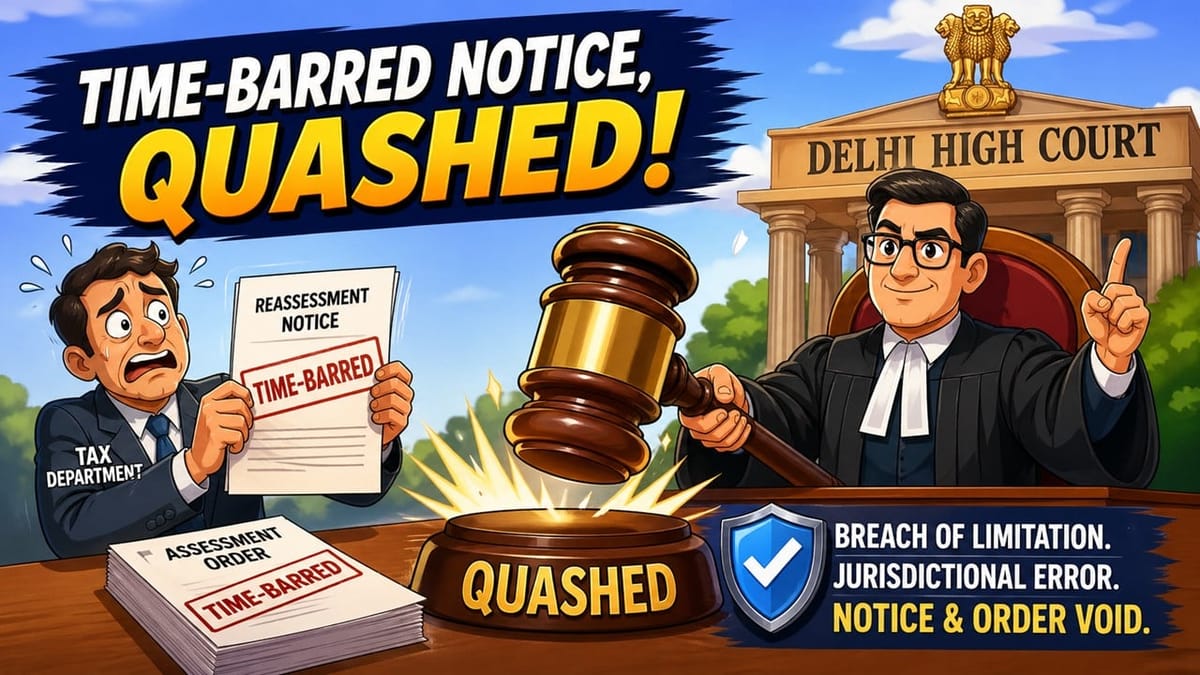

Delhi High Court Cancels Time-Barred Reassessment Notice and Assessment Order
The petitioner, M/s Supreme Build-Cap Pvt Ltd, filed a writ petition with the Delhi High Court because they weren’t happy with an assessment order dated 29 March 2026. Their main complaint? They said the Income Tax Department’s whole reassessment process was time-barred.
Fact of the case

The department sent out a reassessment notice on 30 August 2024 under Section 148 of the Income-tax Act, 1961, targeting Assessment Year 2016-17. Supreme Build-Cap argued that the law at that time only allowed six years for issuing such a notice. By 2024, those six years would be long gone.
During the assessment, Supreme Build-Cap responded to a show cause notice, dated 21 March 2026, and flat out told the Assessing Officer (AO) this was outside the time limit. The AO, though, just ignored their objection and pushed ahead with the assessment anyway.

The Revenue, on the other hand, tried to shoot down the writ petition, saying Supreme Build-Cap should have gone through the normal appellate process instead of heading straight to the High Court.
Issue of the Case
The Court didn’t waste time. The judges threw out the reassessment notice, saying it was obviously beyond the time allowed, so it was void from the start. Because the entire process was invalid from day one, the final assessment couldn’t stand either.
Judgement
Supreme Build-Cap had raised the limitation issue with the AO, but he ignored it. That is an error you cannot just brush aside.
Now, about skipping the usual appeal process, the Court said that, yes, writ petitions are special and not the norm when there’s an alternative remedy. But when a basic jurisdictional mistake like this crops up, the High Court can, and should, step in. Forcing the company through appeals in such a clear-cut case would just be unfair.
The Court cancelled both the Section 148 notice and the follow-up assessment order.
Key Highlight of the Judgement
The Delhi High Court sent a strong message: if the department steps outside the statutory timeline, the whole reassessment falls apart. And if the order itself is without jurisdiction, you can still go straight to the High Court, even if there are other remedies on paper.

In case of any Doubt regarding Membership you can mail us at [email protected]
Join Studycafe's WhatsApp Group or Telegram Channel for Latest Updates on Government Job, Sarkari Naukri, Private Jobs, Income Tax, GST, Companies Act, Judgements and CA, CS, ICWA, and MUCH MORE!"