Refund in Hand, Tax in Demand: The Truth About Interest on Income Tax Refund:
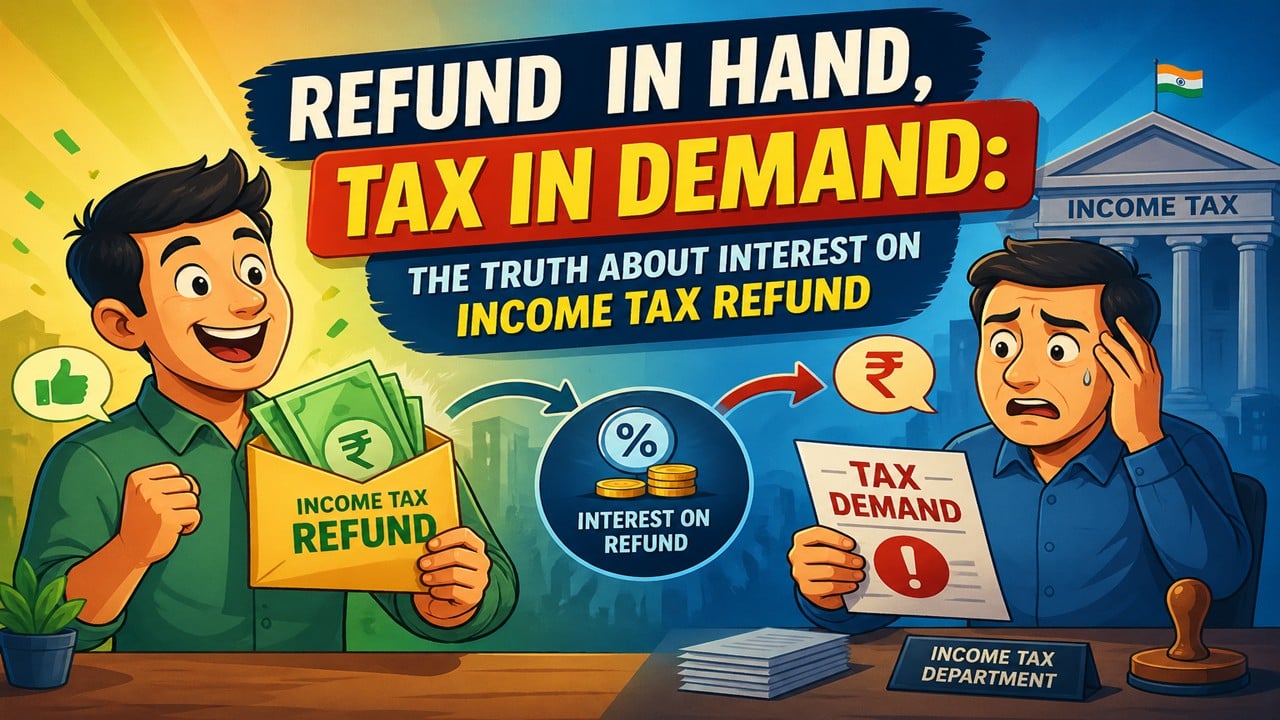
Income tax refund is not taxable, but Interest on refund is taxable under “Income from Other Sources” as per the Income-tax Act, 1961 and Income Tax Act, 2025, and must be reported in the year of receipt.
Income Tax Refund Interest Explained: The Small Amount That Can Trigger Big Tax
 Aishwarya Singh
 Apr 27, 2026
Refund in Hand, Tax in Demand: The Truth About Interest on Income Tax Refund
Understanding the Nature of Refund and Interest under Income Tax Law
The concept of an income tax refund arises when a taxpayer pays tax in excess of his actual liability during a financial year. Such excess payment may occur due to higher deduction of tax at source (TDS), excess advance tax, or self-assessment tax. Under the provisions of the Income-tax Act, 1961, the right to claim refund is governed by Section 237 of the relevant act, which provides that if any person satisfies the Assessing Officer that the amount of tax paid exceeds the amount properly chargeable, he shall be entitled to a refund of such excess amount. Correspondingly, under the Income Tax Act 2025, the refund mechanism has been codified under Section 431 of the Income tax, which similarly provides that a refund shall be granted where tax paid exceeds the actual liability for the relevant Tax Year. It is important to note that such refund is merely a return of the taxpayer’s own money and does not constitute income; hence, it is not chargeable to tax.
When you end up paying more tax than you should - may be because to much was cut as TDS or you pay extra as advance tax or self- assessment - you are entitled to get that extra back as a refund Both the old Act (Section 237) and the new Act (Section 431) say the same thing: If you can show the Assessing Officer that you paid more than you owed, you get your money back. And don't forget, a refund is just your money coming home; it's not income, so you don’t pay tax on it.
Interest on Refunds
Interest is a whole different story. If the Income Tax Department takes its time giving your refund, you get compensated with interest on the amount they held back. Under the old law, it was Section 244A. Now it’s Section 437 in the new Act. This section spells out that the government pays simple interest at 0.5% per month (6% per year) on your refund—calculated from either the start of April (if you filed your return on time) or from the actual filing date (if you filed late), all the way up to the day your refund hits your account.
When Interest Isn’t Paid
You won’t get interest if your refund is less than 10% of the total tax you owed for that year (Section 437(2)). If you caused the delay—say, by giving wrong info or ignoring notices—the days you created holdups won’t count for interest either. There’s also an extra 0.5% per month interest if your refund happens because of an order on an application you made (Section 437(3))
Is Interest on Refunds Taxable?
Absolutely, While the refund itself isn’t taxable, the interest you get on that refund is. Under both the old (Section 56, “Income from Other Sources”) and new law (Section 92), you have to report this interest as income under “Other Sources.” Supreme Court rulings have confirmed this—interest is seen as compensation and has no exemption.
When Should You Report the Interest?
Report the interest in the year you actually receive it, not when the tax was paid or the refund relates to. That keeps things simple; you pay tax on receipts as they come in. Make sure to declare the interest under “Income from Other Sources” in your tax return.
TDS on Interest and Claiming Credit
The tax department might deduct TDS from the interest before paying you the refund. Under both the old and new laws, TDS is applied (now under Sections 392 and 393). You’ll see this deduction in your Form 26AS and AIS, and you can claim credit for the TDS when you calculate your final tax owed.
Claiming Your Refund
To claim a refund, you have to file your income tax return. The new law (Section 433) makes this mandatory, just like in the old law. Also, the new Act uses “Tax Year” instead of the previous “Assessment Year” and “Previous Year.” That swap makes things clearer but doesn’t change how refunds and interest work.
Final Thoughts
In short, extra tax paid comes back to you as a refund and isn’t taxed. But any interest the tax department pays for holding onto your money is taxable, and need to disclose it properly. with the new act, most changes are structural section are renumbered and terminology is updated, but the salary stay the same. So, make sure you report the interest you earn, check your TDS credit, and files your return on time to keep everything above boards.

About Author


Aishwarya Singh
Legal Content Writer
 StudyCafe
 Delhi, Delhi, India
 92
92My Recent Articles
- ITAT Allows Fresh Opportunity to Trust Seeking Income Tax Exemption
- ITAT Upholds Section 11 Exemption for Gujarat Maritime Board Despite Commercial Receipt Allegations
- ITAT Ahmedabad Deletes Rs 52 Lakh Addition based on information received through Insight Portal
- ITAT Deletes Rs. 1.82 Crore Addition on Cash Held for Payments to Farmers During Demonetisation
- Company Penalised by ROC Delhi for Failure to File AOC-4 CFS Within Prescribed Timeline
Up Next
Loading suggestions…


Recent Posts



All Posts



Recent Posts
All Posts