The ITAT Bangalore held that GST refunds cannot be taxed under the exclusive accounting method and that duplicate CPC additions leading to double taxation are unsustainable in law.
Saloni Kumari | May 23, 2026 |
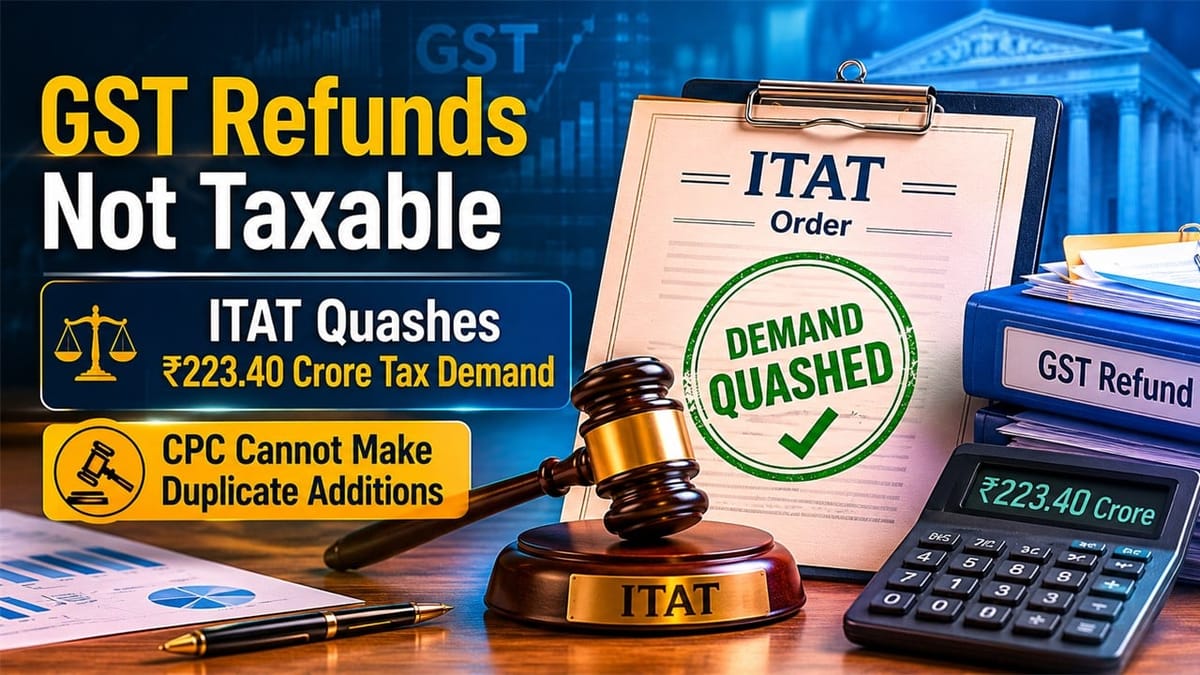

GST Refunds Not Taxable Under Exclusive Accounting Method: ITAT Quashes Rs 223.40 Crore Tax Demand
In a recent important decision, the ITAT Bangalore has provided significant relief to Dell International Services India Private Limited regarding changes made by the Central Processing Centre (CPC) while handling the company’s income tax returns under Section 143(1) of the Income Tax Act.
The assessee company had declared a total income of about Rs 2006.57 crore for the Assessment Year 2023-24, and claimed a refund amounting to Rs 3.42 crore on the same, along with interest under Section 244A of the Act. The CPC during return processing made three major additions: “addition for Goods and Service tax (GST), sales tax and service tax refunds not credited to the statement of profit and loss amounting to Rs 345,28,51,548; addition of margin on finished goods converted to capital assets amounting to Rs 14,37,29,950 and addition of bad debts recovered amounting to Rs 31,13,91,117.”

The CPC later increased the total taxable income of the assessee from Rs 2006.57 crore to Rs 2315.88 crore and raised a demand of Rs 223.40 crore. When the case was taken before the ITAT Bangalore, the assessee argued that it consistently followed the “exclusive method” of accounting for GST, where indirect taxes are recorded separately in balance sheet accounts and are not routed through the profit-and-loss account.
When the tribunal analysed the case, it held that when GST payments are not claimed as expenses in the profit and loss account, the related refunds cannot be treated as taxable income. The ITAT observed that the company had consistently followed this accounting method over the years, and the tax auditor had also confirmed that there was no impact on taxable profits.

On the second issue, the Tribunal found that the amount relating to the margin on finished goods converted into capital assets had already been voluntarily offered to tax by Dell in its return of income. Consequently, making an addition of the same amount again through CPC adjustments will result in double taxation, which is not justified as per the law.
In conclusion, the tribunal allowed both appeals of the assessee.

In case of any Doubt regarding Membership you can mail us at [email protected]
Join Studycafe's WhatsApp Group or Telegram Channel for Latest Updates on Government Job, Sarkari Naukri, Private Jobs, Income Tax, GST, Companies Act, Judgements and CA, CS, ICWA, and MUCH MORE!"