Cash Transactions that can land you in Income Tax Trouble:
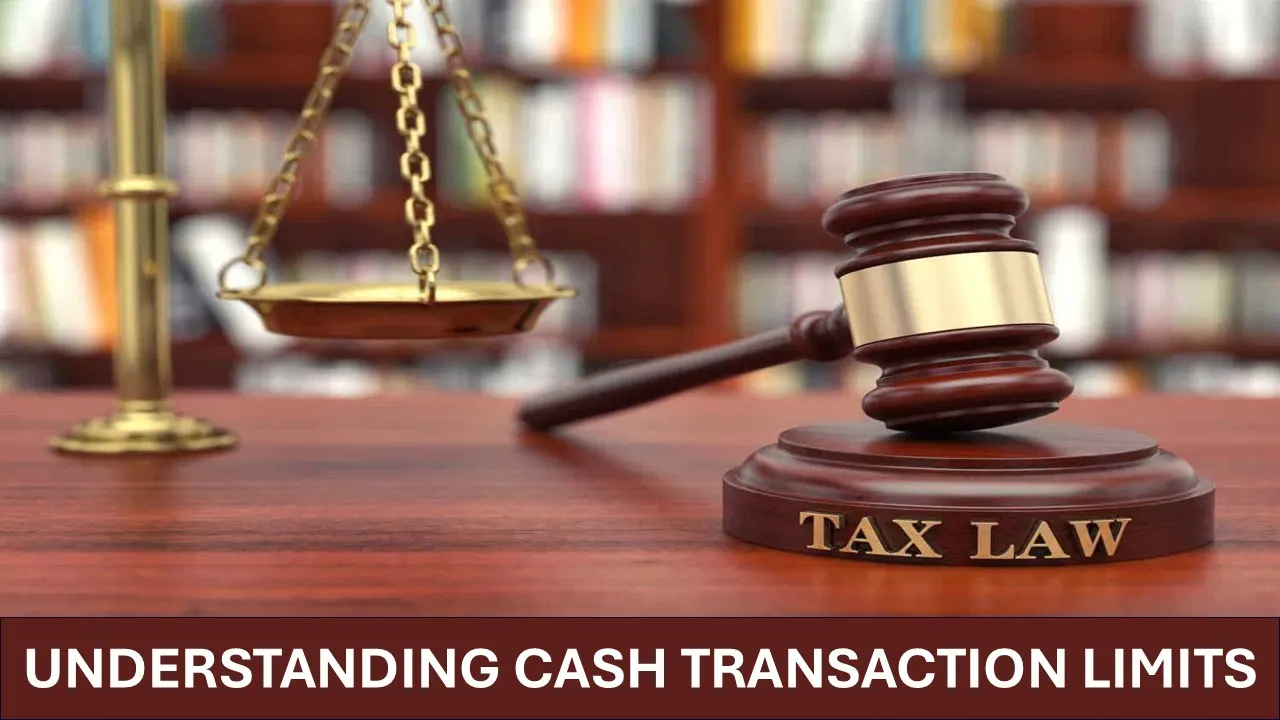
Cash dealings in India are regulated by different provisions in the Income Tax Act to help encourage a cashless economy and curb the circulation of black money
Understanding Cash Transaction Limits
 Janvi Koli
 May 15, 2025
Table of Contents

Cash Transactions that can land you in Income Tax Trouble
Cash dealings in India are regulated by different provisions in the Income Tax Act to help encourage a cashless economy and curb the circulation of black money. Let us discuss these provisions in plain language.
Cash Payment Restrictions for Business Expenses (Section 40A(3))
If you are paying more than Rs. 10,000 in cash for a business expenditure on one day to any person, you cannot claim it as a deduction from your taxable income. For it to qualify as a valid business expenditure, you must pay through- Account payee cheque
- Bank draft
- An electronic clearing system through a bank account
- Other specified electronic modes (credit/debit cards, NEFT, RTGS, UPI, etc.)
Solely Relevant Exceptions:
Payments exceeding these limits are permitted under certain conditions:- Payments to institutions such as the RBI, banks, and LIC
- Government payments that are mandated to be made in legal tender
- Payments through banking modes, such as letters of credit
- Book adjustments among accounts
- Payments to farmers against agricultural produce
- Payments against cottage industry products
- Remoteness village payments where banking facilities are not available
- Terminal employee payments to (maximum Rs. 50,000)
Restriction on Acceptance of Loans and Deposits (Section 269SS)
It is not allowed to accept loans, deposits, or advances for property transactions for Rs. 20,000 or above in cash. They need to be accepted through account payee cheques, drafts, or electronic means. The restriction holds when:- A loan/deposit is Rs. 20,000 or above
- Past non-receipt loans from the same individual amount to Rs. 20,000 or more
- The new loan and outstanding loans combined equal Rs. 20,000 or more
General Cash Receipt Restriction (Section 269ST)
No individual should receive Rs. 2 lakhs or more:- From one person in a day
- In one transaction
- For one event or occasion, related transactions
Electronic Payment Facilities (Section 269SU)
Businesses with a turnover of over Rs. 50 crores are required to provide facilities for the acceptance of payments through:- RuPay debit cards
- UPI (BHIM-UPI)
- UPI QR Code (BHIM-UPI QR Code)
Repayment of Deposits and Loans (Section 269T)
Repayment of deposits or loans of Rs. 20,000 or more (including interest) has to be done through account payee cheques, drafts, or electronic means. This provision is applicable when:- The single loan/deposit with interest is Rs. 20,000 or more
- The sum of all loans/deposits in the hands of the individual is Rs. 20,000 or more
- The total of advances received is Rs. 20,000 or more
Why These Restrictions Matter
These provisions are intended to:- Foster digital and traceable financial transactions
- Decrease the circulation of black money
- Establish an audit trail for large financial transactions
- Boost tax compliance
About Author


Janvi Koli
Digital Marketing Executive
Janvi is an expert content writer focused on taxation and compliance. She writes insightful articles on income tax, GST, company law, and government policies. Known for her practical approach, she simplifies complex regulations to help readers stay informed and compliant. She can be reached at [email protected]
Janvi is an expert content writer focused on taxation and compliance. She writes insightful articles on income tax, GST, company law, and government policies. Known for her practical approach, she simplifies complex regulations to help readers stay informed and compliant. She can be reached at [email protected]
 Studycafe
 Delhi, Delhi, India
 325
325My Recent Articles
- Ethereum Fundamentals for Finance Students through Understanding Blockchain Beyond Bitcoin
- Major Financial Changes Effective from November 1, Every Indian Should Aware Of
- Top 20 CA Firms in Mumbai for Articleship
- Know How to Setup EV Charging Stations: Step by Step Guide
- Unlock business growth this Independence Day with Bajaj Finserv Business Loan
Up Next
Loading suggestions…


Recent Posts


All Posts

Tags
No tags yet.
Recent Posts
All Posts
Tags
No tags yet.