Due date to file ITR Soon: What will happen if you miss?
Filing an income tax return is a must for anyone earning in India. It’s how you report your income to the tax department. Who needs to file and the rules depend on whether you’re an individual, company, firm, or other entity. Filing on time is important late or wrong returns can lead to fines or loss of benefits.
Due date of filing of return of income
- Companies (not required to file Form 3CEB): They must file their income tax return by October 31 of the assessment year. The Due Date was extended to 15th December 2025 for Financial Year 2024-25.
- Any person or company that must file Form 3CEB (Transfer Pricing cases): They need to file their return by November 30 of the assessment year.
- Any person (not a company) whose accounts must be audited under Income Tax Law or any other law: Their due date to file the return is October 31 of the assessment year. The Due Date was extended to 15th November 2025 for Financial Year 2024-25.
- A working partner in a firm whose accounts must be audited: They also must file their return by October 31 of the assessment year. The Due Date was extended to 15th November 2025 for Financial Year 2024-25.
- All other taxpayers: They must file their return by July 31 of the assessment year.
Belated Return
A belated return is an Income Tax Return (ITR)
filed after the original due date has passed. This is permitted under Section 139(4) of the Income Tax Act in
India, allowing taxpayers a second chance to meet their compliance obligations, albeit with specific
penalties and
restrictions. It can be filed at any time
three months before the end of the relevant assessment year or before completion of
assessment, whichever comes first.
Consequences of delay in filing the return of income
If a person files their income tax return late, there can be
several negative results. Here are the main
problems that can happen when you delay filing
your return:
- Losses (except house property loss) cannot be carried forward.
- Interest will be charged for late filing (Section 234A).
- A late filing fee must be paid (Section 234F).
- Exemptions under Sections 10A and 10B cannot be claimed.
Penalty
Fee for default in furnishing return of income will be
Rs 5,000. However, where the total income of the person does not exceed
Rs 500,000 the fee will not exceed
Rs 1,000.
Revision of return
Sometimes, while filing an income tax return, a taxpayer may forget to include some information or may make a mistake. If this happens, the taxpayer can correct the error by filing a revised return. A revised return can be filed anytime up to 3 months before the end of the assessment year or before the tax department finishes the assessment, whichever happens first. However, only returns filed on time under Section 139(1) or late returns filed under Section 139(4) can be revised.
Defective Return
Section 139(9) lists the situations where a
taxpayer’s income tax return can be considered defective, meaning it has missing information or required documents. If the
Assessing Officer finds that a return is defective under this section, then he may ask the
taxpayer to correct the
mistakes.
The taxpayer must fix the
mistakes in the return within
15 days from the date the tax
department informs them, or within any extra time the Assessing Officer may give. If the taxpayer does not
correct the
defect within this time, the return will be treated as
invalid, which means it will be considered as not filed at all, and all rules applying to non-filing of return will
apply.
A return of income will be
regarded as
defective unless all the following
conditions are met:
- All parts of the return related to calculating income under different heads, gross total income, and total income must be properly filled in.
- The return must include a statement showing how the tax payable is calculated.
- If the taxpayer needs an audit under Section 44AB, the return must include the audit report or proof that it was submitted earlier.
- The return must include proof of TDS/TCS, advance tax, or self-assessment tax paid; however, if the TDS/TCS certificate was not issued, the return is still valid if the certificate is produced later within the allowed two-year period.
- If regular books of accounts are maintained, copies of the trading/manufacturing account, profit and loss account, and balance sheet must be attached.
- Personal accounts of the proprietor, partners, or members must also be attached, depending on the type of business.
- If the accounts are audited, copies of audited statements and the auditor’s report must be included, along with any cost audit report if applicable.
- If books of accounts are not maintained, a statement of turnover, gross receipts, profits, expenses, and closing balances of debtors, creditors, stock, and cash must be attached.
Return of Income
It is compulsory for every taxpayer to
explain his/her income to the Income tax Department. Such details are to be reported in the
prescribed form known as
return of income.
Who is required to file the return of income?
The rules for filing an
income tax return depend on what type of
taxpayer you are. The details for each
type are explained below:
1.In the case of companies:
No matter if the company's
income is
profit or
loss, it has to file its return of income.
2.In the case of partnership firms:
It is compulsory for partnership firms,
including Limited Liability Partnership to file their return of income no matter if their income is
profit or
loss.
3.In the case of an Individual/HUF/AOP/BOI/Artificial Juridical Person:
Every person whether an individual,
HUF, AOP, BOI, or artificial legal entity, must file an income tax return if their total income (before applying any exemptions or deductions like section 10(38),
10A, 10B, 10BA 54, 54B, 54D, 54EC, 54F, 54G, 54GA, or
54GB or
Chapter VIA) is more than the basic tax-free limit.
4. In the case of Charitable or religious trusts:
If a charity or religious
trust receives income from its property or receives voluntary donations (referred to in section 2(24)(iia)), it must file an
income tax return if its total income before
applying exemptions under
sections 11 and
12 is more than the basic
exemption limit.
5. In the case of political parties:
The
Chief Executive Officer of every political party has to file the return of income of the party if the total income of the party before applying to the provisions of
section 13A exceeds the basic exemption limit.
6. In the case of certain associations:
Below mentioned are the
entities liable to file the return of income if their
total income before applying to section 10 is more than the
exemption limit:
- News agency referred to in section 10 (22B)
- Research association referred to in section 10 (21)
- Association or institution referred to in section 10 (23A)
- Person referred to in clause (23AAA) of section 10
- Institution referred to in section 10(23B)
- Fund, institution, trust, university or other educational institution, or any hospital or medical institution referred to in sub-clause (iiiac), (iiiab), (iiiad), (iiiae), (iv), (v), (vi) or (via) of section 10 (23C)
- Mutual Fund referred to in clause (23D) of section 10
- Securitisation trust referred to in clause (23DA) of section 10
- Investor Protection Fund referred to in clause (23EC) or clause (23ED) of section 10.
- Core Settlement Guarantee Fund referred to in clause (23EE) of section 10
- Venture capital company or venture capital fund referred to in clause (23FB) of section 10.
- Trade union/association referred to sub-clause (a) or (b) of section 10(24).
- Board or Authority referred to in clause (29A) of section 10.
- Body/authority/Board/Trust/Commission referred to in section 10(46)
- Infrastructure debt fund referred to in section 10(47)
7. In the case of a specific university, college or other institution
Any
university,
college, or similar
institution that is approved for
scientific or
social science research under section 35(1)(ii) or 35(1)(iii) must file an income tax return every year. This requirement applies even if the institution has no
income, has a
loss, or is not
required to file a return under any other provision of the
Income Tax Act.
8. In the case of Business Trust
Every business trust must file an
income tax return every year, even if it does not earn any income or even if it has a loss. This rule applies when the trust is not
required to file a return under any other section of the
Income Tax Act.
9. In the case of an investment fund referred to in section 115UB
Every investment
fund covered under
section 115UB must file an income tax return every year, even if it has no income or even if it has a loss, as long as it is not already
required to file a return under any other
section.
10. In the case of persons holding assets located outside India
A person who lives in
India and is not already required to file an income tax return under the earlier rules must still file a return if, at any time during the year, they have any kind of connection to
assets or accounts located outside India:
a) Owns or partly owns any asset outside
India, including shares or
investments in any foreign company, or has the authority to operate or sign on any
bank account or
financial account outside India.
b) is a
beneficiary of any asset located outside India.
Such a person must
file an income tax return by the due date, giving all required details about their income or loss for the year. However, this rule
does not apply if the
person is only a beneficiary of a
foreign asset and the income from that asset is already being included in the
tax return of the person who
actually owns or controls that asset.
Beneficial Owner
A
beneficial owner is the real person who
ultimately owns or controls a
company, asset, or
arrangement, even if the legal title is in another
person's or entity's
name.
Beneficiary
A beneficiary is a person or entity
designated to receive money, property, or other advantages from a
will,
trust, insurance policy, or other
financial account.
Mandatory filing of return in few cases
It is
compulsory for every individual except for a
company or a firm who is not required to
report income under any provisions of
section 139(1) to file a return of
income if during the previous year he:
1. Has
deposited an amount or total of amounts more than
Rs 1 crore in one or more
current accounts maintained with a bank or a
cooperative bank.
2. Has incurred
total expenditure of more than
Rs. 2 lakh for himself or any other person for travelling to a
foreign country.
3. Has
incurred total expenditure of more than
Rs 1 lakh towards payment of
electricity bill.
4. Satisfy other mentioned
conditions.
The Central Board of Direct Taxes (
CBDT) notified additional conditions under the
seventh proviso to section 139(1), where it mandated return filing through a
notification (No. 37/2022) on April 21, 2022. Following are such
additional conditions:
1. If total sales,
turnover or gross receipts of the business are more than Rs 60 lakh during the previous year
2. If the total gross
receipt of the profession exceeds
Rs. 10 lakh during the previous year
3. If the total of tax deducted and collected in the case of a person during the
previous year is
Rs 25,000 or more. The threshold limit shall be
Rs. 50,000 in the case of a resident individual of the age of
60 years or more or
4. If the
aggregate deposit in one or more
savings bank accounts of the person is
Rs. 50 lakhs or more during the previous year.
Return to be Verified by whom?
According to section 140, the return of income is to be verified by:
A. In the case of an individual:
i. The individual
should verify the return himself.
ii. If he is outside India, he or
someone he has officially authorised can verify the return.
iii. If he is mentally unable to manage his
affairs, his guardian or another responsible person can verify it.
iv. If he cannot
verify the return for any other valid reason, a person
authorised by him can do it on his
behalf.
B. For a Hindu Undivided Family (HUF), the return must be verified by the karta. If the karta is outside India or is mentally unable to handle his responsibilities, then any other adult member of the family can verify the return.
C. For a company, the income tax return must be verified by the
managing director. If the managing director cannot verify it for some valid reason, or if the
company does not have a managing director, then any director of the company can verify the
return.
Updated Return
An Updated Return
(ITR-U) is a special provision under
Section 139(8A) of the Indian Income Tax Act that allows a taxpayer to correct errors, disclose
omitted income, or file a return if the original and belated deadlines have passed. It offers a final
opportunity for voluntary compliance, but it comes with the
liability to pay additional tax and cannot be used to claim or increase a refund or report
losses.
Filling the return through Tax return Preparers
To help certain
groups of people file their income tax returns easily, the
government has introduced the Tax Return Preparer (TRP) Scheme. Under this scheme, these people can file their
returns with the help of a trained and authorized Tax Return
Preparer, who is allowed to assist them in
preparing and
submitting their returns.
Tax Return Preparer
A Tax Return Preparer (
TRP) is a trained person who is officially authorised under the TRP
Scheme to help people file their income tax returns. However, this
person cannot be someone who is already
covered under
section 288(2)(ii)/(iii)/(iv) such as lawyers or accountants allowed to
represent taxpayers or an employee of the person whose return is being
filed.
Specified class or classes of person
'Specified class of persons' means any
taxpayer who has to file an
income tax return, except companies and people whose accounts must be audited under
Section 44AB or any other
law.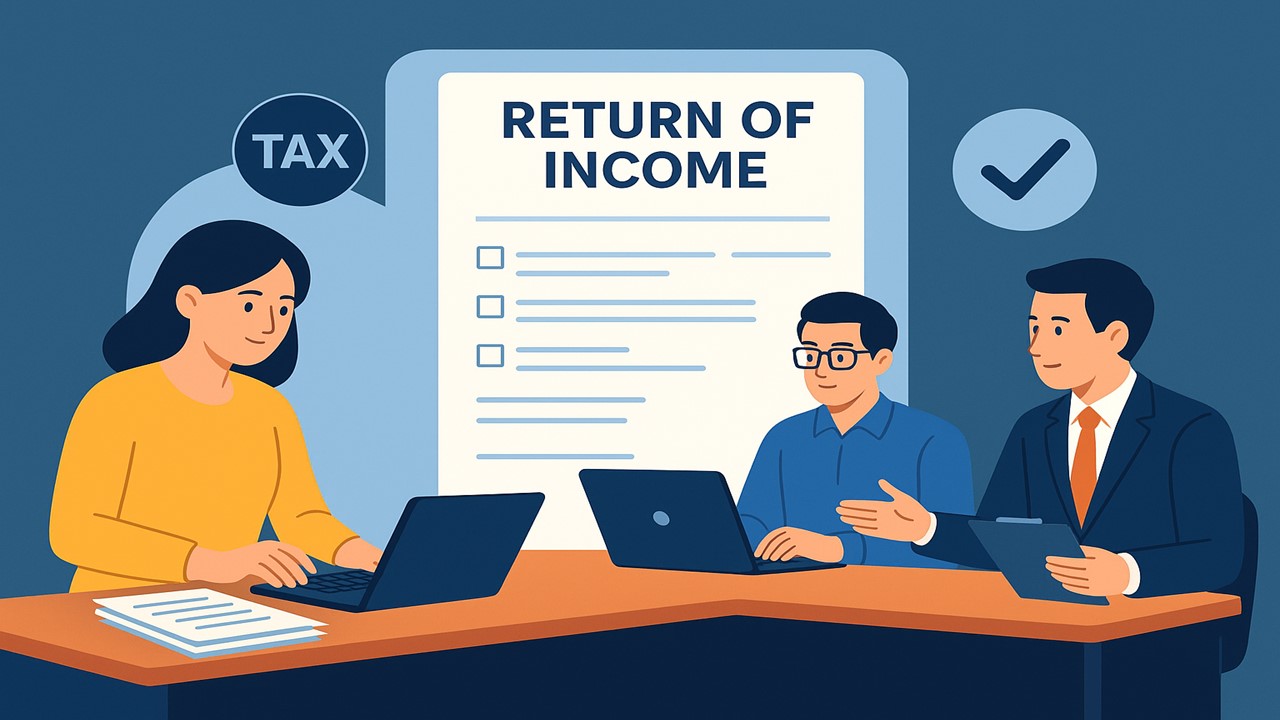
 Vanshika verma
 Nov 26, 2025




 Studycafe
 Delhi, Delhi, India
 2096
2096