Fake Purchases to Be Disallowed as Business Expense, Not Cash Credits: ITAT:
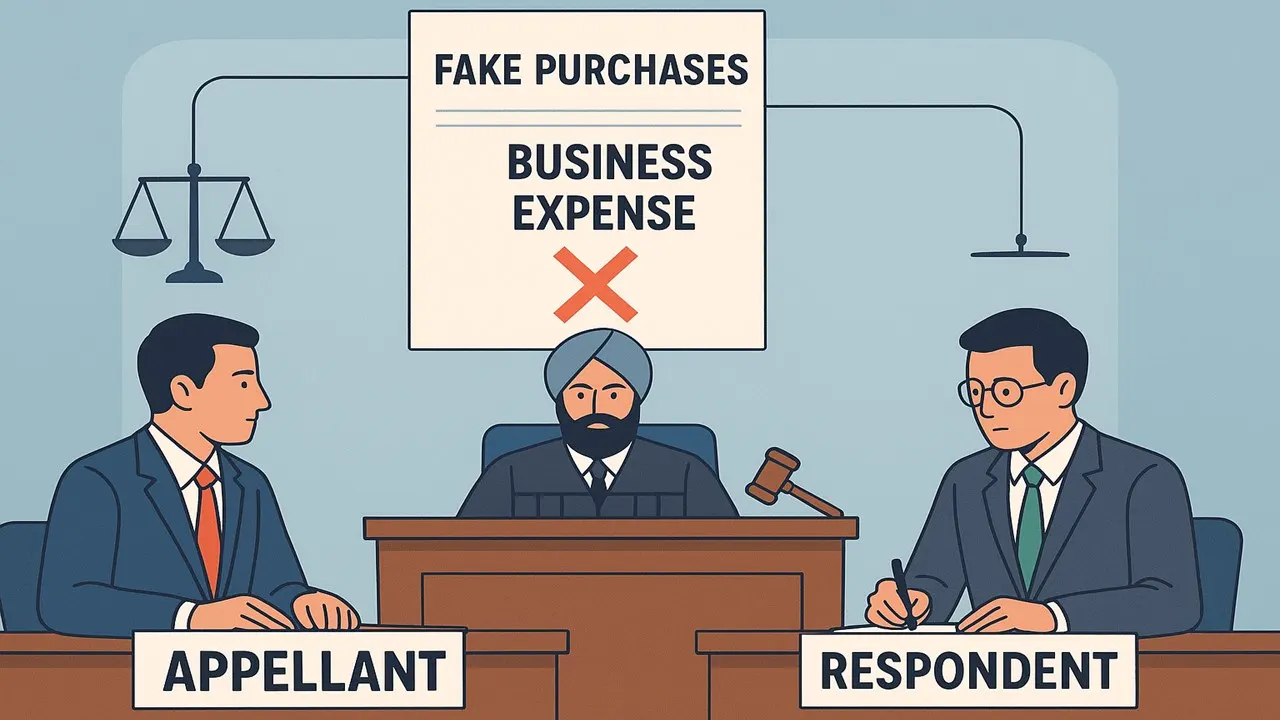
The ITAT Delhi restricts the disallowance of bogus purchases to 8% and treats it as a business expense instead of unexplained cash credits.
ITAT Delhi Limits Bogus Purchase Disallowance to 8%
 Saloni Kumari
 Nov 17, 2025
Fake Purchases to Be Disallowed as Business Expense, Not Cash Credits: ITAT
The appeals have been filed by a company named Prem Tube Co. Private Limited (Appellant) against the Income Tax Officer (ITO), Ward-20(1), New Delhi (Respondent), in the Income Tax Appellate Tribunal (ITAT) Delhi Bench ‘SMC’, New Delhi, before Sh. Satbeer Singh Godara (Judicial Member). The appeals are related to the assessment years 2018-19 and 2019-20. The case was heard on October 30, 2025, and the final decision was announced on October 20, 2025.
Both the appeals have been filed challenging CIT(A)/NFAC, Delhi’s DIN & order No. ITBA/NFAC/S/250/2025-26/1079370154(1) & 1079370333(1), both dated August 07, 2025. The assessee stated that the reason behind filing these identical twin appeals is that in both cases, the lower authorities were mistaken in law and treated their varying purchases from M/S GS Industries as unexplained cash credits under Section 68 in the assessments in question, as allowed in the lower appellate discussion.
The first initial argument of the assessee was that it had submitted all the required documents as evidence to the purchases in question. However, the records show that the assessee could not get these purchases verified or reconciled during the assessment or the appeal. Therefore, on this argument, the tribunal disagreed with the assessee and endorsed the Revenue that these purchases were correctly treated as fake.
The second argument was about how much the fake purchases should be disallowed; the lower authorities had disallowed the entire amount for both assessment years. The tribunal notes that the assessee’s sales have not been rejected. This means the assessee must have bought the goods from unrecorded sources and taken accommodation entries from M/s GS Industries.
Considering the above findings and to ensure fairness, the tribunal ruled that only 8% of the purchase amount should be disallowed for both the assessment years. However, this decision should not be taken as a precedent for any other case. The final calculation will be done according to the law.
In the final decision, the tribunal ruled that both the lower authorities were wrong in adding the fake purchases in question claimed as unexplained cash credits. The Income Tax Officer (ITO) should not deny that this is an expenditure claim rather than credit entries in the books of account of the assessee, which makes this a matter to be discussed further. Hence, the tribunal has directed the tax authorities to treat the assessee’s fake purchases in question as a business expenditure disallowance under Section 37 of the Act; after that, the tax should be calculated only under the normal provisions.
With the aforesaid directions, the twin appeals ITA Nos. 6004 & 6005/Del/2025 of the assessee have been partially allowed.
About Author


Saloni Kumari
Content Writer
Saloni is a Content Writer with 2+ years of experience at studycafe.in. She writes legal, taxation, and finance related content including GST, Income Tax etc. Skilled in translating complex judicial pronouncements and regulatory developments into clear, and reader-friendly articles. Experienced in covering judgements of ITAT, High Court, GSTAT, and news related to Income Tax, GST, and corporate law. She can be reached at [email protected].
Saloni is a Content Writer with 2+ years of experience at studycafe.in. She writes legal, taxation, and finance related content including GST, Income Tax etc. Skilled in translating complex judicial pronouncements and regulatory developments into clear, and reader-friendly articles. Experienced in covering judgements of ITAT, High Court, GSTAT, and news related to Income Tax, GST, and corporate law. She can be reached at [email protected].
 StudyCafe
 Delhi, Delhi, India
 2944
2944My Recent Articles
- ICAI CA Inter Sept 2026 Result OUT at caresults.icai.org, Check Steps to Download
- Section 148 Notice Without Manual or Digital Signature Invalidates Entire Reassessment Proceedings, Holds ITAT
- ITAT Holds Failure to Issue Draft Assessment Order Under Section 144B Invalidates Assessment Procedure
- TRACES to Soon Permit Cross-Year Challan Corrections Amid New Income Tax Act Transition
- SBI Discloses Customer Data Leak on Dark Web, Identifies 3,897 Records Containing Personally Identifiable Information
Up Next
Loading suggestions…


Recent Posts
All Posts
Tags
Recent Posts
All Posts