FAQ's Meaning and Scope of Supply GST
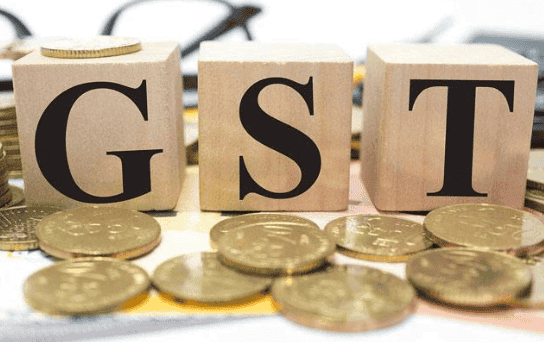
FAQ's Meaning and Scope of Supply GST The taxable event under GST shall be the supply of goods or services or both made for consideration in
 CA Deepak Gupta
 Jan 27, 2019
Table of Contents

FAQ's Meaning and Scope of Supply GST
The taxable event under GST shall be the supply of goods or services or both made for consideration in the course or furtherance of business. The taxable events under the existing indirect tax laws [i.e Service Tax, Excise, VAT etc.] such as manufacture, sale, or provision of services shall stand subsumed in the taxable event known as supply.
Below are the FAQ's on Meaning and Scope of Supply GST

These Frequently asked questions have been taken from Final GST FAQ 3rd Edition of December, 2018released by Central Board of Indirect Taxes (CBIC).
FAQ's Meaning and Scope of Supply GST
What is the taxable event under GST
Ans. The taxable event under GST shall be the supply of goods or services or both made for consideration in the course or furtherance of business. The taxable events under the existing indirect tax laws such as manufacture, sale, or provision of services shall stand subsumed in the taxable event known as supply.
What is the scope of supply under the GST law
Ans. The term supply is wide in its import covers all forms of supply of goods or services or both that includes sale, transfer, barter, exchange, license, rental, lease or disposal made or agreed to be made for a consideration by a person in the course or furtherance of business. It also includes import of service. The GST law also provides for including certain transactions made without consideration within the scope of supply.

What is a taxable supply
Ans. A taxable supply means a supply of goods or services or both which is chargeable to goods and services tax under the GST Act.
What are the necessary elements that constitute supply under CGST/SGST Act
Ans. In order to constitute a supply, the following elements are required to be satisfied, i.e.-
the activity involves supply of goods or services or both;
the supply is for a consideration unless otherwise specifically provided for;
the supply is made in the course or furtherance of business;
the supply is a taxable supply; and
the supply is made by a taxable person.
Can a transaction in which any one or more of the above criteria is not fulfilled, be still considered as supply under GST
Ans. Yes. Under certain circumstances such as import of services for a consideration whether or not in the course or furtherance of business (Section 7(1) (b)) or supplies made without consideration, specified under Schedule-I of CGST/SGST Act, where one or more ingredients specified in answer to question no.4 are not satisfied, it shall still be treated as supply for levy of GST.
Import of Goods is conspicuous by its absence in Section 7. Why
Ans. Import of goods is dealt separately under the Customs Act, 1962, wherein IGST and compensation cess (wherever applicable) shall be levied under the Customs Tariff Act, 1975 in addition to basic customs duty. Proviso to section 5(1) of IGST Act, 2017 may be referred to.
Are self-supplies taxable under GST
Ans. Inter-state self-supplies such as stock transfers, branch transfers or consignment sales shall be taxable under IGST even though such transactions may not involve payment of consideration. Every supplier is liable to register under the GST law in the State or Union territory from where he makes a taxable supply of goods or services or both in terms of Section 22 of the CGST Act. However, intra-state self-supplies are not taxable subject to not opting for registration as business vertical.
Whether transfer of title and/or possession is necessary for a transaction to constitute supply of goods
Ans. Title as well as possession both have to be transferred for a transaction to be considered as a supply of goods. In case title is not transferred, the transaction would be treated as supply of service in terms of Schedule II (1) (b). In some cases, possession may be transferred immediately but title may be transferred at a future date like in case of sale on approval basis or hire purchase arrangement. Such transactions will also be termed as supply of goods.
What do you mean by supply made in the course or furtherance of business
Ans. Business is defined under Section 2(17) include any trade, commerce, manufacture, profession, vocation, adventure or wager etc. whether or not undertaken for a pecuniary benefit. Business also includes any activity or transaction which is incidental or ancillary to the aforementioned listed activities. In addition, any activity undertaken by the Central Govt. or a State Govt. or any local authority in which they are engaged as public authority shall also be construed as business. From the above, it may be noted that any activity undertaken included in the definition for furtherance or promoting of a business could constitute a supply under GST law.
An individual buys a car for personal use and after a year sells it to a car dealer. Will the transaction be a supply in terms of CGST/SGST Act Give reasons for the answer.
Ans. No, because the sale of old and used car by an individual is not in the course or furtherance of business and hence does not constitute supply.
A dealer of air-conditioners permanently transfers an air conditioner from his stock in trade, for personal use at his residence. Will the transaction constitute a supply
Ans. Yes. As per Sl. No.1 of Schedule-I, permanent transfer or disposal of business assets where input tax credit has been availed on such assets shall constitute a supply under GST even where no consideration is involved.
Whether provision of service or goods by a club or association or society to its members will be treated as supply or not
Ans. Yes. Provision of facilities by a club, association, society or any such body to its members shall be treated as supply. This is included in the definition of business in section 2(17) of CGST/SGST Act.
What are the different types of supplies under the GST law
Ans. (i) Taxable and exempt supplies.
(ii) Inter-State and Intra-State supplies,
(iii) Composite and mixed supplies and
(iv) Zero rated supplies.
What are inter-state supplies and intra-state supplies
Ans. Inter-state and intra-state supplies have specifically been defined in Section 7(1), 7(2) and 8(1), 8(2) of the IGST Act respectively. Broadly, where the location of the supplier and the place of supply are in same state it will be intra- state and where it is in different states it will be inter-state supplies.
Whether transfer of right to use goods will be treated as supply of goods or supply of service Why
Ans. Transfer of right to use goods shall be treated as supply of service because there is no transfer of title in such supplies. Such transactions are specifically treated as supply of service in Schedule-II of CGST/SGST Act.
Whether Works contracts and Catering services will be treated as supply of goods or supply of services Why
Ans. Works contracts and catering services shall be treated as supply of services as both are specified under Sl. No. 6 (a) and (b) in Schedule-II of the GST law.
Whether supply of software would betreated as supply of goods or supply of services under GST law
Ans. Development, design, programming, customization, adaptation, upgradation, enhancement, implementation of information technology software shall be treated as supply of services as listed in Sl. No. 5 (2)(d) of Schedule II of the GST law.
Whether goods supplied on hire purchase basis will be treated as supply of goods or supply of services Why
Ans. Supply of goods on hire purchase shall be treated as supply of goods as there is transfer of title, albeit at a future date.
Are there any activities which are treated as neither a supply of goods nor a supply of services
Ans. Yes. As per Section 7(2) of CGST Act, 2017,
activities or transactions specified in Schedule III; or
such activities or transactions undertaken by the Central Government, a State Government or any local authority in which they are engaged as public authorities, as may be notified by the Government on the recommendations of the Council,
shall be treated neither as a supply of goods nor a supply of services.
Schedule-III of the GST law lists certain activities such as
(i) services by an employee to the employer in the course of or in relation to his employment,
(ii) services by any Court or Tribunal established under any law,
(iii) functions performed by members of Parliament, State Legislatures, members of the local authorities, Constitutional functionaries
(iv) services of funeral, burial, crematorium or mortuary and
(v) sale of land and
(vi), actionable claims other than lottery, betting and gambling shall be treated neither a supply of goods or supply of services.
Vide the CGST (Amendment), 2018, following transactions have also been inserted in the schedule-III:
(vii) Merchant Trading or Out and Out transactions: Supply of goods from a place in the non-taxable territory to another place in the non-taxable territory without such goods entering into India.
(viii) (a) Supply of goods while the same are still in Customs Bonded warehouse: Supply of warehoused goods to any person before clearance for home consumption;
(b) High Seas Sales: Supply of goods by the consignee to any other person, by endorsement of documents of title to the goods, after the goods have been dispatched from the port of origin located outside India but before clearance for home consumption.
What is meant by zero rated supply under GST
Ans. Zero rated supply means export of goods and/or services or supply of goods and/or services to a SEZ developer or a SEZ Unit.
Will import of services without consideration be taxable under GST
Ans. As a general principle, import of services without consideration will not be considered as supply under GST in terms of Section 7. However, import of services by a taxable person from a related person or from any of his other establishments outside India, in the course or furtherance of business, even without consideration will be treated as supply in terms of Sl. No.4 of Schedule I.
What is a Composite Supply under CGST/ SGST/UTGST Act
Ans. Composite Supply means a supply made by a taxable person to a recipient comprising two or more taxable supplies of goods or services, or any combination thereof, which are naturally bundled and supplied in conjunction with each other in the ordinary course of business, one of which is a principal supply.
Principal supply has been defined in Section 2(90) of the CGST Act as supply of goods or services which constitutes the predominant element of a composite supply and to which any other supply forming part of that composite supply is ancillary.
For example, where goods are packed and transported with insurance, the supply of goods, packing materials, transport and insurance is a composite supply and supply of goods is the principal supply.
How will tax liability on a composite supply be determined under GST
Ans. A composite supply comprising two or more taxable supplies, one of which is a principal supply, shall be treated as a supply of such principal supply. (Section 8(a) of CGST Act, 2017)
What is a mixed supply
Ans. Mixed Supply means two or more individual supplies of goods or services or any combination thereof, made in conjunction with each other by a taxable person for a single price where such supply does not constitute a composite supply. For example, a supply of package consisting of canned foods, sweets, chocolates, cakes, dry fruits, aerated drink and fruit juice when supplied for a single price is a mixed supply. Each of these items can be supplied separately and it is not dependent on any other. It shall not be a mixed supply if these items are supplied separately.
How will tax liability on a mixed supply be determined under GST
Ans. A mixed supply comprising two or more supplies shall be treated as supply of that particular supply which attracts the highest rate of tax.
Whether retreading of tyres is a supply of goods or services
Ans. In retreading of tyres, which is a composite supply, the pre-dominant element is the process of retreading which is a supply of service. Rubber used for retreading is an ancillary supply. Therefore, it is a supply of service.
On the other hand, supply of retreaded tyres, where the old tyres belong to the supplier of retreaded tyres, is a supply of goods (retreaded tyres under heading 4012 of the Customs Tariff)
(CBIC Circular No. 34/8/2018-GST dated 1st March, 2018)
Whether activity of bus body building, is a supply of goods or services
Ans. The classification would depend on which supply is the principal supply. In case, a bus body building company builds on the chassis owned by it and sells the completely built buses, it would be supply of goods. On the other hand, if the company builds the body on the chassis belonging to some else, it would be supply of services.
Whether foods supplied to the patients as part of the healthcare services in hospitals taxable
Ans. Health care services provided by the clinical establishments will include food supplied to the patients. Therefore, food supplied to the in-patients as advised by the doctor/nutritionists is a part of composite supply of healthcare and not separately taxable.
However, other supplies of food by a hospital to patients (not admitted) or their attendants or visitors are taxable.
(CBIC Circular No. 32/06/2018-GST dated 12th February, 2018)
Is the reverse charge mechanism applicable only to services
Ans. No, reverse charge applies to supplies of both goods and services, as notified by the Government on the recommendations of the GST Council. Notification no. 4/2017-Central Tax (Rate) dated 28/06/2017 as amended by notification no.43/2017-Central Tax (Rate) dated 14/11/2017 & notification no.11/2018-Central Tax (Rate) dated 28/05/2018 and 13/2017- Central Tax (Rate) dated 28/06/2017 as amended by notification no.33/2017-Central Tax (Rate) dated 13/10/2017 & notification no.03/2018-Central Tax (Rate) dated 25/01/2018 have been issued. Similar notifications have been issued under IGST Act also.
Reverse charge also applies to supplies received by a registered person from unregistered persons. However, the provision of reverse charge liability on supplies received from unregistered persons, as provided in sections 9 (4) and 5 (4) of the CGST Act and the IGST Act respectively, have been kept in abeyance till 30.09.2019.
Further as the recent CGST (Amendment) Act, 2018, section 9(4) shall only be applicable for specified class of registered persons which shall be notified by the government. However, the notification to bring the Act into effect is yet to be issued.
What are the supplies of goods under RCM
Ans.Supplies of goods under reverse charge mechanism:
|
S/No. |
Description of supply of Goods |
Supplier of goods |
Recipient of Goods |
|
1 |
Cashew nuts, not shelled or peeled |
Agriculturist |
Any registered person |
|
2 |
Bidi wrapper leaves (tendu) |
Agriculturist |
Any registered person |
|
3 |
Tobacco leaves |
Agriculturist |
Any registered person |
|
4 |
Silk yarn |
Any person who manufactures silk yarn from raw silk or silk worm cocoons for supply of silk yarn |
Any registered person |
|
4A |
Raw cotton |
Agriculturist |
Any registered person. |
|
5 |
Supply of lottery |
State Government, Union Territory or any local authority |
Lottery distributor or selling agent |
|
6 |
Used vehicles, seized and confiscated goods, old and used goods, waste and scrap |
Central Government, State Government, Union territory or a local authority |
Any registered person |
|
7 |
Priority Sector Lending Certificate (Notf. 11/2018 Central Tax (Rate) dt. 28.05.2018 |
Any registered person |
Any registered person |
Whether insurance service is under reverse charge
Ans. Service supplied by an insurance agent to any person carrying on insurance business, located in taxable territory is under the reverse charge mechanism. The Notification No. 3/2018- Central Tax (Rate) dated 25th January, 2018 defines insurance agent and takes the meaning from section 2(10) of the Insurance Act, 1938.
The insurance agent and corporate agent have different meaning and connotation in the insurance industry as well as under the insurance Act, 1938. The corporate agents along with insurance brokers, re-insurance brokers, insurance consultants, third party administrator, surveyors and loss assessors etc. are categorized as insurance intermediary and get excluded from reverse charge mechanism. They can pay GST under forward charge and claim input tax credit thereby avoiding cascading. Only individuals are covered under the reverse charge mechanism as insurance agent.
Click Here to Buy CA Final Pendrive Classes at Discounted Rate
About Author


CA Deepak Gupta
Co Founder
 StudyCafe
 Delhi, Delhi, India
 3423
3423My Recent Articles
- UltraTech Cement slapped with Rs. 808.78 Cr Income Tax Demand
- GST: High Court upheld constitutional validity of Section 16(2)(c), asks government to address ITC issues of genuine purchasers
- Old vs New Tax Regime for Tax Year 2026-27
- High court criticizes Income Tax Department for not releasing ITR Utilities despite 11 years of directions
- Fino Payments Bank CEO Rishi Gupta Gets Bail in GST Case, Bank Clarifies No Direct Link
Loading suggestions…


Recent Posts
All Posts
Tags
No tags yet.
Recent Posts
All Posts
Tags
No tags yet.