GST Council Proposes Major Reforms in Registration, ITC, Refunds and Arrest Rules:
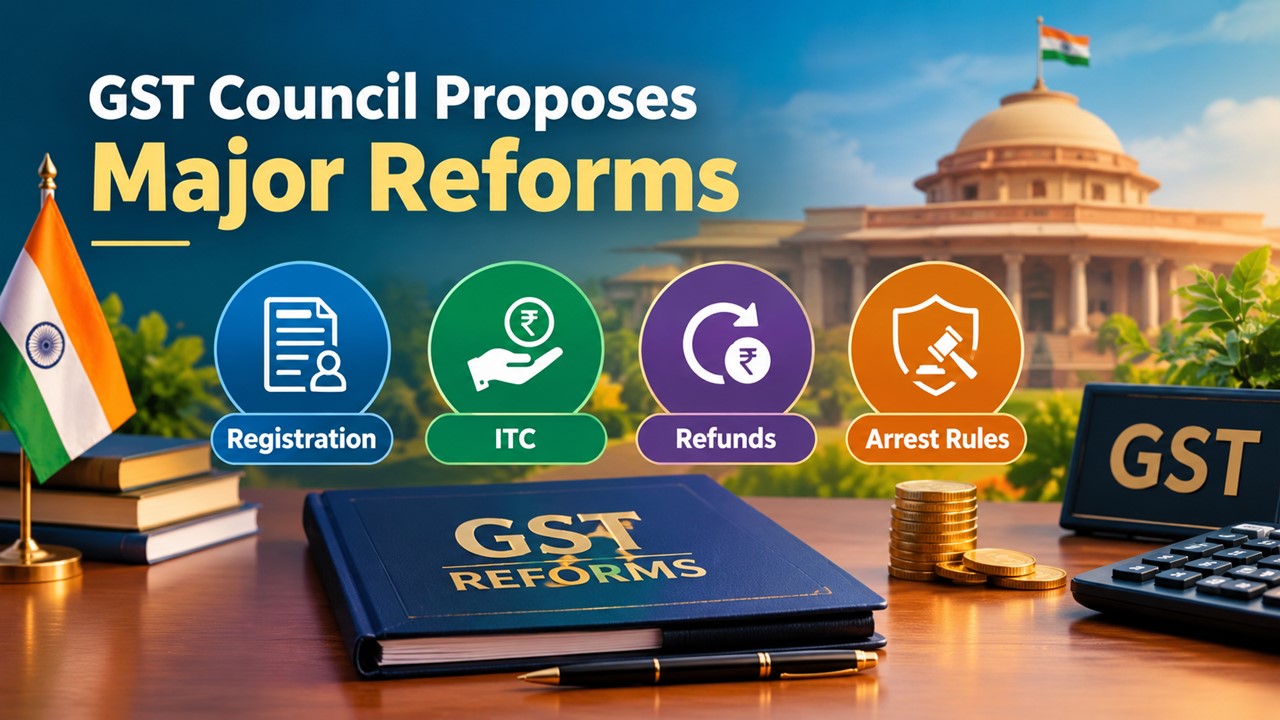
The 57th GST Council Meeting proposed major GST compliance, registration, ITC, refund and enforcement reforms while keeping GST rates unchanged.
Note On Outcomes of 57th Meeting of GST Council
 Saloni Kumari
 Oct 8, 2026
The Goods and Services Tax (GST) Council meeting held today (October 08, 2026) was focused primarily on simplifying GST procedures and improving ease of compliance, rather than changing tax rates. It has been observed by the council that taxable supplies increased by 25.8% to Rs 50.58 lakh crore per month, while GST revenue grew 11% in Financial Year 2026-27.
In the meeting, several registration reforms had been proposed. Registrations to low-risk taxpayers will continue to be granted automatically within three working days. Further, routine changes such as changes to the trade name, a director or partner, or the address of an additional place of business will be accepted automatically.

The council has proposed a simpler return filing process and correction mechanisms. The Invoice Management System will be used to settle input tax credit based on what the buyer accepts. Refund processing will also be faster, with the acknowledgement period reduced from 15 days to 10 days. The system will sanction 90% of eligible refund claims automatically based on risk assessment.
Major input tax credit (ITC) changes were also announced. ITC will be allowed on employee health and life insurance, certain telecom towers and pipelines, free samples and specified expired stock. Refunds under the inverted duty structure will now include input services from November 1, 2026, while refund of tax on plant and machinery will be introduced from April 1, 2027.

The Council also proposed automated business closure, simpler filing for small consumer-facing taxpayers, and restrictions on unnecessary roadside inspections of goods in transit. One of the proposals is also related to the arrest powers under GST. Arrest powers under GST are proposed to be removed, the prosecution threshold will rise from Rs 1 crore to Rs 5 crore, and the general penalty will fall between Rs 25,000 and Rs 10,000.
Export benefits will be provided to exporters, services provided through overseas branches and certain work performed in India on foreign-owned goods. Small sellers using e-commerce platforms will also get easier access to registrations in other States. The meeting has not suggested any changes in the GST rates.
About Author


Saloni Kumari
Content Writer
 StudyCafe
 Delhi, Delhi, India
 2879
2879My Recent Articles
- RBI Eases Foreign Exchange Compliance for Small Exporters and Freelancers
- Govt Fixes 7.1% Interest Rate on Special Deposit Scheme for Non-Government PF Funds From Oct to Dec 2026
- CBI Apprehends Principal of Eklavya Model Residential School, Nuapada, for Demanding Rs 20,000 Bribe
- RBI Announces Exclusion of Paytm Payments Bank Limited from Second Schedule of RBI Act, 1934
- ITAT Remands Rs 1.80 Crore Tax Dispute, Says Buyer’s Alleged Accommodation Entries Cannot Alone Trigger Section 68 Addition
Loading suggestions…


Recent Posts

All Posts

Recent Posts
All Posts