High Court Grants Conditional Relief in GST Cancellation Case:
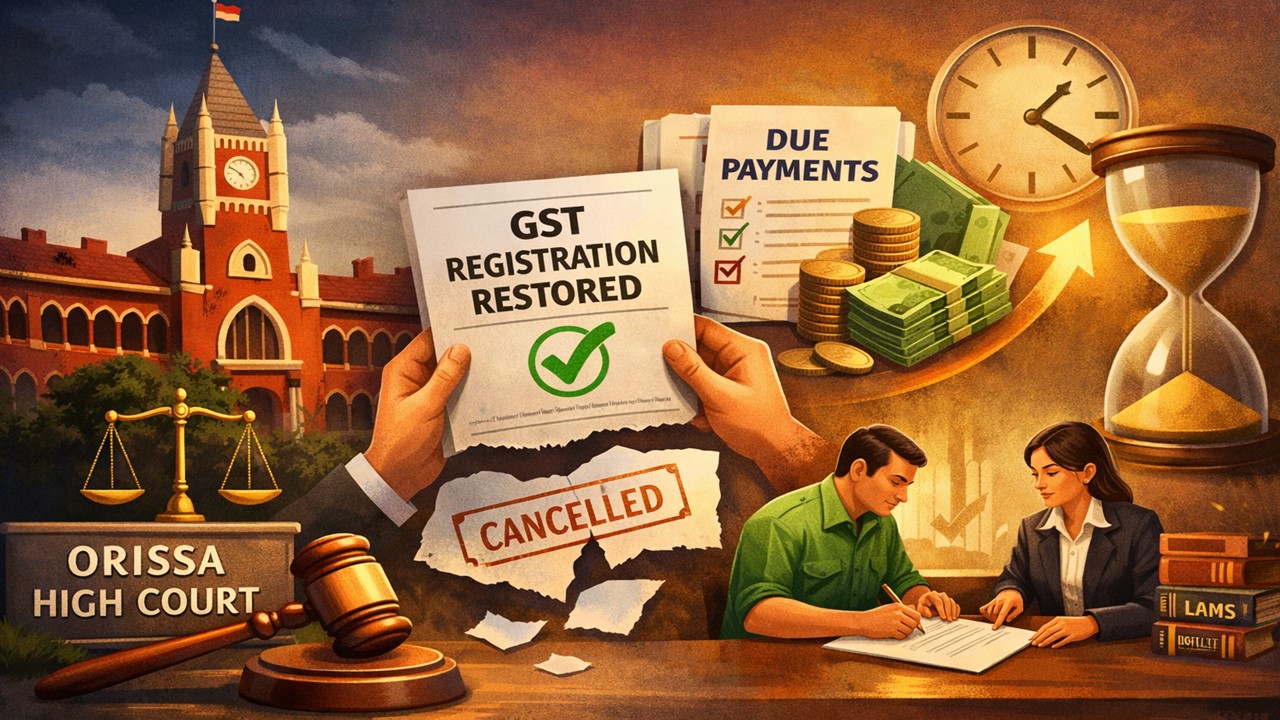
The Orissa High Court allowed GST registration restoration if the petitioner clears all pending dues and complies with legal formalities, treating the delay as excusable and granting conditional relief.
Taxpayer Gets Opportunity to Rectify Default in GST Compliance
 Kashish Bhardwaj
 Apr 12, 2026
High Court Grants Conditional Relief in GST Cancellation Case
The Orissa High Court said that if the petitioner deposits all the outstanding taxes, interest, late fees and other amounts and follows the necessary formalities, the department will consider his application for the restoration of GST registration in accordance with law. Considering the delay excusable, the Court granted relief to the petitioner and disposed of the appeal.
The Appeal in this case was filed by Buddhimanta Sahu against the Union of India and others. The appeal was filed in the Orissa High Court, Cuttack, under Article 226 of the Constitution regarding the cancellation of GST registration under the Central Goods and Services Tax Act, 2017, dated 19th December 2024. This appeal has been filed to challenge the show cause notice dated 6 November 2024 issued by the department regarding the registration of the petitioner, which was cancelled.
In this case, the GST registration of the petitioner has been cancelled by the Department on the grounds of not paying the tax, interest, late fee, penalty and anything else. The department had earlier issued a show-cause notice on November 6, 2024, seeking a reply from the petitioner within the stipulated time. The petitioner could not submit the reply in time, as a result of which the Department issued an order for cancellation of registration on 19 December 2024.
The petitioner approached the High Court challenging this order. The petitioner told the court that business activities were affected by the cancellation of registration, and the petitioner is now ready to file all the pending returns and deposit the outstanding tax, interest, late fees, and penalty. He also said that the delay was not deliberate and, if given an opportunity, the petitioner would comply with all legal formalities.
During the hearing, the petitioner also cited a similar case passed earlier, in which the court had given relief to the taxpayer by forgiving the delay. The Court also observed that cancellation of registration leads to a complete stoppage of business, making it more difficult for the taxpayer to comply. In this situation, the court took a fair and balanced approach. It ordered the petitioner to pay all pending taxes, interest, late fees, and any other dues and to file the required returns. After this ruling, the department will consider the application for restoration of registration as per the law. With these directions, the High Court disposed of the petition and granted limited relief to the petitioner
About Author


Kashish Bhardwaj
Content Writer
 StudyCafe
 Delhi, Delhi, India
 176
176My Recent Articles
- Supreme Court Judge Strength to Increase from 33 to 37 for Faster Justice
- Builder Cleared of Profiteering Charges After Passing Excess ITC Benefit to Homebuyers: GSTAT
- Jubilant Ingrevia to Challenge Rs 2.03 Crore GST Demand Before GSTAT
- Rs 70 Crore Claim Row: Ex-CFO Gobind Jain Moves Bombay High Court Against IndusInd Bank Over Alleged Wrongful Dismissal
- Dream Sports Launches Dream Street: AI-Powered Entry into India’s Retail Broking Market
Up Next
Loading suggestions…


Recent Posts
All Posts

Tags
Recent Posts
All Posts