High Court: Refund of GST Paid Twice Cannot Be Denied on Limitation; Article 265 Overrides Section 54:
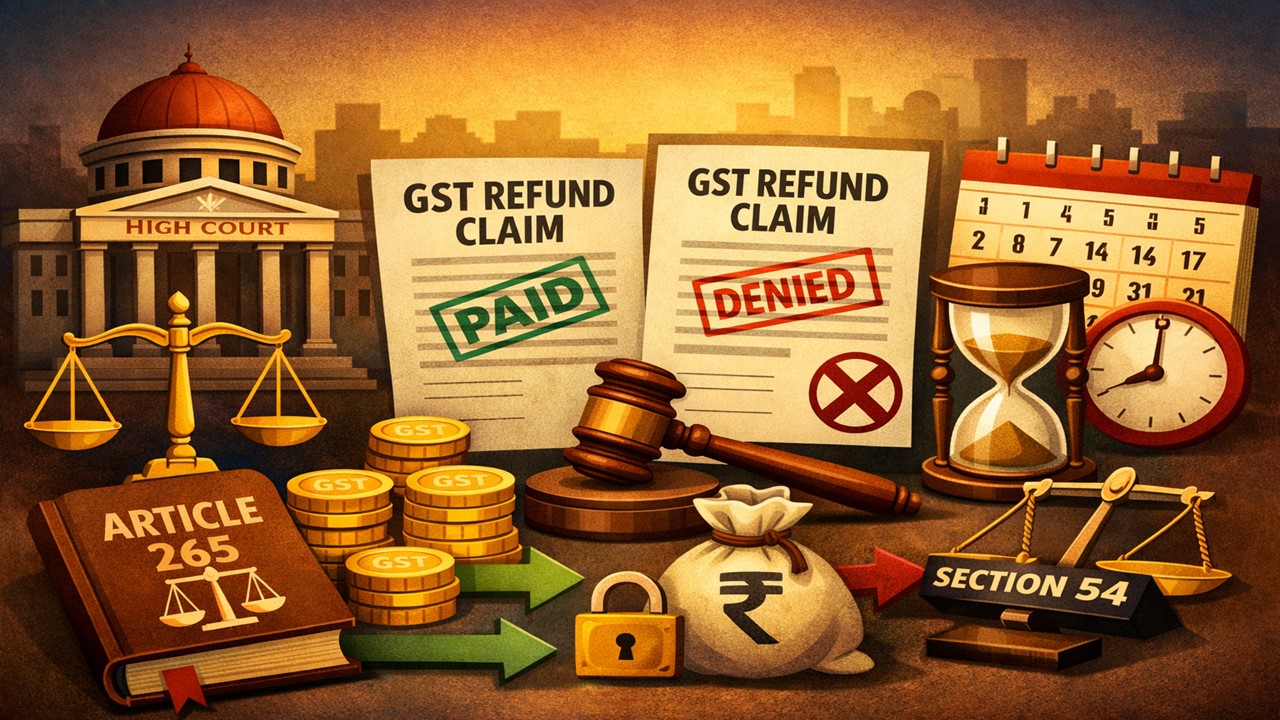
Statutory Limitation Periods Under Section 54 Do Not Apply to Taxes Paid Under a Mistake of Law
HC: GST Paid Twice Must Be Refunded; Section 54 Limitation Not Applicable
 Meetu Kumari
 Feb 28, 2026
High Court: Refund of GST Paid Twice Cannot Be Denied on Limitation; Article 265 Overrides Section 54
The petitioner, Rajendra Narayan Mohanty, was subject to a proceeding under Section 74 of the GST Act for the 2019-20 financial year after authorities noticed discrepancies in his returns. On February 8, 2021, the petitioner discharged the alleged tax liability of Rs. 12,03,290 using his Credit Ledger. However, acting on mistaken legal advice, he paid the exact same amount again on September 18, 2022, with Cash Ledger. After the underlying tax proceeding was dropped in November 2024, the petitioner sought a refund of the second payment.
The Revenue Department rejected the refund application on October 22, 2025, claiming it was filed beyond the two-year limitation period prescribed under Section 54 of the GST Act.
Issue Before Court: Whether the two-year limitation period under Section 54 of the GST Act applies to tax amounts deposited twice due to a mistake of law, and whether the Revenue can retain such payments under Article 265 of the Constitution.
HC Decided: The High Court set aside the rejection order and ruled in favor of the petitioner. The Court held that when a taxpayer deposits an amount under a "mistake of law," such a payment does not take the color of "tax" legally due to the State. Thus, the strict two-year limitation period in Section 54 of the GST Act does not apply.
The Court applied Article 265 of the Constitution, which prohibits the collection of tax without the authority of law, and Section 17 of the Limitation Act, which allows for claims within three years from the discovery of a mistake. The Bench emphasized that the Revenue is not justified in retaining double payments for the same transaction and directed the Joint Commissioner to process a fresh refund application.
To Read Full Judgment, Download PDF Given Below
About Author


Meetu Kumari
Content Manager
Meetu Kumari is an Experienced Advocate and Content Writer with 4+ years of demonstrated history of working in the law practice industry. Skilled in Developing Content, Researching, and Drafting. Strong professional with a Bachelor of Science (B.Sc.) focused on Law from Gujarat National Law University.
Meetu Kumari is an Experienced Advocate and Content Writer with 4+ years of demonstrated history of working in the law practice industry. Skilled in Developing Content, Researching, and Drafting. Strong professional with a Bachelor of Science (B.Sc.) focused on Law from Gujarat National Law University.
 Studycafe
 Jodhpur, Rajasthan, India
 2264
2264My Recent Articles
- ITAT Condones 302-Day Delay, Restores Salary Assessment for Fresh VerificationPremium
- ITAT Condones Delay After Tax Consultant's Death, Restores Appeals for Fresh HearingPremium
- ITAT Remands Salary Addition, Says Taxability Depends on Salary Becoming Due, Not Mere ReceiptPremium
- ITAT Deletes TP Royalty Adjustment, Orders Fresh Review of Commission BenchmarkingPremium
- ITAT Quashes Reassessment Over Unsigned Section 148 Notice Issued to AssesseePremium
Up Next
Loading suggestions…


Recent Posts


All Posts

Recent Posts
All Posts