Supreme Court Holds ‘Sharbat Rooh Afza’ Taxable as Fruit Drink at 4% Under UPVAT, Not Residuary 12.5%:
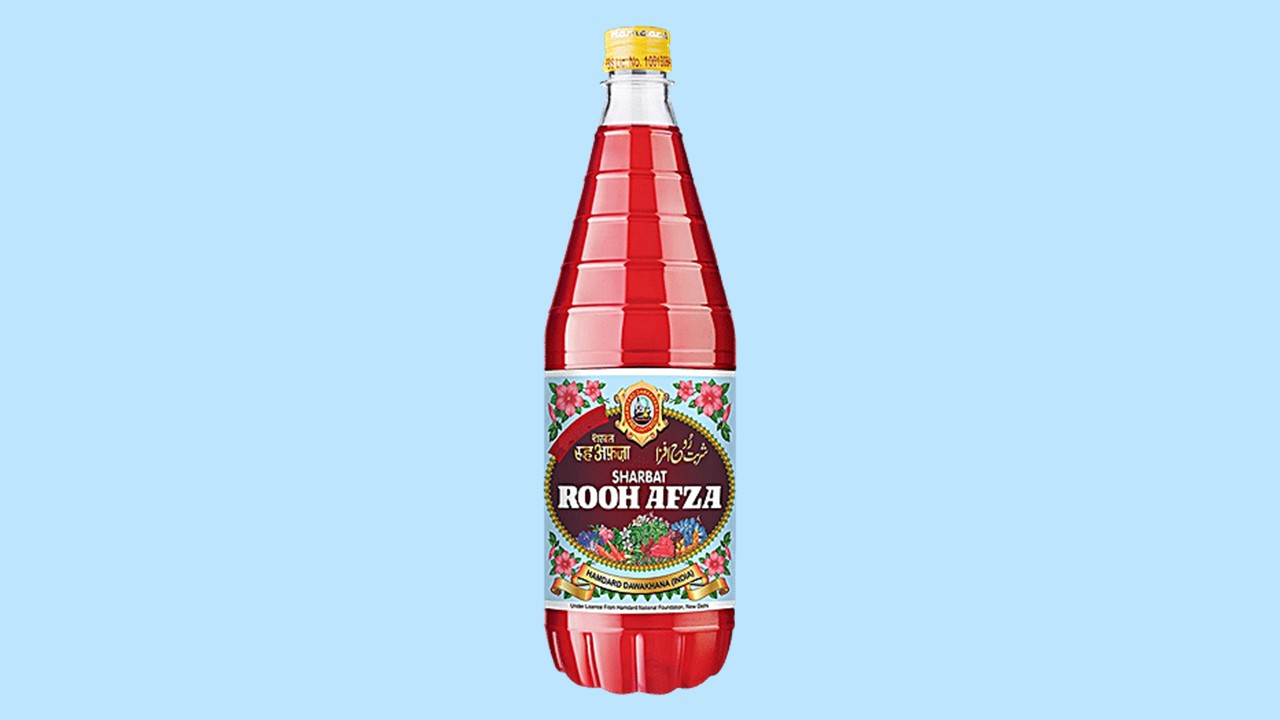
Regulatory labelling as “non-fruit syrup” under food laws cannot override fiscal classification: Supreme Court
Supreme Court Holds ‘Sharbat Rooh Afza’ Taxable as Fruit Drink at 4% Under UPVAT
 Meetu Kumari
 Feb 28, 2026
Supreme Court Holds ‘Sharbat Rooh Afza’ Taxable as Fruit Drink at 4% Under UPVAT, Not Residuary 12.5%
The appellant, Hamdard Laboratories (India), manufactures "Sharbat Rooh Afza," a product with a legacy dating back to 1907. The dispute centered on the classification of this product under the Uttar Pradesh Trade Tax Act, 1948, and the later Value Added Tax (VAT) Act.
The Revenue Department continuously attempted to classify Rooh Afza as "non-alcoholic beverages" or "soft drinks," which attracted a higher tax rate of 12.5% to 15%. Hamdard argued that because the product contains 25% orange juice and 2.5% pineapple juice, satisfying the 25% fruit juice threshol, it should be classified as a "Fruit Drink/Syrup" or "Fruit Juice," attracting a lower tax rate of 4% to 5%. After the High Court ruled in 2018 and 2022 that the product was a beverage, Hamdard appealed to the Supreme Court.
Main Issue: Whether "Sharbat Rooh Afza" should be classified as a "Fruit Drink/Syrup" taxable at 4-5% or as a "Non-alcoholic beverage/Soft Drink" taxable at 12.5-15% based on its composition and common parlance.
SC's Decision The Supreme Court set aside the High Court judgments, ruling in favor of Hamdard Laboratories. The Court applied the "Common Parlance Test" and the "Composition Test," noting that Rooh Afza is sold as a concentrate to be diluted, unlike ready-to-drink soft drinks.
The Court observed that the product contains 27.5% fruit juice, which squarely places it within the category of "Fruit Syrup" as defined by the Fruit Products Order (FPO), 1955. The Bench held that once a product qualifies under a specific entry like "Fruit Syrup," it cannot be relegated to a general category like "beverages". Therefore, the Court held that the product is taxable at the lower rate applicable to fruit products.
To Read Full Judgment, Download PDF Given Below
About Author


Meetu Kumari
Content Manager
Meetu Kumari is an Experienced Advocate and Content Writer with 4+ years of demonstrated history of working in the law practice industry. Skilled in Developing Content, Researching, and Drafting. Strong professional with a Bachelor of Science (B.Sc.) focused on Law from Gujarat National Law University.
Meetu Kumari is an Experienced Advocate and Content Writer with 4+ years of demonstrated history of working in the law practice industry. Skilled in Developing Content, Researching, and Drafting. Strong professional with a Bachelor of Science (B.Sc.) focused on Law from Gujarat National Law University.
 Studycafe
 Jodhpur, Rajasthan, India
 2264
2264My Recent Articles
- ITAT Condones 302-Day Delay, Restores Salary Assessment for Fresh VerificationPremium
- ITAT Condones Delay After Tax Consultant's Death, Restores Appeals for Fresh HearingPremium
- ITAT Remands Salary Addition, Says Taxability Depends on Salary Becoming Due, Not Mere ReceiptPremium
- ITAT Deletes TP Royalty Adjustment, Orders Fresh Review of Commission BenchmarkingPremium
- ITAT Quashes Reassessment Over Unsigned Section 148 Notice Issued to AssesseePremium
Up Next
Loading suggestions…


Recent Posts


All Posts



Recent Posts
All Posts