Income Tax Addition Based on WhatsApp Messages Invalid: ITAT:
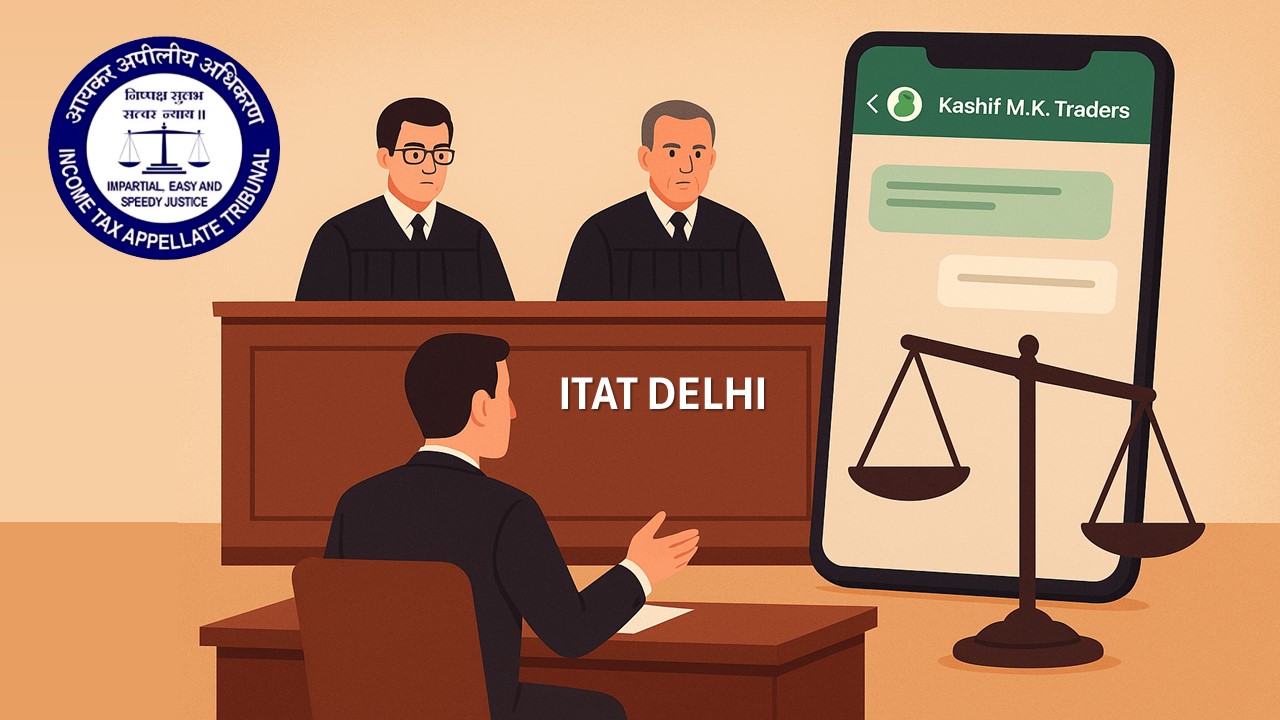
The ITAT Delhi allows the appeal, holding that salary disallowance and additions based on uncertified WhatsApp chats are unjustified and lack proper evidentiary support.
Tribunal Rules in Favor of Assessee on Electronic Evidence and Salary Dispute
 Saloni Kumari
 Nov 5, 2025
Income Tax Addition Based on WhatsApp Messages Invalid: ITAT
The present appeal has been filed by a company named M/s. LSL Tools (P) Limited, Gurugram, Haryana (Appellant), having PAN no. AABCK7484L, against ACIT Central Circle-1, Faridabad (Respondent), in the Income Tax Appellate Tribunal (ITAT) Delhi Bench ‘E’: New Delhi before Shri S. Rifaur Rahman (Accountant Member) and Shri Anubhav Sharma (Judicial Member). The case was heard in the court on August 06, 2025, and was decided on October 30, 2025.
Through the current appeal, the assessee challenged orders dated 11.11.2024 and 25.11.2024 relating to the assessment years 2020-21 and 2021-22, respectively, issued by CIT(A). As the issues in both orders are connected to each other, they have been heard simultaneously. On November 10, 2021, the Revenue conducted a seizure operation under section 132 of the Income-tax Act, 1961, at the residential as well as office location of the assessee.
On November 20, 2022, the assessee filed its income tax return (ITR), declaring a total income amounting to Rs. 35.67 crore. Later, the return was selected for the purpose of inspection, and thereafter, notices were issued under Sections 143(2) and 142(1) of the Act via the ITBA Portal. In response to the notices, the assessee filed its reply. At the time of the personal hearing, the authorised representative of the assessee highlighted Ground Nos. 4 to 4.3 and Ground No. 5 only (listed in the official judgement). The representative either talked about any other grounds or made any submissions to them.
Key Issues Raised by the Assessee
- Jurisdiction Issue: Claims the assessment order is invalid, as jurisdiction was transferred after notice was issued.
- No Valid Approval Under Section 153D: Argues assessment is without mandatory approval.
- Disallowance of Salary (Rs. 44.10 Lakhs) Paid to Director: AO disallowed salary paid to Ms Priti Singla under Section 40A(2)(b), claiming she was not qualified or involved.
- Addition of Rs. 5 Lakhs for Alleged Cash Sales: AO alleges unrecorded profit based on WhatsApp chats.
- Imposition of Interest Under Section 234C: Assessee contends interest is not applicable. Only issues related to salary disallowance and the addition of cash sales were pressed during the hearing.
- The AO relied on statements made by Ms Priti Singla under oath during the search, where she admitted lack of knowledge and involvement.
- The assessee argued that salary is taxed in her hands; disallowing it in the company's hands leads to double taxation.
- Disallowance based only on a statement, without any proof of its bogus nature, is invalid.
- Several case laws support that disallowance cannot be based on suspicion or mere statements.
- AO assumed undisclosed sales based on a WhatsApp chat with "Kashif M.K. Traders".
- Assessee clarified that no such cash sales were made; Vikas Singla (director) denied any cash deal.
- No independent verification was done by AO (e.g., issuing notices to the alleged party).
- The assessee argued that no proper evidence was found to prove cash sales. WhatsApp chats are unreliable without Section 65B certification. The addition is made on assumptions and is unjustified.

About Author


Saloni Kumari
Content Writer
Saloni is a Content Writer with 2+ years of experience at studycafe.in. She writes legal, taxation, and finance related content including GST, Income Tax etc. Skilled in translating complex judicial pronouncements and regulatory developments into clear, and reader-friendly articles. Experienced in covering judgements of ITAT, High Court, GSTAT, and news related to Income Tax, GST, and corporate law. She can be reached at [email protected].
Saloni is a Content Writer with 2+ years of experience at studycafe.in. She writes legal, taxation, and finance related content including GST, Income Tax etc. Skilled in translating complex judicial pronouncements and regulatory developments into clear, and reader-friendly articles. Experienced in covering judgements of ITAT, High Court, GSTAT, and news related to Income Tax, GST, and corporate law. She can be reached at [email protected].
 StudyCafe
 Delhi, Delhi, India
 2924
2924My Recent Articles
- Major Relief in Arbitration Case: MCIA Denies Rs 908 Crore Statement Claim Made by Allied Silica Against Tata Chemicals
- MCA and ICSI to Hold User Awareness Session on Form AOC-4 Filing Amid Glitches on MCA-21 Version-3 Portal
- GSTN Introduces New E-Invoicing Facility for Self-Invoices Under Reverse Charge Mechanism
- Flexi Cap vs Multi Cap Funds: What's the Real Difference?
- IBA Recommends Public Sector Banks to Reduce Ambit of Physical Branch Audits to 50% of Total Business
Up Next
Loading suggestions…


Recent Posts
All Posts

Tags
Recent Posts
All Posts