ITAT Delhi Quashes Section 263 Revision: MAT Not Applicable on Foreign Entity in Absence of PE:
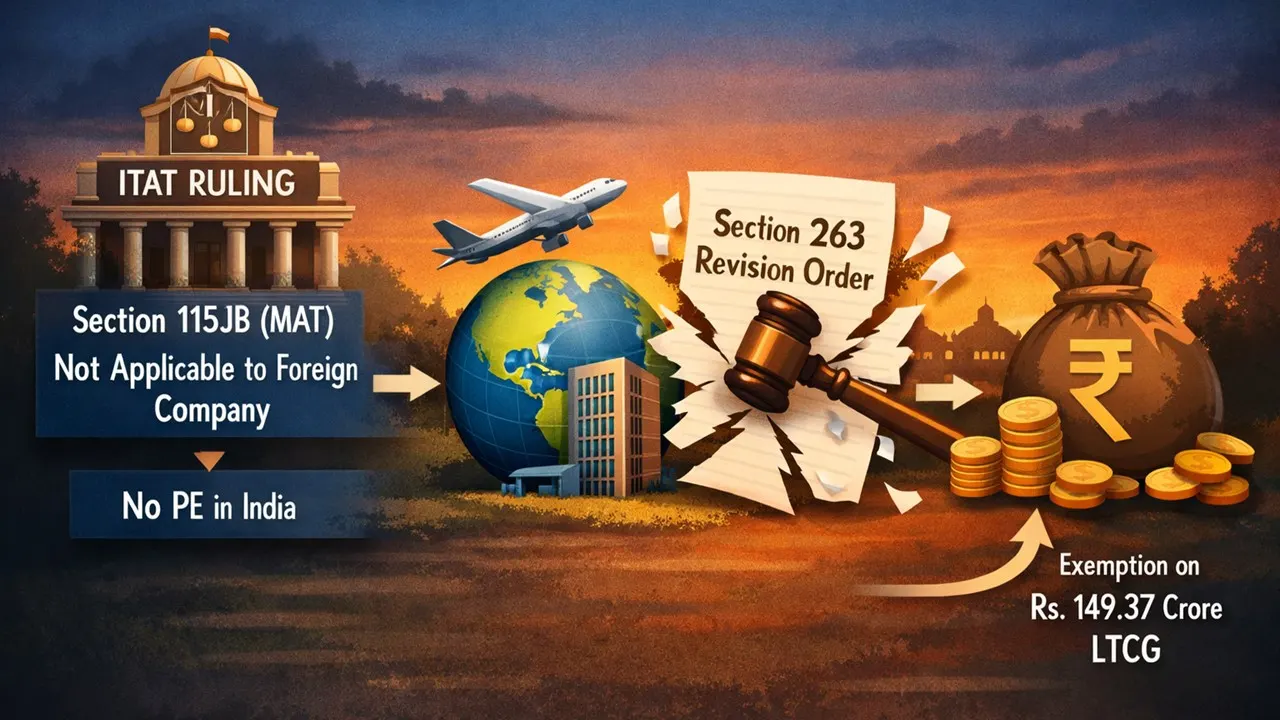
ITAT held that Section 115JB (MAT) does not apply to a foreign company without a PE in India and quashed the Section 263 revision order, allowing exemption on Rs. 149.37 crore LTCG.
ITAT Delhi Allows Appeal in Rs 149 Crore LTCG Case
 Saloni Kumari
 Mar 2, 2026
ITAT Delhi Quashes Section 263 Revision: MAT Not Applicable on Foreign Entity in Absence of PE
The Income Tax Appellate Tribunal (ITAT) Delhi Bench “D” has delivered its judgement on an appeal filed by Sandstone Investment Partners I against the DCIT (Deputy Commissioner of Income Tax), challenging an order dated March 24, 2022, passed by the CIT(A) under Section 263 of the Income Tax Act. The case belongs to the Assessment Year 2017-18.
The assessee had earned a long-term capital gain (LTCG) amounting to Rs 149.37 crore from the sale of listed shares in India. The assessee had paid Securities Transaction Tax (STT) on this sale. The assessee claimed exemption on this gain under Article 13(4) of the India-Mauritius Double Taxation Avoidance Agreement (DTAA) and also under Section 10(38) of the Income Tax Act. The assessee filed its income tax return (ITR) for the year in consideration, declaring NIL income. The Assessing Officer (AO) accepted the assessee's return after inspection.
However, the Commissioner later revised the assessee's assessment under Section 263, raising allegations against the AO that he did not properly scrutinise the assessee's return and holding that the LTCG should be taxed under Section 115JB (Minimum Alternate Tax provisions). The Commissioner also challenged the company’s eligibility for treaty benefits, alleging treaty shopping and a lack of commercial substance.
The assessee, aggrieved with the aforementioned action, filed an appeal before the ITAT Delhi. When the tribunal analysed the facts, it noted that AO had properly examined the case and all the documents related to the case. Therefore, the tribunal quashed the impugned revision order, holding that Section 263 can be invoked only if the assessment order is both erroneous and prejudicial to revenue, which was not the case here.
The key point flagged by the tribunal in the present case is that Explanation 4 to Section 115JB clearly provides that MAT provisions do not apply to a foreign company having no Permanent Establishment (PE) in India. Therefore, Section 115JB was not applicable. Since the assessee did not possess any PE in India and the gains were otherwise exempt under Section 10(38), the capital gains were not taxable. Accordingly, the appeal was allowed in favour of the assessee.
About Author


Saloni Kumari
Content Writer
Saloni is a Content Writer with 2+ years of experience at studycafe.in. She writes legal, taxation, and finance related content including GST, Income Tax etc. Skilled in translating complex judicial pronouncements and regulatory developments into clear, and reader-friendly articles. Experienced in covering judgements of ITAT, High Court, GSTAT, and news related to Income Tax, GST, and corporate law. She can be reached at [email protected].
Saloni is a Content Writer with 2+ years of experience at studycafe.in. She writes legal, taxation, and finance related content including GST, Income Tax etc. Skilled in translating complex judicial pronouncements and regulatory developments into clear, and reader-friendly articles. Experienced in covering judgements of ITAT, High Court, GSTAT, and news related to Income Tax, GST, and corporate law. She can be reached at [email protected].
 StudyCafe
 Delhi, Delhi, India
 2948
2948My Recent Articles
- Maharashtra Govt Eases Registration of Jointly Owned Land Sales, ‘KA’ Copy Can Replace Co-Owners’ NOC
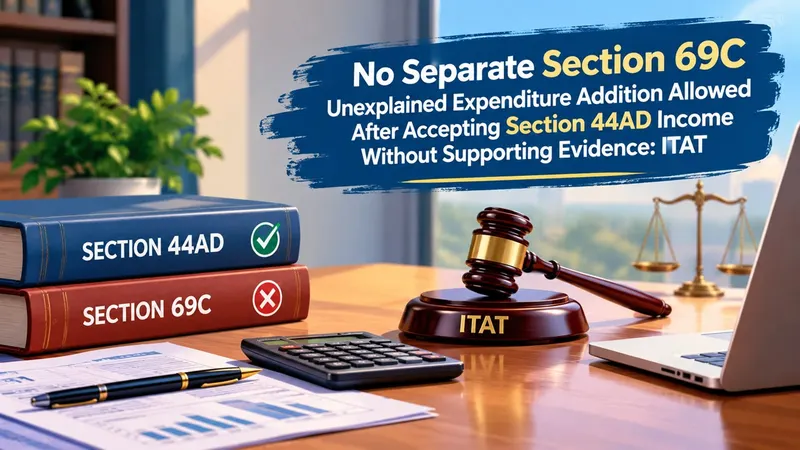
- No Separate Section 69C Unexplained Expenditure Addition Allowed After Accepting Section 44AD Income Without Supporting Evidence: ITAT
- RBI Imposes Restrictions on Puducherry Co-operative Urban Bank for Six Months, Caps Cash Withdrawals at Rs 5,000
- ICAI Opens Application Window for Empanelment of Members to Act as Observer at CA January 2027 Exams
- ICAI CA Inter Sept 2026 Result OUT at caresults.icai.org, Check Steps to Download
Up Next
Loading suggestions…


Recent Posts


All Posts



Tags
Recent Posts
All Posts