ITAT Delhi Rules Salary Reimbursements to Seconded Employees Are Genuine Not FTS; Favours Company:
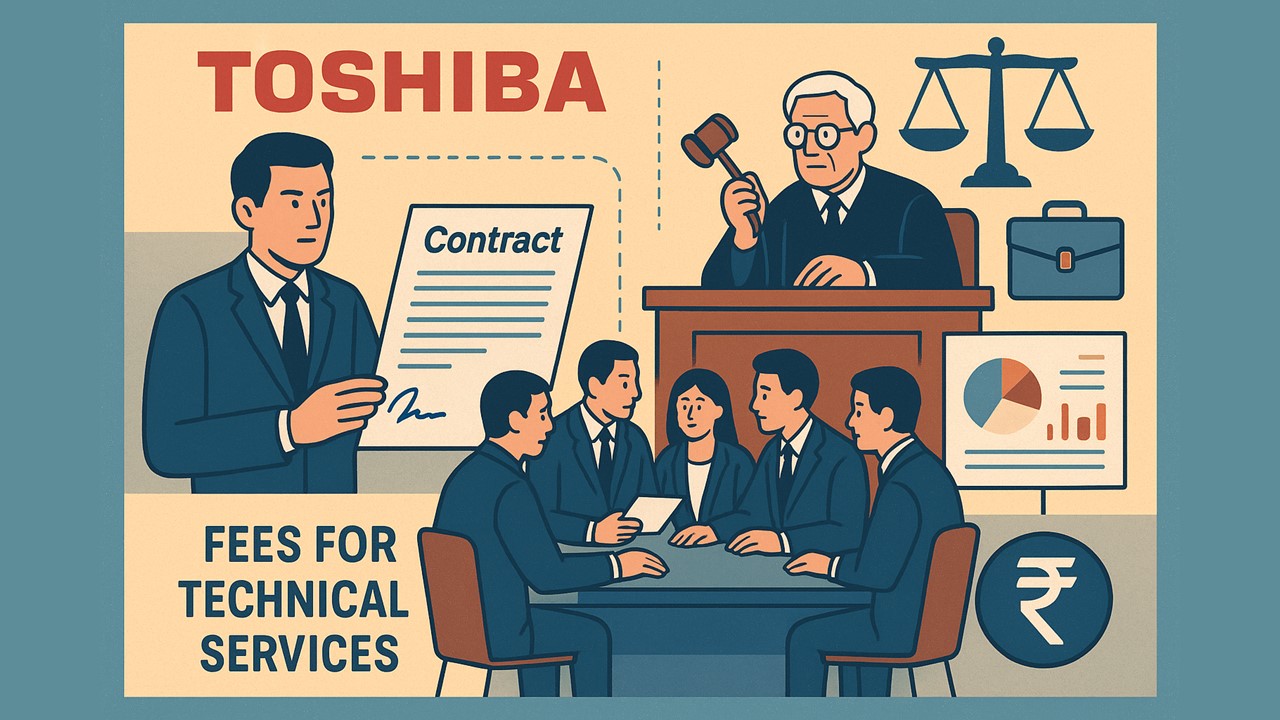
ITAT Delhi rules that Toshiba’s reimbursements for seconded employees’ salaries in Japan are genuine salary payments, not Fees for Technical Services (FTS).
Salary Reimbursements Abroad Not FTS, Rules ITAT
 Saloni Kumari
 Dec 4, 2025
ITAT Delhi Rules Salary Reimbursements to Seconded Employees Are Genuine, Not FTS; Favours Company
ITAT Delhi, in a recent case, had partly ruled in favour of the company (assessee), ruling that reimbursements by Indian entities for salaries of seconded employees in Japan are genuine salary payments, not Fees for Technical Services (FTS). The payments were properly documented, taxed under TDS, and under Indian control, hence not FTS.
The case had been filed by Toshiba Corporation before the Income Tax Appellate Tribunal (ITAT) Delhi, challenging an assessment order passed by the tax authorities on July 27, 2023. The corporation was aggrieved by the addition made to its income by the tax authorities on account of payments made to seconded employees of Rs. 10.76 crore. The amount had been treated as FTS (Fee for Technical Services) under section 9(1)(vii) of the Income Tax Act, 1961, and Article 12(4) of the India-Japan Double Taxation Avoidance Agreement (DTAA).
When the tribunal heard the arguments served by both sides. The key issue on which the tribunal had to decide was, "whether the payments made by the Indian entities to the assessee in respect of salaries paid to the seconded employees in Japan are in the nature of reimbursement of the salary for the services rendered in India or are in the nature of FTS?"
Payment amounting to a total of Rs. 10.76 crore was made by the corporation (appellant) to its 26 employees in the form of reimbursement of salary paid in Japan for rendering services in India. These employees had separate employment contracts with the Indian companies. To prove this, the assessee submitted one such contract (on page 715), which shows the terms and conditions of employment.
To announce the final decision, the Tribunal cited an earlier judgment of the Delhi High Court titled PCIT vs. Boeing India (P.) Ltd. (supra); therein, the court ruled that "reimbursements are in the nature of salary, same could not be treated as FTS." It also referenced another ruling of the high court titled CIT vs. Karl Storz Endoscopy India (P) Ltd in IT Appeal No. 13 of 2008, which was decided on September 13, 2010, and the Hon'ble Delhi High Court's ruling in the case of Flipkart Internet (p) Ltd. (supra). These rulings were all decided in favour of the assessee.
The Tribunal also compared provisions mentioned in Article 12 of the Indian Constitution with the India-Japan DTAA, where it found similarities in the context of royalty and FTS. In the Indian constitution, FTS is defined in Article 12(4), which says, "(4) The term 'fees for technical services' as used in this article means payments of any amount to any person other than payments to an employee of a person making payments and to any individual for independent personal services referred to in Article 14." This also says that payments made as salary to the employees outside India for rendering services in India are not treated under FTS.
The tribunal in its final decision concluded that the tax authority was incorrect in treating reimbursement of salary as FTS and held that the tax department had misread the Contract of Appointment/Letter of Appointment. Further ruled, "The assessee has been able to establish an employee-employer relationship between the seconded employees and the Indian entities. Where the payments are made to employees as salaries, such payments cannot be recharacterised as FTS." In conclusion, it partially allowed the appeal in favour of the corporation.
About Author


Saloni Kumari
Content Writer
Saloni is a Content Writer with 2+ years of experience at studycafe.in. She writes legal, taxation, and finance related content including GST, Income Tax etc. Skilled in translating complex judicial pronouncements and regulatory developments into clear, and reader-friendly articles. Experienced in covering judgements of ITAT, High Court, GSTAT, and news related to Income Tax, GST, and corporate law. She can be reached at [email protected].
Saloni is a Content Writer with 2+ years of experience at studycafe.in. She writes legal, taxation, and finance related content including GST, Income Tax etc. Skilled in translating complex judicial pronouncements and regulatory developments into clear, and reader-friendly articles. Experienced in covering judgements of ITAT, High Court, GSTAT, and news related to Income Tax, GST, and corporate law. She can be reached at [email protected].
 StudyCafe
 Delhi, Delhi, India
 2924
2924My Recent Articles
- Major Relief in Arbitration Case: MCIA Denies Rs 908 Crore Statement Claim Made by Allied Silica Against Tata Chemicals
- MCA and ICSI to Hold User Awareness Session on Form AOC-4 Filing Amid Glitches on MCA-21 Version-3 Portal
- GSTN Introduces New E-Invoicing Facility for Self-Invoices Under Reverse Charge Mechanism
- Flexi Cap vs Multi Cap Funds: What's the Real Difference?
- IBA Recommends Public Sector Banks to Reduce Ambit of Physical Branch Audits to 50% of Total Business
Up Next
Loading suggestions…


Recent Posts
All Posts


Tags
Recent Posts
All Posts