Mere Proof Of Signature Not Enough When Suspicious Circumstances Surround Will: High Court
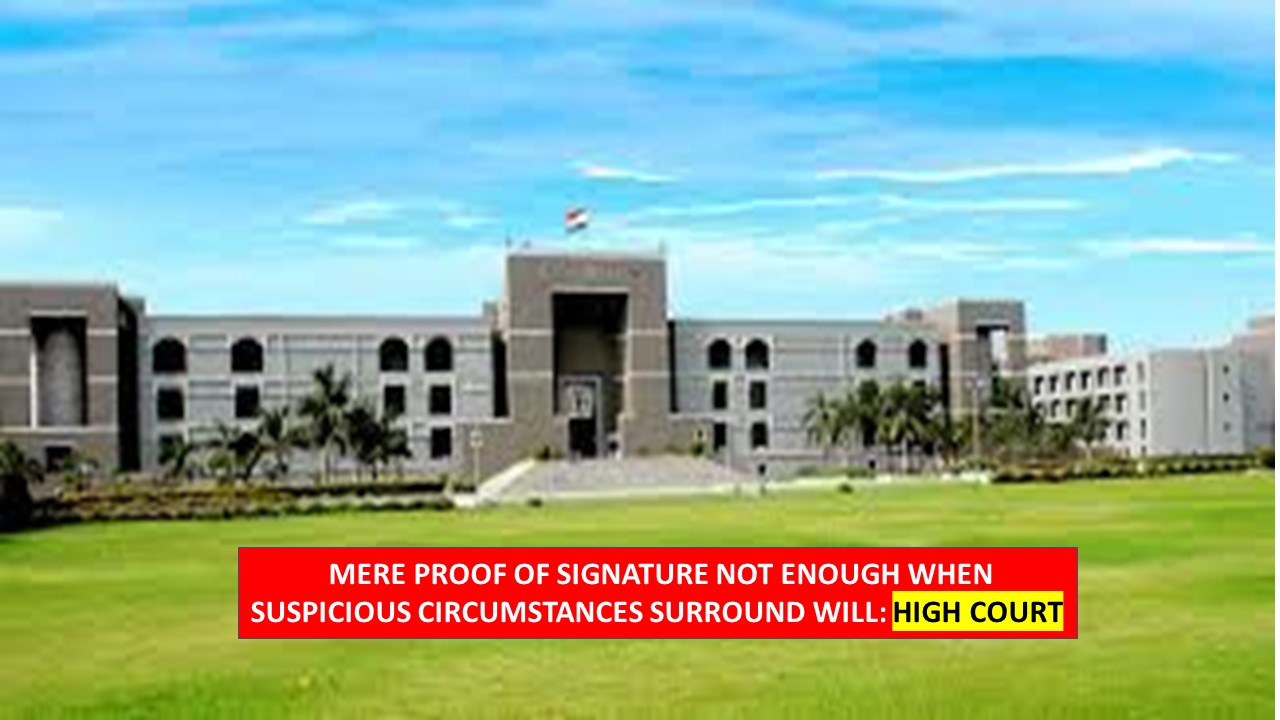
The High Court held that the propounder failed to remove serious suspicious circumstances surrounding the execution of the Will, including the testator’s critical medical condition, contradictory witness testimonies, and posthumous registration of the document.
 Khushi Jain
 May 8, 2026
Mere Proof Of Signature Not Enough When Suspicious Circumstances Surround Will: High Court
Late Ramchandra, father of both the parties, died on 26.07.1981. The plaintiff, Bhaskar Pednekar, claimed that Ramchandra had executed a Will dated 18.07.1981 in his favour, bequeathing House No. 34, Arvindnagar Society, Ahmedabad, exclusively to him, and on that basis sought probate of the Will.
The defendant, Harishchandra Pednekar, denied the genuineness of the Will and contended that it was fabricated. He submitted that Ramchandra was suffering from advanced jaw and tongue cancer and was not in a sound and disposing state of mind at the time of the alleged execution of the Will. He further argued that the property had already been transferred in his favour as nominee in the society records.
The trial court granted probate of the Will in favour of the plaintiff. Aggrieved by the said order, the defendant preferred an appeal before the High Court. The principal issue before the High Court was whether the Will dated 18.07.1981 had been validly executed by Ramchandra in a sound state of mind and free from suspicious circumstances, and whether the trial court was justified in granting probate despite procedural and evidentiary anomalies.
The High Court found several suspicious circumstances surrounding the execution of the Will. The Court noted that Ramchandra died merely seven days after the alleged execution of the Will while suffering from advanced cancer. Contradictions were also found in the testimonies of the attesting witnesses regarding the presence of persons and the sequence of signatures on the document. The Will mentioned only one property, excluded the other legal heirs, and contained handwritten dates despite being otherwise typed. Further, the registration of the Will after the death of Ramchandra created additional doubt regarding its genuineness.
The High Court observed that the plaintiff failed to dispel these suspicious circumstances through cogent and reliable evidence.
No medical evidence was produced to establish the mental fitness of the testator, nor was there any independent corroboration regarding the due execution of the Will. Consequently, the Court held that the Will had not been proved in accordance with law. Accordingly, the appeal was allowed and the probate granted by the trial court was set aside.
About Author


Khushi Jain
Legal Content Writer
 StudyCafe
 Delhi, Delhi, India
 80
80My Recent Articles
- ROC Chennai Orders Penalty for delay in filing MGT-17: Short Staff no Excuse
- Penalty Order Passed by ROC Chennai for Non-Disclosure in Form PAS-3
- ROC Imposes Penalty For Non-Compliance In Securities Allotment Filing
- GST: Bombay High Court Upholds Validity of Manual Appeal
- From Rs. 275 Crore to Zero: United Breweries Gets Relief in Sales Tax Dispute
Up Next
Loading suggestions…


Recent Posts

All Posts


Recent Posts
All Posts