New Changes proposed in GST E Way Bill
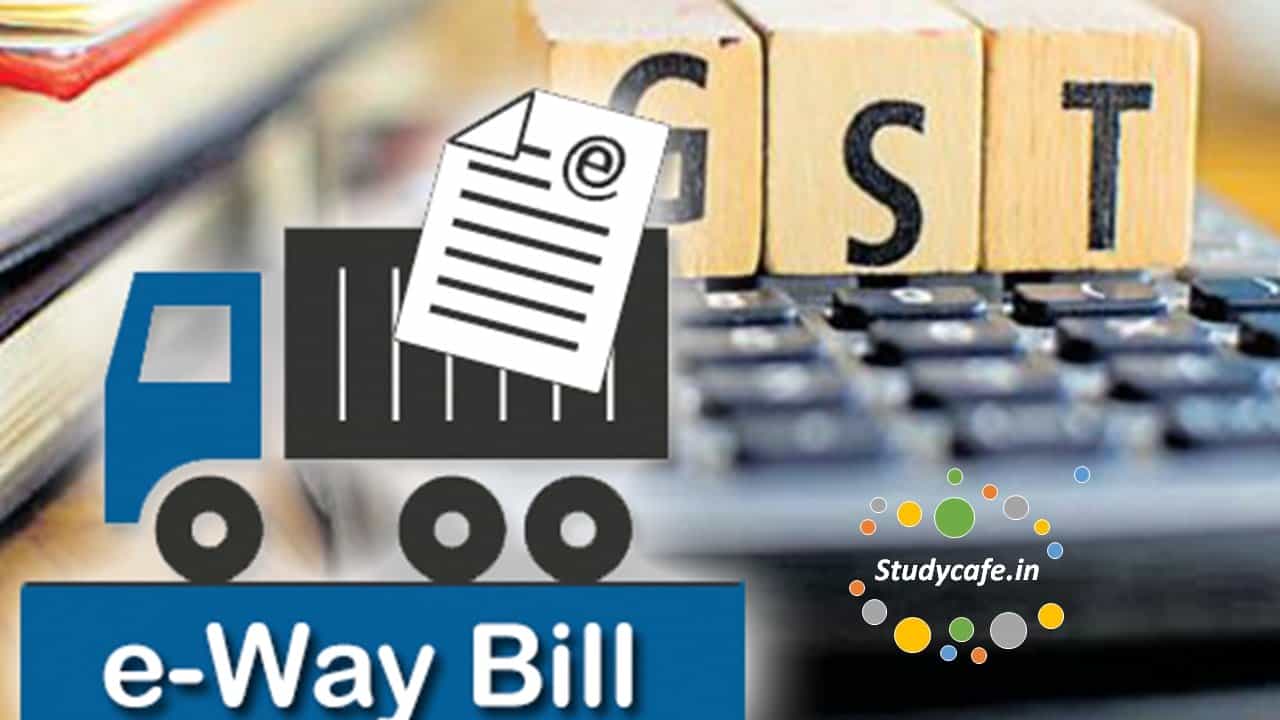
New Changes proposed in GST E Way Bill: CBIC has proposed new changes in E Way Bill system. Below mentioned changes has been proposed and wi
 CA Deepak Gupta
 Mar 26, 2019
New Changes proposed in GST E Way Bill:
CBIC has proposed new changes in E Way Bill system. Below mentioned changes has been proposed and will be available in next version.
1. Now E-waybill system is being enabled to auto calculate the route distance for movement of goods, based on the Postal PIN codes of source and destination locations.One Invoice.
2. One E-way Bill policy is followed, Now Blocking of generation of multiple E-Way Bills on one Invoice/document
3. Now E Way Bill can be extended in case Consignment is in Transit
4. Blocking of Interstate Transactions for Composition dealers
More Details about the changes are given below:
1. Auto calculation of route distance based on PIN code for generation of EWB
Now, E-waybill system is being enabled to auto calculate the route distance for movement of goods, based on the Postal PIN codes of source and destination locations. That is, the e-waybill system will calculate and display the actual distance between the supplier and recipient addresses. User is allowed to enter the actual distance as per his movement of goods. However, it will be limited to 10% more than the displayed distance for entry. That is, if the system has displayed the distance between Place A and B, based on the PIN codes, as 655 KMs, then the user can enter the actual distance up to 720KMs (655KMs + 65KMs). In case, the source PIN and destination PIN are same, the user can enter up to a maximum of 100KMs only. If the PIN entered is incorrect, the system would alert the user as INVALID PIN CODE. However, he can
continue entering the distance. Further, these e-waybills having INVALID PIN codes are flagged for review by the department.
Route distance calculation between source and destination uses the data from various electronic sources. This data employs various attributes, for example: road class, direction of travel, average speed, traffic data etc. These attributes are picked up from traffic that is on National highways, state highways, expressways, district highways as well as main roads inside the cities. A proprietary logic is then used for approximating the distance between two postal pin codes. The distance thus derived is then provided as the motorable distance at that point of time.
2. Blocking of generation of multiple E-Way Bills on one Invoice/document
Based on the representation received by the transporters, the government has decided not to allow generation of multiple e-way bills based on one invoice, by any party consignor, consignee and transporter. That is, once E-way Bill is generated with an invoice number, then none of the parties - consignor, consignee or transporter - can generate the E-Way Bill with the same invoice number. One Invoice, One E-way Bill policy is followed. The change will come in the next version.
3. Extension of E-Way Bill in case Consignment is in Transit
The transporters had represented to incorporate the provision to extend the E-way Bill, when the goods are in transit. The transit means the goods could be on Road or in Warehouse. This facility is being incorporated in the next version for the extension of E-way Bill.
During the extension of the e-way bill, the user is prompted to answer whether the Consignment is in Transit or in Movement. On selection of In Transit, the address details of the transit place need to be provided. On selection of In Movement the system will prompt the user to enter the Place and Vehicle details from where the extension is required. In both these scenarios, the destination PIN will be considered from the PART-A of the E-way Bill for calculation of distance for movement and validity date. Route distance will be calculated as explained above.
4. Blocking of Interstate Transactions for Composition dealers
As per the GST Act, the composition tax payers are not supposed to do Interstate transactions. Hence next version will not allow generation of e-way bill for inter-state movement, if the supplier is composition tax payer. Also, the supplies of composition tax payers will not be allowed to enter any of the taxes under CGST or SGST for intrastate transactions. In case of Composition tax payer, document type of Tax Invoice will not be enabled.
About Author


CA Deepak Gupta
Co Founder
CA Deepak Gupta,is Co-founder of Studycafe. He is Microsoft Office Specialist and Corporate Trainer of AI Tools, Microsoft Excel.
He is Finance Influencer having more than 250K followers on Social Media. CA Deepak Gupta, is Having more than 14 plus years of experience, and he has Worked with best brands Like, Hero, Wipro, Ericsson before Starting Studycafe. He has Trained more than 20000 Persons in Microsoft Excel, PowerPoint, Power BI, Google Sheet, Google Forms and Other Tools.
CA Deepak Gupta,is Co-founder of Studycafe. He is Microsoft Office Specialist and Corporate Trainer of AI Tools, Microsoft Excel.
He is Finance Influencer having more than 250K followers on Social Media. CA Deepak Gupta, is Having more than 14 plus years of experience, and he has Worked with best brands Like, Hero, Wipro, Ericsson before Starting Studycafe. He has Trained more than 20000 Persons in Microsoft Excel, PowerPoint, Power BI, Google Sheet, Google Forms and Other Tools.
 StudyCafe
 Delhi, Delhi, India
 3423
3423My Recent Articles
- UltraTech Cement slapped with Rs. 808.78 Cr Income Tax Demand
- GST: High Court upheld constitutional validity of Section 16(2)(c), asks government to address ITC issues of genuine purchasers
- Old vs New Tax Regime for Tax Year 2026-27
- High court criticizes Income Tax Department for not releasing ITR Utilities despite 11 years of directions
- Fino Payments Bank CEO Rishi Gupta Gets Bail in GST Case, Bank Clarifies No Direct Link
Up Next
Loading suggestions…


Recent Posts
All Posts
Tags
No tags yet.
Recent Posts
All Posts
Tags
No tags yet.