New Rules Applicable From April 1: Important Changes Related To Travel, Tax and Market:
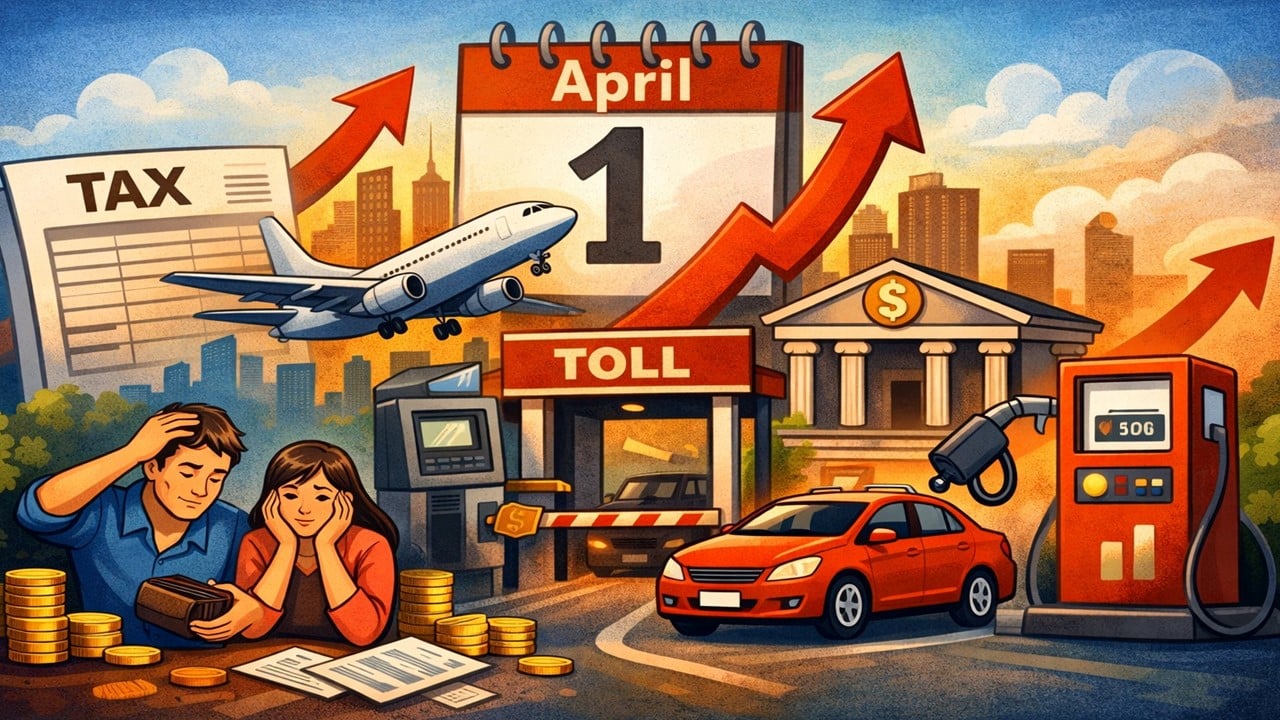
Changes in the prices of taxes, travel, banking, tolls, gas, and vehicles will be implemented from April 1, which will have a direct Impact on the expenses of the common people.
New Rules Implemented From April 1 And Their Impact On Common People
 Kashish Bhardwaj
 Mar 30, 2026
New Rules Applicable From April 1: Important Changes Related To Travel, Tax and Market
Public Provident Fund (PPF), National Pension System (NPS) and Sukanya Samriddhi Yojana (SSY) are the major savings schemes of India. The main objective of PPF is to provide fixed returns, and any Indian citizen can invest in it. This scheme offers an interest rate of approximately 7.1%, which is reviewed from time to time. In this, the annual minimum investment is fixed at Rs 500 and the maximum at Rs 1.5 lakh. Its lock-in period is 15 years, and it is considered a low-risk scheme due to the government guarantee.
The purpose of NPS is to save for retirement and a pension. Any citizen between 18 and 70 years of age can invest in this. This is a market-based scheme, which has a return potential of around 9% to 12%. In this, the annual minimum investment starts from Rs 1,000, and the investment can be continued till the age of 60 years. Since its returns depend on the market, its risk level is considered low to moderate.
SSY is a scheme specially designed for the education and marriage of the girl child. This account can be opened in the name of a girl child below 10 years of age. About 8.2% interest rate is available on this scheme, which is reviewed from time to time. In this, the annual minimum investment can be Rs 250 and the maximum Rs 1.5 lakh. Its lock-in period is 21 years or till the marriage of the girl child, and it is also considered a low-risk scheme due to the government guarantee.
Category 1: Tax and Banking
1. Filing under the revised regime
Changes: In the year 2025, the government changed the tax slabs of the new tax regime, which came into effect from April 1, 2025. This year, taxpayers will file income tax returns with this revised system.
Impact: Salaried individuals will get tax exemption on income up to Rs 12.75 lakh under Section 87A. Other taxpayers can avail tax relief on income up to Rs 12 lakh.
2. New Forms 130 and 131
Change: Earlier, Form 16 was given for TDS deductions and Form 16A for other income. Now the format of these forms has been changed to Form 130 and Form 131.
Impact: While filing returns in June-July, details of tax calculations and exemptions in these forms will be more detailed than before, which will reduce the chances of mistakes in filling the ITR.
3. PNB ATM Cash Limit
Change: A maximum of Rs 25,000 can be withdrawn per day from the Classic Debit Card of Punjab National Bank, whereas for the Platinum Card, this limit has been fixed at Rs 50,000.
Impact: If the customer requires more cash than this, he or she will have to visit the bank branch or use a cheque book or withdrawal form. This decision has been taken with the aim of preventing fraud.
4. PAN Card Update
Change: The Aadhaar card has been removed from the list of valid documents for the date of birth for making a PAN card. Aadhaar will be accepted only as address proof.
Impact: For making a new PAN card or amending the date of birth, it will be mandatory to submit other documents, such as a birth certificate or 10th mark sheet, along with Aadhaar.
Category 2: Travel and tourism
1. Railway Refund and Cancellation Rules
Change: According to the new rules, now a refund will be given if the ticket is cancelled only up to 8 hours before the departure of the train, whereas earlier this time limit was 4 hours. Also, passengers will be able to change the boarding station only 30 minutes before the train departure.
Impact: Passengers may face financial loss if tickets are not cancelled on time. Tightening the rules will reduce unnecessary bookings and increase the chances of other passengers getting confirmed tickets.
2. Fastag Annual Pass
Change: There will be a higher fee for the renewal of the Fastag annual pass from April 1, as the concerned authority has increased its price by 2.5%.
Impact: Earlier, Rs 3,000 had to be paid for the annual pass; now, Rs 3,075 will have to be paid. This pass provides non-stop travel facilities to the drivers at around 200 toll plazas across the country.
3. No-cash system on toll
Change: The cash payment system is being abolished at all toll plazas, and toll fees will be accepted only through digital means, such as Fastag or UPI.
Impact: Drivers who do not have Fastag or do not have sufficient balance will have to make payment through UPI. Eliminating the option of cash payment can cause inconvenience if you are not prepared.
Category 3: Market and Kitchen
1. New rates of cylinder and ATF
Changes: Government oil companies review fuel prices on the 1st of every month. In this sequence, new rates of gas cylinders and aviation fuel (ATF) will be implemented from 6 am on April 1.
Impact: The price of commercial gas cylinders is likely to increase, which may make food in hotels and restaurants expensive. Additionally, if air fuel (ATF) becomes expensive, air ticket prices may also increase.
2. New prices of vehicles
Change: Till March 31, vehicle companies were providing vehicles on old stock at predetermined prices. An increase of about 2% to 3% in the prices of commercial and passenger vehicles may be implemented from April 1.
Impact: Customers who have booked a vehicle but the bill has not been issued by March 31 may have to pay the increased price. Additionally, due to an increase in showroom prices, registration fees, and other related charges will also be payable as per the increased rates.

About Author


Kashish Bhardwaj
Content Writer
 StudyCafe
 Delhi, Delhi, India
 176
176My Recent Articles
- Supreme Court Judge Strength to Increase from 33 to 37 for Faster Justice
- Builder Cleared of Profiteering Charges After Passing Excess ITC Benefit to Homebuyers: GSTAT
- Jubilant Ingrevia to Challenge Rs 2.03 Crore GST Demand Before GSTAT
- Rs 70 Crore Claim Row: Ex-CFO Gobind Jain Moves Bombay High Court Against IndusInd Bank Over Alleged Wrongful Dismissal
- Dream Sports Launches Dream Street: AI-Powered Entry into India’s Retail Broking Market
Up Next
Loading suggestions…


Recent Posts
All Posts

Recent Posts
All Posts