On Independence Day, PM Emphasis How GST Played a Vital Role in Building a Strong Tax System for Atmanirbhar Bharat:
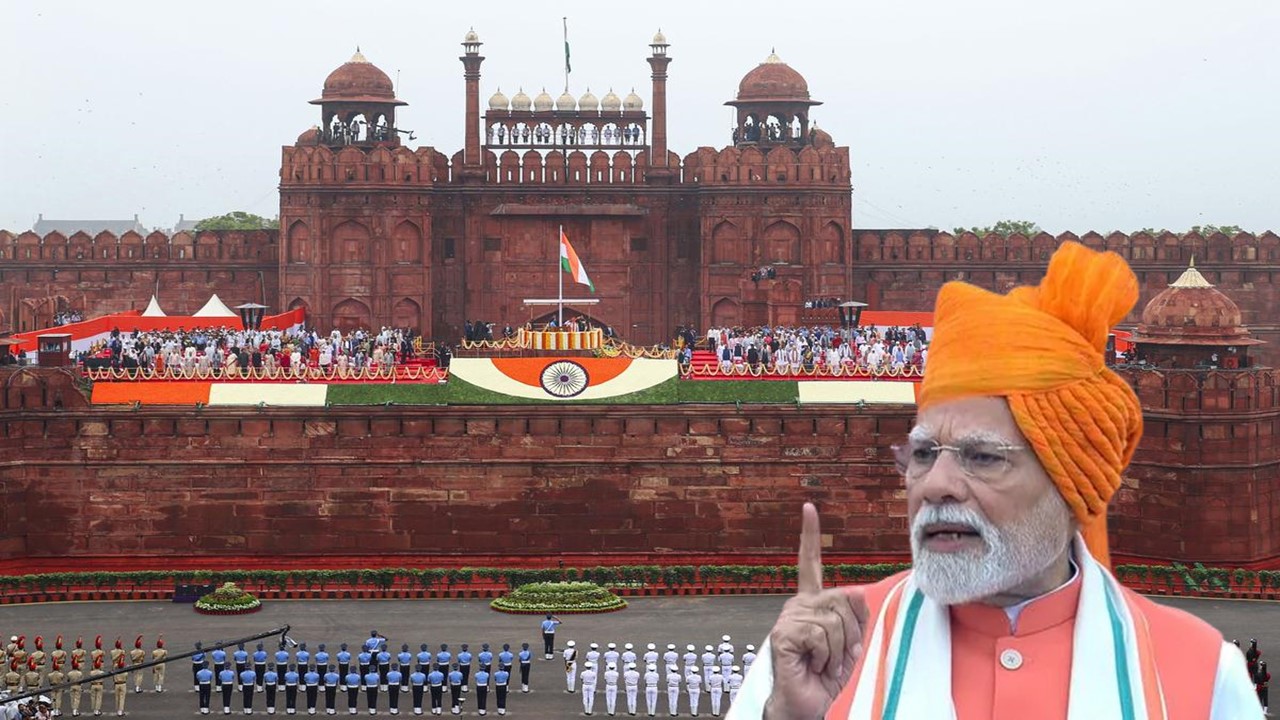
On Independence Day, PM Narendra Modi announced the next-generation GST reforms, focusing on structural changes, rate rationalisation, and ease of living.
PM Modi Unveils Key GST Reforms to Simplify Tax and Boost Self-Reliance
 Saloni Kumari
 Aug 18, 2025
On Independence Day, PM Emphasis How GST Played a Vital Role in Building a Strong Tax System for Atmanirbhar Bharat
On 15th August 2025 (Sunday), during the 79th Independence Day celebration in India, Prime Minister Narendra Modi addressed the nation and highlighted how the Goods and Services Tax (GST), which was introduced in 2017, is one of the significant tax reforms, that has over years played a vital role in building a strong tax system of country and also helped various sections of society to develop financially. GST has made a positive impact on the Indian Economy.
The Central Government is now thinking of launching the next generation of reforms in GST to build an "Atmanirbhar Bharat," meaning a self-reliant India. These new reforms will focus on three main pillars, i.e., Structural Reforms, Rate Rationalisation and Ease of Living.
1. Structural Reforms
This pillar of structural reform is focused towards improving the basic structure and functioning of the GST system:
- Fixing Inverted Duty Structures: In some sectors, the tax on raw materials (inputs) is higher than that on finished products (outputs). This causes businesses to collect extra tax credits that they cannot use easily. The government is now looking to solve this discrepancy to reduce such unused tax credits and encourage more products to be made within the country.
- Resolving Classification Issues: It is also a major confusion or dispute about which GST rate applies to which product or service. The government is now planning to resolve these classification issues to avoid conflicts, streamline rate structures, make compliance easier, and treat all sectors fairly.
- Providing Stability and Predictability: The Prime Minister highlighted that businesses must know what to expect in the long term. Hence, the government want to provide long-term clarity and stable GST policies to help companies plan better and to build industry confidence.
- Lowering Taxes on Common and Aspirational Items: Items used commonly by people (common-man items), such as food, basic household goods, etc., and aspirational goods such as mobile phones, appliances, etc., will be accessible to people at cheaper rates. This will increase affordability and encourage people to spend more, which helps the economy grow.
- Reducing Number of Tax Slabs: Presently, there are multiple GST tax slabs in the country. The government is now planning to reduce them and shift to just two main slabs: a standard rate and a merit (lower) rate. Only a few special items will have different rates. This change will make GST easier to understand and manage.
- End of Compensation Cess: The government is now thinking of ending the Compensation Cess (extra tax collected to compensate states for GST revenue loss). This has created fiscal space, providing greater flexibility to rationalise and align tax rates within the GST framework for long-term sustainability.
- Easy Registration: Getting a GST registration will become faster and fully online, making it easy for small businesses to join the formal economy.
- Pre-filled Returns: Tax returns will be pre-filled using available data, so businesses won’t have to fill in everything manually. This reduces errors and effort.
- Faster Refunds: Especially for exporters and those facing inverted duty structures, the refund process will become quicker and automatic, improving cash flow.
About Author


Saloni Kumari
Content Writer
Saloni is a Content Writer with 2+ years of experience at studycafe.in. She writes legal, taxation, and finance related content including GST, Income Tax etc. Skilled in translating complex judicial pronouncements and regulatory developments into clear, and reader-friendly articles. Experienced in covering judgements of ITAT, High Court, GSTAT, and news related to Income Tax, GST, and corporate law. She can be reached at [email protected].
Saloni is a Content Writer with 2+ years of experience at studycafe.in. She writes legal, taxation, and finance related content including GST, Income Tax etc. Skilled in translating complex judicial pronouncements and regulatory developments into clear, and reader-friendly articles. Experienced in covering judgements of ITAT, High Court, GSTAT, and news related to Income Tax, GST, and corporate law. She can be reached at [email protected].
 StudyCafe
 Delhi, Delhi, India
 2919
2919My Recent Articles
- IBA Recommends Public Sector Banks to Reduce Ambit of Physical Branch Audits to 50% of Total Business
- ITAT Directs AO to Reconsider Rs 16.44 Lakh Capital Gains and Rs 25.87 Lakh Stamp Duty Value Addition
- ITAT Remands Rs 3.33 Crore Demonetisation Cash Deposit Case to AO, Directs Rs 10,000 Relief Fund Payment
- Income Tax Dept Increases Scope for Saksham Nudge Initiative to Further Include Professional Insuring Timely Compliance
- Vedanta Subsidiary ESL Steel Receives GST SCN for Rs. 2.76 Lakh IGST Demand Over Alleged RCM Short Payment
Up Next
Loading suggestions…


Recent Posts
All Posts

Tags
Recent Posts
All Posts