Salary Around Rs 12 Lakh or Job Switch During the Year? Why You Should Consult a CA for Advance Tax:
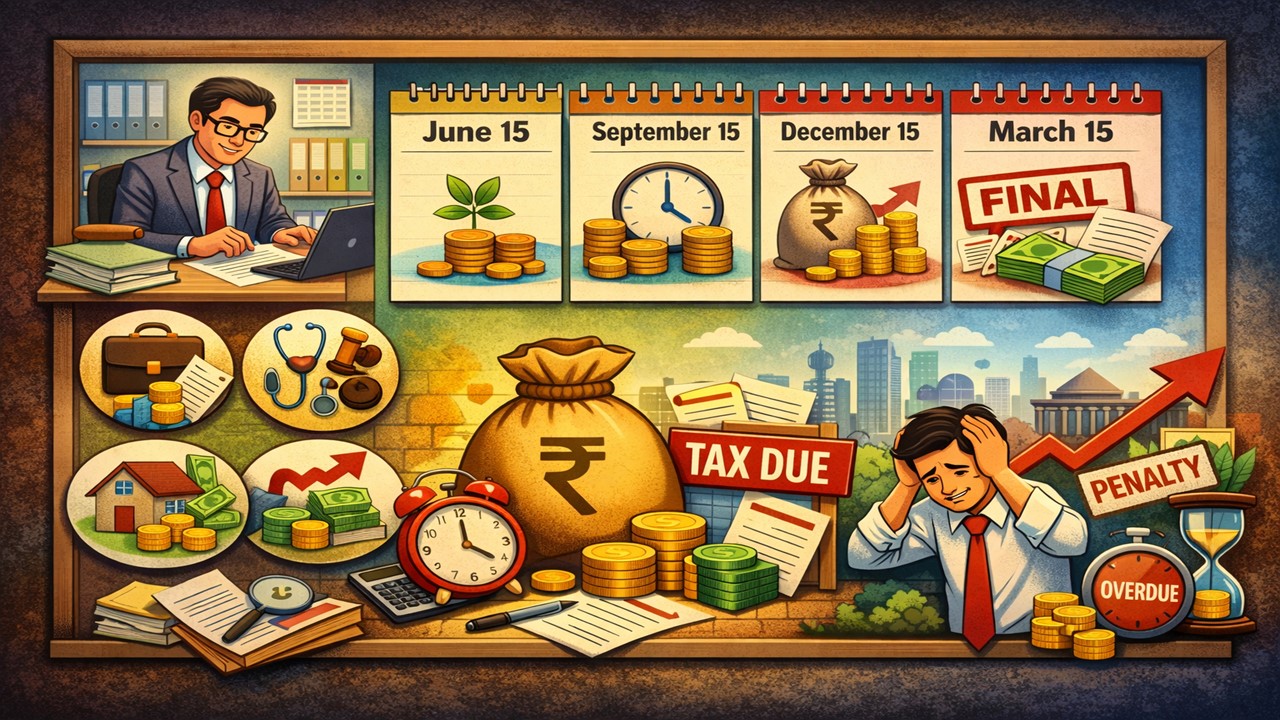
Salary around Rs. 12 lakh or switched jobs during the year? You may still need to pay advance tax if you have additional income. Learn who must pay advance tax, due dates, and how to avoid penalties.
A Complete Guide for Taxpayers
 Vanshika verma
 Mar 9, 2026
Salary Around Rs 12 Lakh or Job Switch During the Year? Why You Should Consult a CA for Advance Tax
If you have switched jobs during the financial year or if your annual salary is below or upto Rs 12,00,000 here is why you might need to deposit Advance Tax.
For example, if your salary is Rs 12,75,000, you can claim a standard deduction of Rs 75,000 under the new tax regime. This reduces your taxable income to Rs 1,200,000. Which fall within the non-taxable range.
This means No Tax was deducted by you employer. However, apart from salary, if you have other taxable income, such as interest from bank deposits, rental income, or any other income, it should also be considered while calculating your total tax liability.
Now at time of filing Income Tax Return, you might have Tax Liability and thus interest would be applicable if you do not pay Advance Tax now.
In such cases, you must consult a chartered accountant (CA) who can review your complete income details and determine whether you have any tax liability. If there is a tax liability after considering all sources of income, you should pay advance tax before March 15 to avoid interest and penalties under income tax rules.
Advance Tax in case of Job Switch:
Similarly, in case of Job Switch, you should consider consulting a chartered accountant for payment of Advance tax. Let us understand this with the help of an example:
Mr Ram Got Salary of Rs. 600,000 and Rs. 10,00,000 from 2 of his employers during the period 1st April 2025 to 31st March 2026. However none of them deducted TDS as his taxable salary was less than 12,00,000.
However, if Mr. Ram does not pay Advance Tax before 15th March, at time of filing ITR, his Tax liability will be on 15,25,000 and he will be required to pay interest on the same.
What do you understand by "advance tax"?
Advance tax is the process of paying your income tax liability in instalments throughout the financial year. Under this, you have to pay tax liability in four instalments instead of a single lump sum at the end of the year.
Who should pay advance tax?
You are liable to pay advance tax if your total tax liability is Rs 10,000 or more in a financial year. It includes:
- Salaried employees
- Self-employed persons
- Consultants, doctors, lawyers, etc.
- Business owners
- People earning income from rent, capital gains, etc.
About Author


Vanshika verma
Content Writer
Vanshika Verma is a Content Writer with 1+ year of experience at Studycafe.in. A B.Com graduate from Delhi University, She writes articles on Finance, Tax, ICAI, GST, and the latest financial news, with a focus on making complex topics easy for readers and professionals.
Vanshika Verma is a Content Writer with 1+ year of experience at Studycafe.in. A B.Com graduate from Delhi University, She writes articles on Finance, Tax, ICAI, GST, and the latest financial news, with a focus on making complex topics easy for readers and professionals.
 Studycafe
 Delhi, Delhi, India
 2027
2027My Recent Articles
- CBI Court Jails Ex-Bank Manager 7 Years in Rs 3.61 Crore Loan Fraud Case
- Income Tax Department Imposes Rs 57.74 Crore Penalties on Emcure Pharmaceuticals for Seven Financial Years
- ICAI Releases Revised Handbook on E-Way Bill Under GST, Covering Latest Legal Changes, Portal Updates and Key Judicial Decisions
- CBI Arrests 5 in Mumbai Bribery Case After CPWD Engineer Allegedly Demanded Rs 70 Lakh for Wadala Land NOC
- CBI Registers Rs 93.44 Crore PNB Bank Fraud Case, Searches Mumbai Premises Linked to Company Directors
Up Next
Loading suggestions…


Recent Posts
All Posts


Recent Posts
All Posts