Your First Audit as a CA: Simple Tips to Get Started:
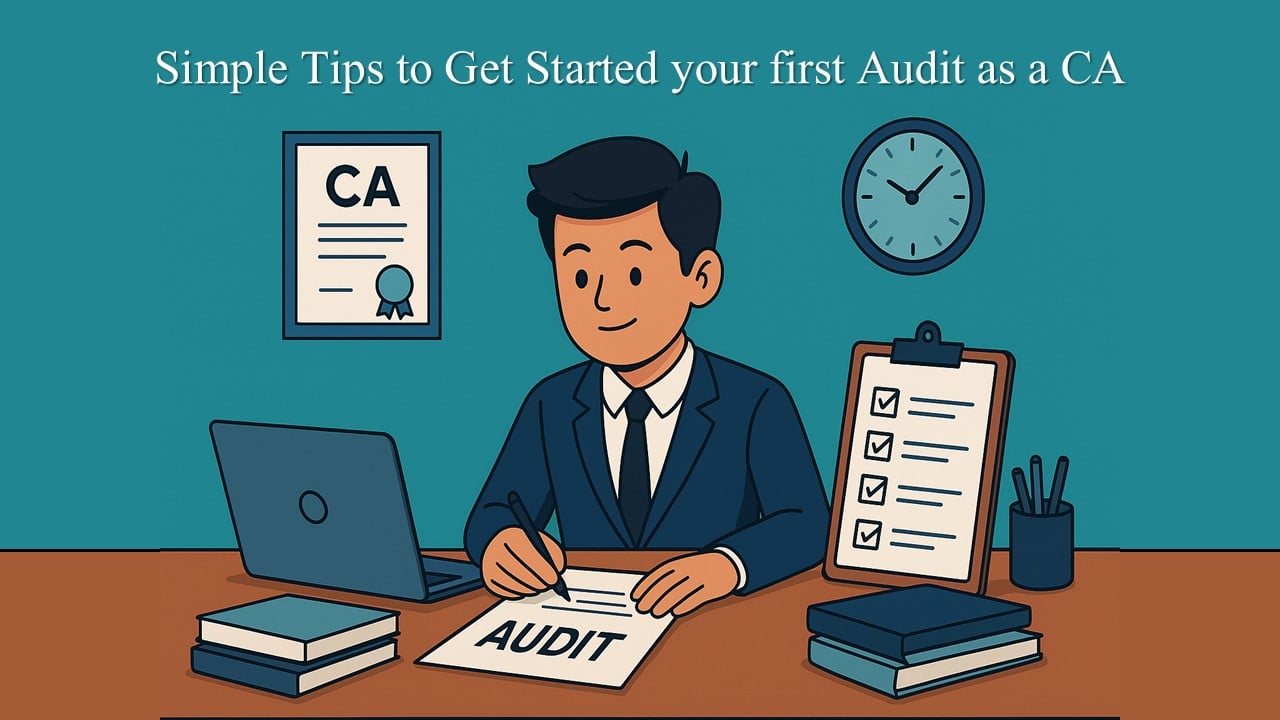
Here's a practical and easy-to-follow guide that helps newly qualified CAs confidently begin, plan, execute, and complete their very first audit assignment with clarity, structure, and professionalism.
Smart Steps for New CAs Entering Audit
 CA Tushar Makkar
 Nov 18, 2025
Table of Contents

Your First Audit as a CA: Simple Tips to Get Started
How to start your first audit assignment as a CA is what most newly qualified Chartered Accountants search online after getting their ICAI membership. You've worked hard through articleship, cleared all exams, and now it's time for real action. The good news? Every CA has been in your shoes, and yes, it does get easier.
What to Expect in Your First CA Audit
First audit work for chartered accountants in India usually starts small—maybe a tax audit under Section 44AB, a small company audit, or even a bank branch audit. These are great starting points because they help you build confidence without overwhelming pressure. Most new CAs feel nervous signing their first audit report. That signature means you're taking responsibility, and it's completely normal to feel the weight of it. Just remember, your articleship trained you for exactly this moment.Planning Your Audit: Keep It Simple
Audit planning checklist for new CAs doesn't need to be complicated. Before visiting your client, understand what type of business they run. If it's a retail shop, know how retail works. If it's a manufacturing unit, understand the basics of their production. Read last year's financial statements if available. Check what the previous auditor reported. Make a simple checklist of documents you'll need—purchase bills, sales invoices, bank statements, GST returns, and TDS records. Pro Tip: Create a timeline working backwards from your deadline. If a tax audit report is due September 30, plan to finish fieldwork by August 31, draft by September 15, and leave buffer time for reviews.Documents You Must Have
Essential audit documents for CA start with your engagement letter. Never skip this—it protects both you and your client by clearly stating what work you'll do and what you won't. Your audit file should have:- Signed engagement letter
- Independence declaration
- Audit program with completion dates
- Working papers for each section
- Management representation letter
- Draft and final audit reports with UDIN
Talking to Clients: The Human Side
How to communicate with clients during audit matters more than you think. Most small business owners in India aren't accounting experts—they're busy running their businesses. When you ask for documents, be specific about what you need and why. Instead of saying "show me all purchase records," say "I need purchase invoices above ₹50,000 for April 2024 to March 2025 with corresponding payment proofs." If you find issues, explain them simply. Don't just say "your TDS compliance is wrong." Explain what's wrong, why it matters, and how to fix it going forward. Example: A textile trader in Surat might not understand why you need transport receipts. Explain that these proved goods were actually moved, which is important for GST and income tax purposes.Common Mistakes to Avoid
Mistakes new CA make in the first audit include trusting everything the client says without verification. Your job is to verify, not just accept. If they say inventory is worth ₹10 lakhs, check stock registers, do physical verification or at least sample checking. Another mistake is poor documentation. If your working papers don't clearly show how you concluded, they're incomplete. Write notes explaining your audit steps—future you (or ICAI review) will thank you. Don't ignore materiality. A ₹2,000 error in a business with a ₹50 crore turnover is different from the same error in a ₹5 lakh turnover business.Standards on Auditing: Your Guide
Standards on Auditing practical tips are simpler than you think. Keep SA 230 (Documentation), SA 500 (Evidence), and SA 700 (Audit Opinion) handy on your phone. These aren't just exam topics—they tell you how much evidence is enough and how to document your work. When confused about any procedure, refer to the relevant SA. They're written for practical use, not just theoretical knowledge.
Handling Difficult Situations
What to do when clients disagree during an audit happens often. Maybe they claimed wrong GST credits or didn't make provisions for bad debts. When you point this out, some might push back. Stay professional but firm. Your CA registration and reputation are more valuable than any single assignment. If something is materially wrong, you have clear options:- Qualify your opinion
- Give an adverse opinion if serious
- Resign if they ask you to do something unethical
Tax Audit Special Points
Tax audit tips for new CAs in India require attention to Form 3CD. Each clause needs careful checking:- Clause 13: Verify closing stock properly
- Clause 21(f): Check if transfer pricing rules apply
- Clause 30: Note tax demands or refunds from earlier years
Bank Branch Audits
Bank concurrent audit for CA is a good opportunity for steady work. If you're empanelled with PSU banks like Punjab National Bank or State Bank of India, focus on:- Checking loan classifications (especially NPAs)
- Verifying KYC documents
- Reviewing large cash transactions
- Branch reconciliation statements
Building Your Practice
How to get audit clients as a new CA starts with your network. Tell family, friends, and their businesses that you're now practising. Join local CA association meetings, attend CPE programs, and don't hesitate to connect with senior CAs. But here's what matters most: do good quality work. One satisfied client will refer you to three others. One poorly done audit will haunt your reputation.Your First Audit Report
When drafting your first audit report, check everything twice:- Company registration details correct?
- Financial year mentioned properly?
- Is your opinion clearly stated?
- Signature with membership number?
- UDIN generated?
Keep Learning
CA professional development after qualification never stops. Tax laws change, accounting standards get updated, and new Auditing Standards are issued. Complete your CPE hours not just for compliance but for genuine learning. Join WhatsApp or Telegram groups where CAs discuss practical problems. When you're stuck, ask senior CAs; nobody expects you to know everything from day one.Final Thoughts
Your first audit as a CA in India might feel scary, but you're more prepared than you think. Your articleship and exams trained you for this. Take it step by step, ask questions when unsure, and always prioritise ethics over convenience. The Standards on Auditing and the ICAI Code of Ethics are your foundation. Build your practice on integrity, and success will follow. Before long, you'll be the one advising the next batch of nervous new CAs. Trust your training, stay ethical, and keep learning. You've got this!About Author


CA Tushar Makkar
Chartered Accountant
 Delhi, Delhi, India
 10
10My Recent Articles
- How to Build a Winning LinkedIn Profile After CA Final Results
- Big Four vs Tier-2 Firms: Which Path Actually Accelerates Your CA Career in India?
- Big Four Assessment Centre Preparation: What Every CA Student Must Know Before Walking In
- LinkedIn Profile Mistakes CA Freshers Make That Cost Them Big Four Interviews
- How to Communicate Effectively with Partners and Managers as a Fresher
Up Next
Loading suggestions…


Recent Posts


All Posts



Recent Posts
All Posts