The Tribunal upheld the reopening but remanded the matter to the Assessing Officer for fresh verification of purchase genuineness and supporting evidence.
Khushi Jain | May 13, 2026 |

Mere production of invoices, ledger extracts, and banking transactions not sufficient to stablish Valid Purchase: ITAT
Sajan Overseas Pvt. Ltd., a chemical manufacturer and exporter, filed an income of Rs 40,15,370 for AY 2018–19, but the Assessing Officer reopened the case under section 147 based on the Investigation Wing information alleging bogus purchases of Rs 9.95 crore from three suspected entry operator firms and added the amount under section 69C as unexplained expenditure.
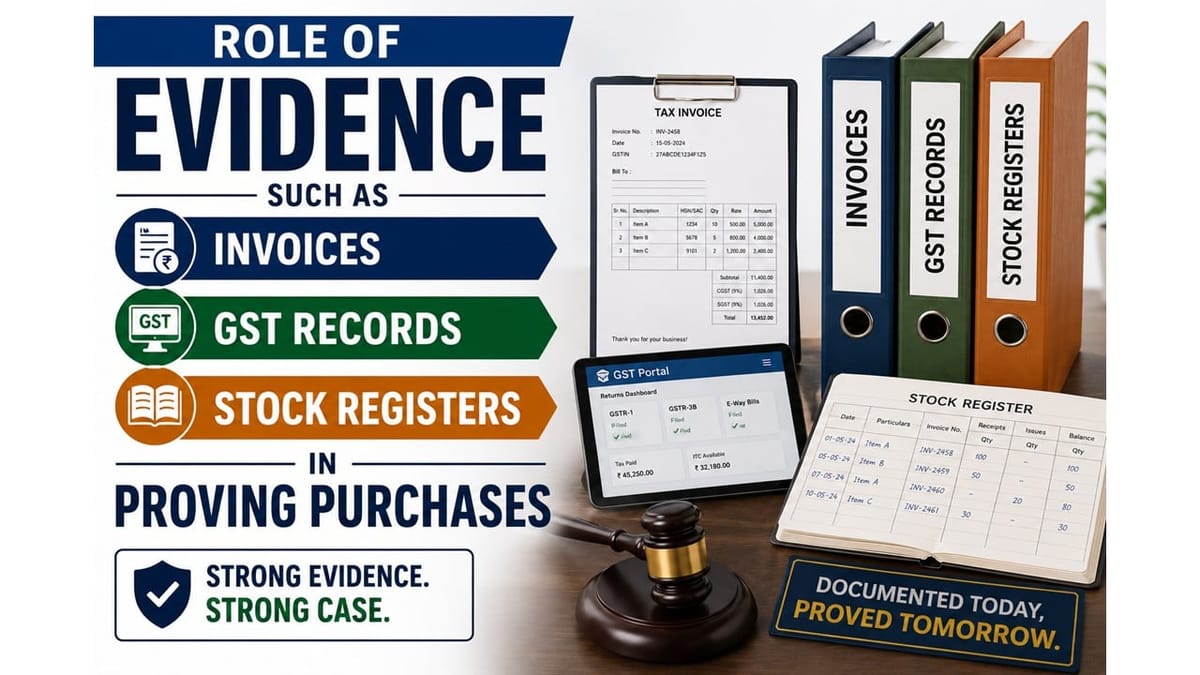
The assessee claimed that the purchases were genuine and supported their claim with invoices, GST records, bank statements, stock registers, and sales data.

While the Tribunal upheld the validity of the reopening, it observed deficiencies in the assessee’s evidence as well as adverse GST findings against the suppliers.
19. On an examination of the assessment order, we find that the Assessing Officer has not proceeded merely on conjectures but has relied upon specific, credible, and corroborative material emanating from the Investigation Wing as well as GST authorities. The findings recorded by the Assessing Officer show that the suppliers from whom purchases were claimed to be made by the assessee were identified as entities engaged in issuing accommodation entries. The Assessing Officer has further noted that the GST registrations of such parties were cancelled, that they had reported disproportionately high turnover with negligible tax payments, and that information received from CGST authorities specifically identified certain entities (including Rajesh Shaw and Raj Trading) as providers of bogus invoices without actual supply of goods.
20. These findings, in our considered view, constitute incriminating material casting serious doubt on the genuineness of the purchases claimed by the assessee. The evidentiary value of such information cannot be lightly disregarded, particularly when it emanates from Statutory Authorities viz. GST Authorities acting under independent regulatory frameworks.

21. Further, the Assessing Officer has pointed out palpable deficiencies in the evidences furnished by the assessee. We observe that in several instances, crucial transportation details such as lorry numbers and complete delivery documentation were not furnished. Further, the assessee failed to provide a clear and demonstrable correlation between the alleged purchases and the corresponding sales. In cases involving alleged accommodation entries, mere production of invoices, ledger extracts, and banking transactions does not conclusively establish genuineness, especially when the surrounding circumstances indicate that the suppliers themselves are non-genuine or non-existent entities.
It held that acceptance of sales alone does not establish genuineness of purchases, ultimately setting aside the matter and remanding it back to the Assessing Officer for fresh examination with directions to verify the reconciliation of purchases and sales, transport and delivery proofs, and the authenticity and capacity of suppliers.
23. The CIT(Appeals), in granting relief by restricting the addition to 15%, has primarily proceeded on the premise that sales have been accepted and that quantitative records were not disturbed. However, in our view, such an approach, though supported by certain precedents, cannot be applied in a mechanical manner without first conclusively establishing that goods corresponding to the impugned purchases had actually been received. The acceptance of sales, by itself, does not automatically validate the source of purchases, particularly where there is material to suggest that the purchases may have been routed through accommodation entry providers to inflate expenditure or suppress profits.
24. In the present case, the deficiencies namely absence of complete transportation evidence, lack of purchase-to-sale correlation, and adverse findings from GST authorities go to the root of the matter and materially weaken the evidentiary value of the documents furnished by the assessee. These aspects, in our view, have not been adequately addressed or reconciled either before the Assessing Officer or before the CIT(Appeals).
25. At the same time, we are conscious of the fact that the addition of the entire purchase amount under section 69C of the Act is a serious consequence and must be supported by a thorough and conclusive examination of facts. Although the material on record raises strong suspicion against the assessee, the matter, in our considered view, requires deeper factual verification, particularly with regard to actual movement of goods and the genuineness of the suppliers.
26. In these circumstances, and balancing the interests of both sides, we deem it appropriate to restore the matter to the file of the Assessing Officer for fresh adjudication with the following specific directions: firstly, the assessee shall furnish a detailed and verifiable reconciliation chart establishing a direct nexus between each purchase transaction and the corresponding sales, supported by quantitative records. Secondly, the assessee shall produce complete and credible transportation evidences, including lorry receipts, vehicle numbers, weighbridge slips (if any), and delivery challans, so as to establish actual physical movement of goods. Thirdly, the assessee shall specifically rebut the adverse findings of the GST authorities, including cancellation of GST registrations of the suppliers and allegations of issuance of bogus invoices, by producing independent evidence demonstrating the identity, existence, and business activity of such parties. Fourthly, the Assessing Officer shall carry out necessary independent enquiries, including verification from GST databases and other sources, and examine whether the suppliers had the capacity to effect genuine supply of goods.

In case of any Doubt regarding Membership you can mail us at [email protected]
Join Studycafe's WhatsApp Group or Telegram Channel for Latest Updates on Government Job, Sarkari Naukri, Private Jobs, Income Tax, GST, Companies Act, Judgements and CA, CS, ICWA, and MUCH MORE!"