All You Need to Learn About IT Department's Real-Time Cross-Verification:
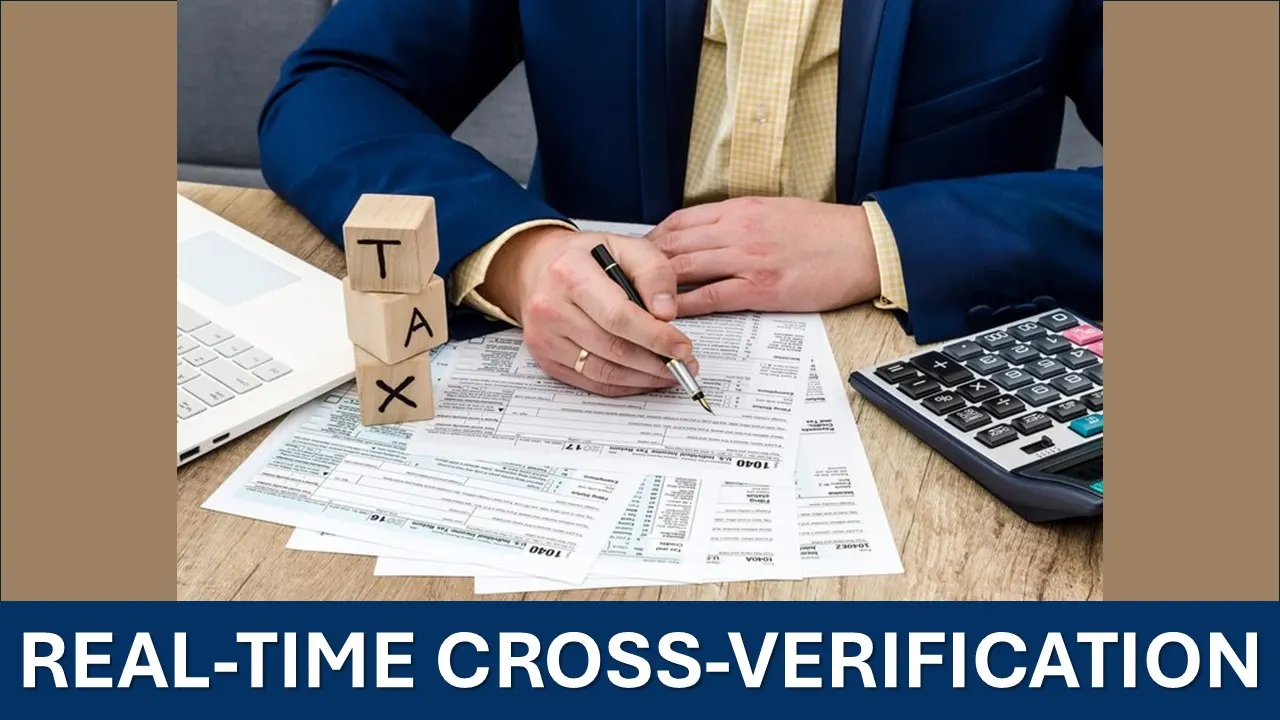
The Income Tax Department has stepped up with a remarkable move by cross-verifying information provided by taxpayers in order to improve transparency and minimizing false claims.
Income Tax Department Using Real-Time Cross-Verification
 Shriya Mishra
 Jun 9, 2025
Table of Contents

All You Need to Learn About IT Department's Real-Time Cross-Verification
The Income Tax Department has escalated its efforts in cross-verifying claims made by taxpayers in real time in order to improve efficiency and transparency. This remarkable move targets to diminish discrepancies, curb falsified claims, and guarantee precise tax compliance. From now on, taxpayers need to have accurate and proper documentation while filing their tax returns.Meaning of "Real-Time Cross Verification"
The Income Tax Department has now started using complex algorithms and huge data analysis in order to match the information proclaimed by taxpayers with data available from different other sources as soon as the claims are being made. These sources include:- Data from banks, financial institutions (mutual fund investments, share transactions), property registrars, and other government agencies.
- Comparison of current claims with the previous tax returns to identify unusual deviations.
- Usage of linked PAN and Aadhar to receive a greater array of financial footprints.\
- Usage of AI and machine learning to identify patterns of possible non-compliance or inconsistencies that can otherwise remain unnoticed.
What Taxpayers Must Keep In Mind
This "warning" requires taxpayers to be accurate and honest. Here's what taxpayers should do:- Maintain supporting documents for all the claims they make, be it investments, deductions, expenses, or income source. These documents could be bank statements, invoices, investment proofs, or other relevant paperwork.
- Re-check your income and deduction claims with information present in your AIS or Annual Information Statement before filing ITR.
- Claiming deduction or exemption with no legal backing can be even more troubling now.
- Consider taking advice from a qualified tax professional if there are complexities in your financial affairs.
Usage of 26AS, AIS, and ITR by the GST Department to Verify Income Tax Data
The GST Department uses different sources of information, such as Form 26AS, Annual Information Statement (AIS), and Income Tax Returns (ITR), in order to verify income tax data, ensuring compliance with tax laws.
Income Tax Scrutiny Assessment under IT Act Section 143 (3)
The Income Tax Assessment involves the verification of information given by a taxpayer in the returns submitted to the IT Department. Its major role is to ensure the correctness of the taxable income announced and the tax actually paid. This procedure includes regular assessments, reassessments, etc.About Author


Shriya Mishra
Content Writer
Shriya writes engaging and easy-to-understand content on budgeting, mutual funds, insurance, income tax, GST, company law and financial planning. Her mission is to guide readers toward smarter money habits and long-term wealth creation. She can be reached at [email protected]
Shriya writes engaging and easy-to-understand content on budgeting, mutual funds, insurance, income tax, GST, company law and financial planning. Her mission is to guide readers toward smarter money habits and long-term wealth creation. She can be reached at [email protected]
 Studycafe
 Delhi, Delhi, India
 56
56My Recent Articles
- Income Tax Dept Breaks Silence: No Mass Scrutiny for Small Taxpayers
- GST Return Filing to Get Tougher from July 1: Major Changes You Must Know
- Tax Trouble for Delhivery: Rs. 1.36 Cr Penalty Order from Income Tax
- Canada to remove Digital Services Tax to Restart Trade Talks with US
- IEC Update Deadline Ends Today: Don't Miss Final Date to Avoid Penalties
Up Next
Loading suggestions…


Recent Posts


All Posts



Tags
No tags yet.
Recent Posts
All Posts
Tags
No tags yet.