Apex Court Sets Aside Gujarat HC Direction to Modify Income Tax Software in TDS Mismatch Cases:
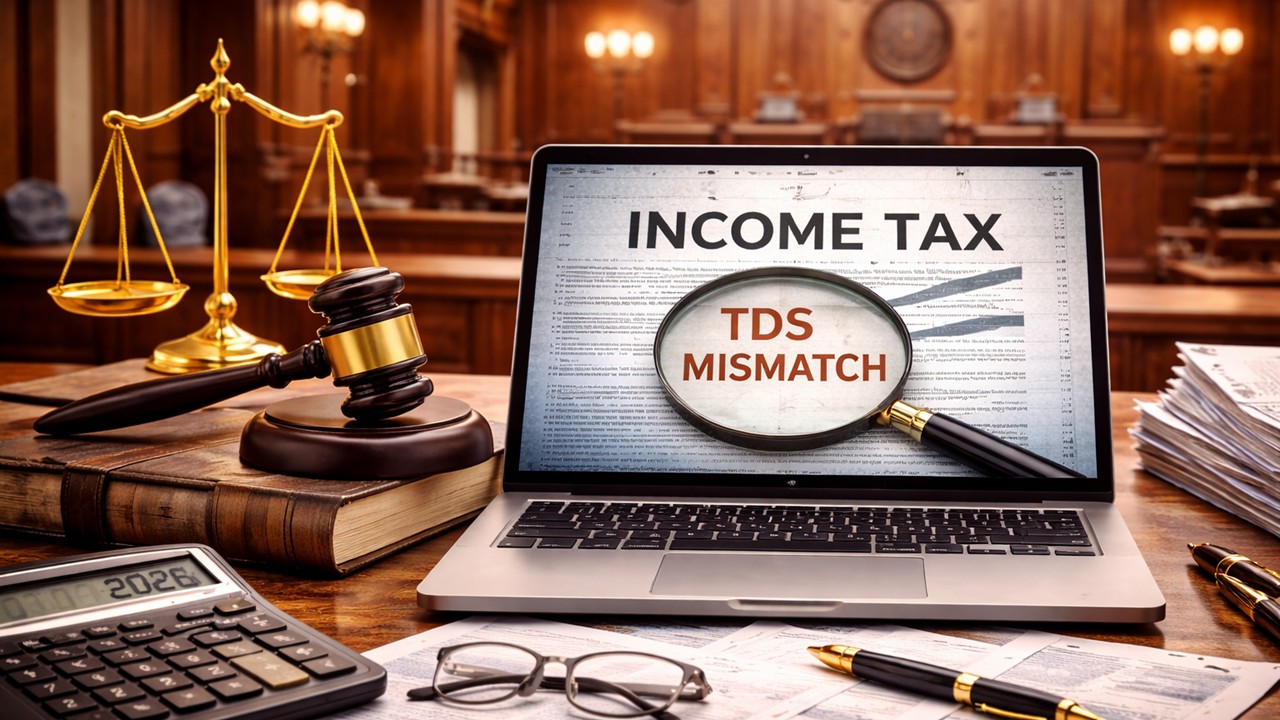
While upholding relief to employees under Section 205, SC clarifies technology cannot replace adjudication
SC Sets Aside Gujarat HC Order Directing Income Tax Software Changes in TDS Mismatch Case
 Meetu Kumari
 Feb 11, 2026
Apex Court Sets Aside Gujarat HC Direction to Modify Income Tax Software in TDS Mismatch Cases
The Gujarat High Court had quashed intimation orders issued under Section 143(1) for AY 2020-21 and 2021-22 against two salaried employees, Gayatri Snehal Rao and Shobhan Shantilal Doshi. The employer had deducted TDS from their salaries but failed to deposit the same with the Government. Due to this mismatch in Form 26AS, the Income Tax Department raised demands against the employees.
The High Court held that Section 205 bars direct demand on a deductee where tax has already been deducted, even if not deposited by the deductor. Relying on CBDT Instruction No. 275/29/2014-IT(B) dated 01.06.2015 and Office Memorandum , the Court not only quashed the demands but also directed the Department to make necessary changes in its software to prevent such demands in future.
The Revenue challenged only the direction relating to modification of the software before the Supreme Court.
Issue Before SC: Whether the High Court was justified in directing the Income Tax Department to modify its software to automatically prevent demand generation in cases where TDS is deducted but not deposited by the deductor.
SC's Decision: The Supreme Court upheld the substantive relief granted to the employees but set aside the High Court’s direction requiring changes in the Income Tax Department’s software.
The Court observed that granting TDS credit often requires factual verification by the AO. Technology is meant to assist and process data, not to adjudicate disputes or determine complex factual situations. A blanket direction to modify software could result in genuine tax demands being ignored without proper scrutiny.
Therefore, while the relief granted to the assessees remained untouched, the Supreme Court clarified that the High Court’s directions in paragraphs 10 and 11 concerning mandatory software modification were unsustainable and were therefore set aside.
In the connected matter, the SLP filed in Income Tax Assessing Officer & Ors. v. Gayatri Snehal Rao was dismissed both on delay (360 days) and on merits in view of the earlier order passed in 2026.
To Read Full Judgment, Download PDF Given Below
About Author


Meetu Kumari
Content Manager
Meetu Kumari is an Experienced Advocate and Content Writer with 4+ years of demonstrated history of working in the law practice industry. Skilled in Developing Content, Researching, and Drafting. Strong professional with a Bachelor of Science (B.Sc.) focused on Law from Gujarat National Law University.
Meetu Kumari is an Experienced Advocate and Content Writer with 4+ years of demonstrated history of working in the law practice industry. Skilled in Developing Content, Researching, and Drafting. Strong professional with a Bachelor of Science (B.Sc.) focused on Law from Gujarat National Law University.
 Studycafe
 Jodhpur, Rajasthan, India
 2264
2264My Recent Articles
- ITAT Condones 302-Day Delay, Restores Salary Assessment for Fresh VerificationPremium
- ITAT Condones Delay After Tax Consultant's Death, Restores Appeals for Fresh HearingPremium
- ITAT Remands Salary Addition, Says Taxability Depends on Salary Becoming Due, Not Mere ReceiptPremium
- ITAT Deletes TP Royalty Adjustment, Orders Fresh Review of Commission BenchmarkingPremium
- ITAT Quashes Reassessment Over Unsigned Section 148 Notice Issued to AssesseePremium
Up Next
Loading suggestions…


Recent Posts
All Posts

Recent Posts
All Posts