Assessee Cannot Be Denied TDS Credit for Deductor’s Default: ITAT Pune:
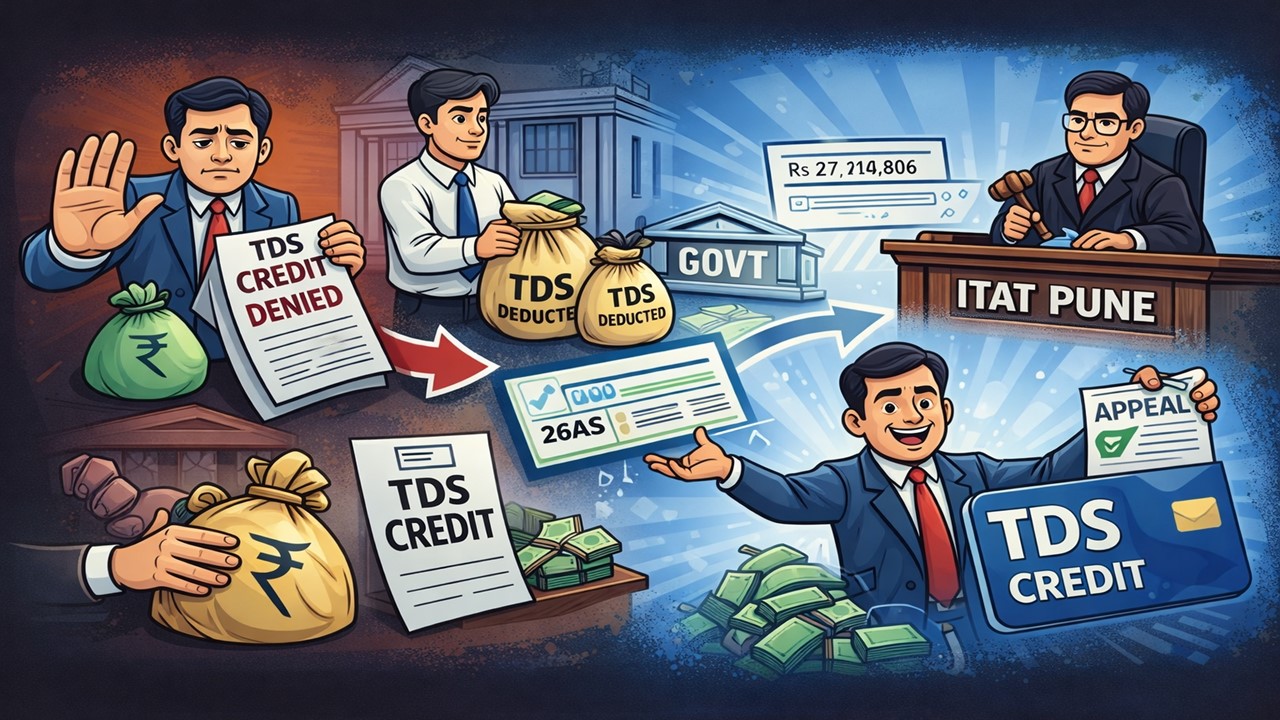
ITAT rules that an assessee cannot be denied TDS credit due to the deductor’s failure to deposit tax, and directs grant of credit with deletion interest.
ITAT Pune Allows TDS Credit Despite Deductor’s Failure
 Vanshika verma
 Jan 2, 2026
Assessee Cannot Be Denied TDS Credit for Deductor’s Default: ITAT Pune
The ITAT Pune held that assessee cannot be denied TDS credit just because the deductor failed to deposit the tax with the government, as the TDS was already deducted from its income. As a result, the tribunal allows the TDS credit and removes the interest, partly allowing the appeal.
Hemant Enterprises has filed the present appeal against the ACIT, Circle-1, Nashik, in the Income Tax Appellate Tribunal (ITAT) in Pune "A" Bench, challenging an order passed by the CIT(A), dated January 22, 2025, for assessment year 2019-20.
The assessee is an Association of Persons (AOP). For Assessment Year 2019-20, it filed its income tax return on October 15, 2019, showing an income of Rs 27,841,125, which was later revised on January 16, 2020.
The AO/CPC processed the return and issued an intimation order under the Income Tax Act, 1961, on July 10, 2020. While doing so, it did not allow credit for TDS of Rs 27,14,806 claimed by the assessee and also charged interest under 234A for late filing. The assessee then applied for correction of this mistake, but the tax department rejected the request on September 8, 2020, without making any changes.
Being aggrieved by the order of the AO, the assessee filed an appeal before the CIT(A)/NFAC. However, the CIT(A)/NFAC confirmed the action of the AO/CPC.
The assessee further approached ITAT, Pune. During the hearing, AR submitted that the TDS amount is not appearing in Form 26AS because the deductor failed to deposit the deducted tax into the government account. The AR explained that the assessee had already received payment from the deductor, Mumbai WTR Pvt. Ltd., after deduction of TDS. Once tax has been deducted from the payment, it becomes the legal responsibility of the deductor to deposit the same with the government. Therefore, the assessee should not be denied credit for the TDS amount.
AR also cited the decision of the Hon'ble Madras High Court in the case of Ashok Kumar B. Chowatia vs. JCIT (TDS). On the other hand, DR supported the order of CIT(A)/NFAC.
After considering both the parties, the Tribunal said the assessee should be granted TDS credit of Rs 27,14,806 and set aside the order of CIT(A)/NFAC. The tribunal also directed the AO to grant credit and delete the interest charged under section 234A of the Income Tax Act. As a result, the tribunal partly allowed the assessee's appeal.

About Author


Vanshika verma
Content Writer
Vanshika Verma is a Content Writer with 1+ year of experience at Studycafe.in. A B.Com graduate from Delhi University, She writes articles on Finance, Tax, ICAI, GST, and the latest financial news, with a focus on making complex topics easy for readers and professionals.
Vanshika Verma is a Content Writer with 1+ year of experience at Studycafe.in. A B.Com graduate from Delhi University, She writes articles on Finance, Tax, ICAI, GST, and the latest financial news, with a focus on making complex topics easy for readers and professionals.
 Studycafe
 Delhi, Delhi, India
 2096
2096My Recent Articles
- Pinarayi Vijayan Moves Supreme Court Challenging Kerala High Court Order to Register FIR in CMRL Alleged Bribery Case
- CBI Lays Trap in Srinagar, Arrests SMC Ward Officer Red-Handed While Allegedly Accepting Rs 10,000 Bribe
- NIIT Limited Discloses Income Tax Department’s Appeal Before Delhi ITAT, Says No Adverse Financial Impact Expected
- Fake WhatsApp Boss Dupes Company Accountant of Rs 40 Lakh; Surat Police Arrest Haryana Man in Cyber Fraud Case
- Uttarakhand Tax Department Detects Rs 2.5 Crore Tax Evasion at Ramnagar Resort
Up Next
Loading suggestions…


Recent Posts


All Posts


Tags
Recent Posts
All Posts