Capital Gains Exemption under Section 54GB: Tax Savings on Sale of Residential Property:
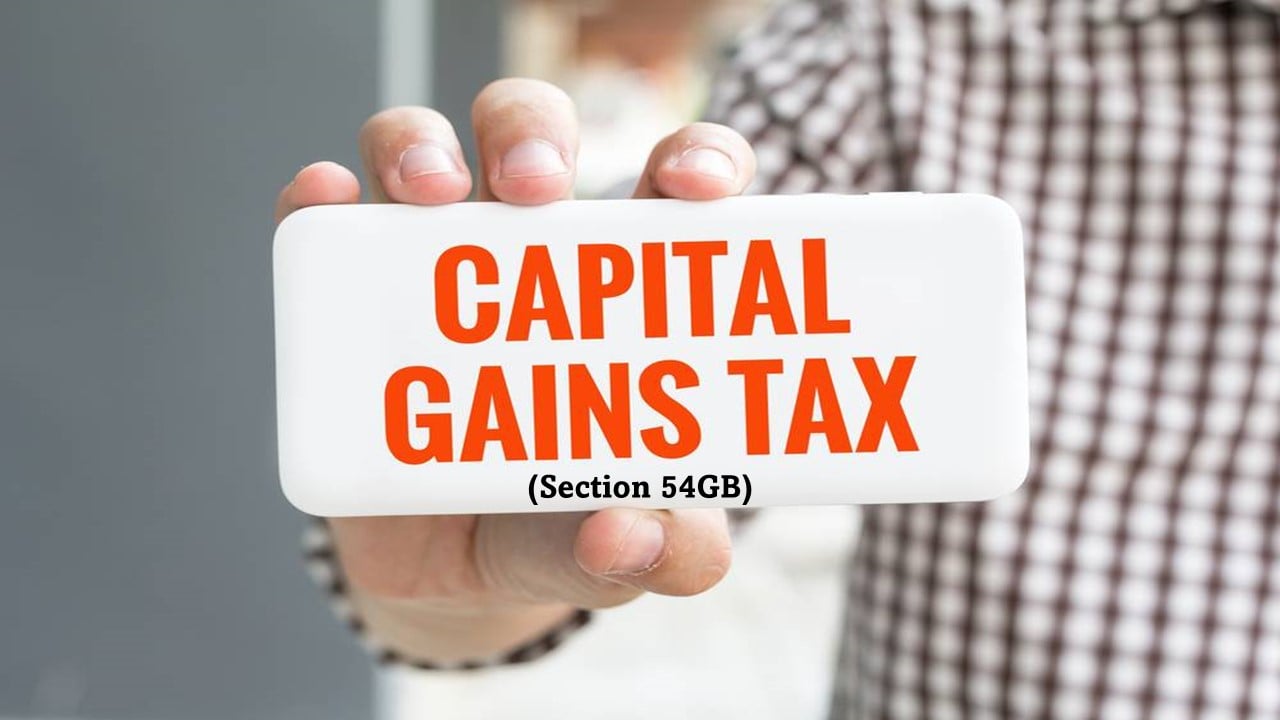
Section 54GB helps taxpayers save tax on long-term capital gains that arise when you sell a residential property. Know conditions on which Section 54GB is applicable.
Know How to Claim Capital Gain Exemption Using Section 54GB
 Saloni Kumari
 Aug 6, 2025
Capital Gains Exemption under Section 54GB: Tax Savings on Sale of Residential Property
Capital gain is the profit earned when a capital asset is sold at a price higher than its purchase price. The taxpayer who has earned this profit amount is required to pay tax on it; however, the Income Tax Act also provides exemptions on these capital gains if taxpayers immediately use the profit amount in purchasing another capital asset. There are a total of two types of capital gains: long-term and short-term capital gains.
Capital Gain Exemption is a situation where the taxpayers are not required to pay tax on their capital gains if they reinvest that gain in specified ways as per various sections of the Income Tax Act. These sections include Section 54, Section 54B, Section 54D, Section 54EC, Section 54EE, Section 54F, Section 54G, Section 54GA, Section 54GB, etc.
Among these sections, one is Section 54GB. Here, we will understand the conditions under which this section can be used for claiming capital gain exemption. Section 54GB helps you save tax on long-term capital gains that arise when you sell a residential property (a house or a plot of land). This is available only for individuals or Hindu Undivided Families (HUFs), not for companies or firms. One can get an exemption under this section if he/she invest the net consideration in the equity shares of an eligible company or start-up, and that company uses the money to buy new plant and machinery.
This section is only applicable to residential properties transferred between April 1, 2012, and March 31, 2017, for regular eligible companies and up to March 31, 2022, if the investment is made in an eligible start-up. Therefore, if a taxpayer sells his/her residential property within these periods, they may become eligible.
To claim the exemption under Section 54GB, the taxpayer must invest the profit earned by selling the residential property in the equity shares of an eligible company or start-up. The condition is that the investment must be made before the due date for filing your Income Tax Return (ITR) under Section 139(1).
After you invest in the company, the company must use that money to purchase new plant and machinery (called "new assets"). This purchase should take place within a time period of one year from the date when you invested in their shares. If by chance, the company fails to use the capital gain immediately, they can use the unused amount by putting it in a Capital Gains Account Scheme (CGAS) before their ITR due date. However, this money must then be used within one year to buy new plant and machinery.
The capital gain exemption the taxpayer gets is not always complete. This capital gain exemption amount is calculated using the following formula:
Exemption = (A × B) ÷ C
Where:
- A = Amount the company spent on buying new plant/machinery.
- B = Capital gain from the sale of residential property.
- C = Net sale consideration (i.e., total sale price minus expenses like brokerage).
- You sell your shares within 5 years: If you sell or transfer the equity shares of the eligible company within 5 years, then the exemption you got earlier becomes taxable again as a long-term capital gain in the year you sold the shares.
- The company sells the new asset early: If the company sells or transfers the plant/machinery within 5 years (or 3 years in the case of computers or software), then again, the earlier exemption is reversed, and it will be taxed as a long-term capital gain in the year the asset is sold.
- The company does not use the capital gain account money: If the company deposits the money in the Capital Gain Account Scheme (CGAS) but fails to use it to buy new assets within 1 year, then again, your earlier exemption is cancelled. That amount will now be considered a long-term capital gain for you, and it will be taxed in the year when the 1-year time limit expires.
About Author


Saloni Kumari
Content Writer
Saloni is a Content Writer with 2+ years of experience at studycafe.in. She writes legal, taxation, and finance related content including GST, Income Tax etc. Skilled in translating complex judicial pronouncements and regulatory developments into clear, and reader-friendly articles. Experienced in covering judgements of ITAT, High Court, GSTAT, and news related to Income Tax, GST, and corporate law. She can be reached at [email protected].
Saloni is a Content Writer with 2+ years of experience at studycafe.in. She writes legal, taxation, and finance related content including GST, Income Tax etc. Skilled in translating complex judicial pronouncements and regulatory developments into clear, and reader-friendly articles. Experienced in covering judgements of ITAT, High Court, GSTAT, and news related to Income Tax, GST, and corporate law. She can be reached at [email protected].
 StudyCafe
 Delhi, Delhi, India
 2919
2919My Recent Articles
- IBA Recommends Public Sector Banks to Reduce Ambit of Physical Branch Audits to 50% of Total Business
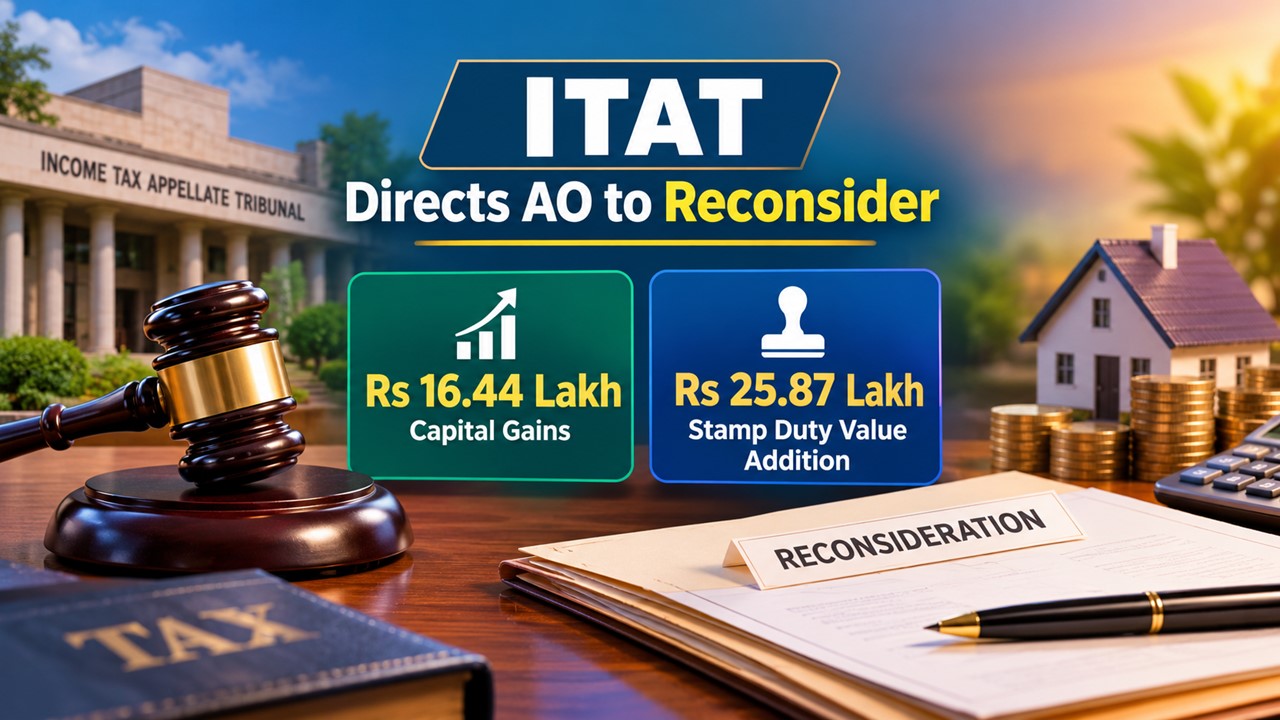
- ITAT Directs AO to Reconsider Rs 16.44 Lakh Capital Gains and Rs 25.87 Lakh Stamp Duty Value Addition
- ITAT Remands Rs 3.33 Crore Demonetisation Cash Deposit Case to AO, Directs Rs 10,000 Relief Fund Payment
- Income Tax Dept Increases Scope for Saksham Nudge Initiative to Further Include Professional Insuring Timely Compliance
- Vedanta Subsidiary ESL Steel Receives GST SCN for Rs. 2.76 Lakh IGST Demand Over Alleged RCM Short Payment
Up Next
Loading suggestions…


Recent Posts


All Posts


Recent Posts
All Posts