Flat Buyer Purchased Pune Apartment for Rs. 1.26 Crore, Faced Tax on Rs. 5.55 Lakh Stamp Duty Difference; ITAT Deletes Addition as Variation Was Within 10% Limit:
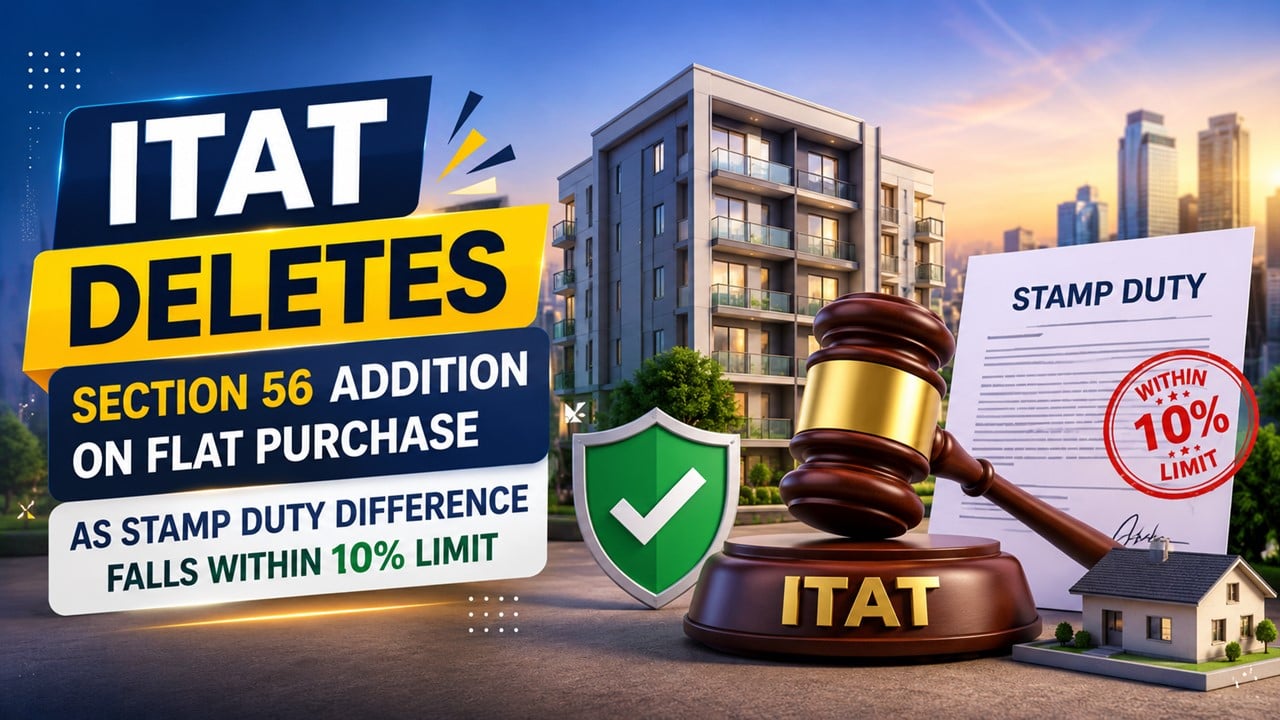
The ITAT deleted a Rs 5.55 lakh addition on a flat purchase after holding that the difference between the purchase price and stamp duty value was within the 10% safe-harbour limit.
No Tax on Minor Property Valuation Mismatch, Says ITAT
 Saloni Kumari
 Jun 20, 2026
Flat Buyer Purchased Pune Apartment for Rs. 1.26 Crore, Faced Tax on Rs. 5.55 Lakh Stamp Duty Difference; ITAT Deletes Addition as Variation Was Within 10% Limit
The ITAT Pune has granted significant relief to taxpayer Alok Gangadharrao Galge by deleting an addition of Rs 5.55 lakh made by the tax authorities under Section 56(2)(vii)(b) of the Income Tax Act in relation to the purchase of a residential flat.
During the year under consideration, i.e., Assessment Year 2016-17, the assessee had purchased a flat worth Rs 1.26 crore in Blue Ridge Township, Pune. The stamp duty authority valued the property at Rs 1.315 crore, which resulted in a difference of Rs 5.55 lakh. The tax authorities treated the same difference as taxable income and made an addition of the same to the assessee's income.
Before the Tribunal, the assessee argued that the difference between the purchase price and the stamp duty value was less than 10% and therefore should be ignored in view of judicial precedents. The assessee relied on several ITAT decisions which held that the tolerance limit of 10% is applicable even in earlier years.
When the tribunal analysed the facts of the case, it noted that the variation between the actual consideration and the stamp duty valuation was within the 10% safe-harbour limit. Following earlier decisions of the Mumbai and Pune Benches, the Tribunal held that no addition could be made under Section 56(2)(vii)(b) in such circumstances. Accordingly, it directed the Assessing Officer to delete the addition of Rs. 5.55 lakh.
However, the Tribunal rejected the assessee’s separate claim for deduction under Section 80C amounting to Rs 8.80 lakh towards the stamp duty payment. It noted that the deduction had not been claimed in the income tax return filed by the assessee. Referring to Section 80A(5) and decisions of the Bombay and Gujarat High Courts, the Tribunal held that a deduction cannot be allowed if it is not claimed in the return of income.
As a result, the appeal was partly allowed in favour of the assessee.
About Author


Saloni Kumari
Content Writer
Saloni is a Content Writer with 2+ years of experience at studycafe.in. She writes legal, taxation, and finance related content including GST, Income Tax etc. Skilled in translating complex judicial pronouncements and regulatory developments into clear, and reader-friendly articles. Experienced in covering judgements of ITAT, High Court, GSTAT, and news related to Income Tax, GST, and corporate law. She can be reached at [email protected].
Saloni is a Content Writer with 2+ years of experience at studycafe.in. She writes legal, taxation, and finance related content including GST, Income Tax etc. Skilled in translating complex judicial pronouncements and regulatory developments into clear, and reader-friendly articles. Experienced in covering judgements of ITAT, High Court, GSTAT, and news related to Income Tax, GST, and corporate law. She can be reached at [email protected].
 StudyCafe
 Delhi, Delhi, India
 2879
2879My Recent Articles
- RBI Eases Foreign Exchange Compliance for Small Exporters and Freelancers
- GST Council Proposes Major Reforms in Registration, ITC, Refunds and Arrest Rules
- Govt Fixes 7.1% Interest Rate on Special Deposit Scheme for Non-Government PF Funds From Oct to Dec 2026
- CBI Apprehends Principal of Eklavya Model Residential School, Nuapada, for Demanding Rs 20,000 Bribe
- RBI Announces Exclusion of Paytm Payments Bank Limited from Second Schedule of RBI Act, 1934
Up Next
Loading suggestions…


Recent Posts

All Posts

Recent Posts
All Posts