GST Relief on Disability Aids? Govt Responds in Lok Sabha:
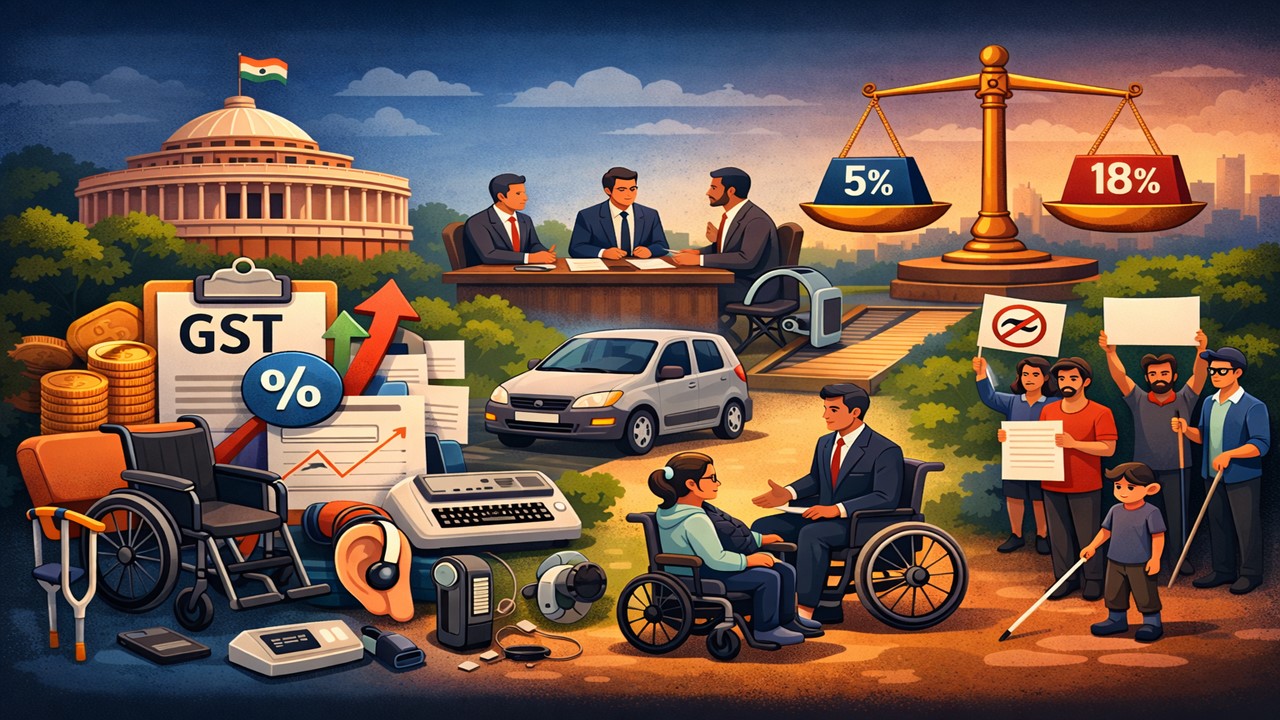
The Ministry of Finance outlined existing GST rates on assistive devices & explained why further exemptions depend on the GST Council.
Government's Response on GST for Disability Assistive Products
 Vanshika verma
 Feb 5, 2026
GST Relief on Disability Aids? Govt Responds in Lok Sabha
In a written response to questions raised in the Lok Sabha regarding GST Rebates for Assistive Devices for Persons with Disabilities, the Ministry of State in the Ministry of Finance, Shri Pankaj Chaudhary, replied on Monday, February 2, 2026.
Here are the questions raised in the Lok Sabha:
a) whether the Government is aware that several assistive devices and mobility aids for persons with disabilities, which previously received concessional GST benefits or effective price reductions, including discounts of up to 10 per cent, are no longer available under the revised GST rate structure, if so, the details thereof;
b) the details of the current Goods and Services Tax (GST) rates applicable to assistive devices and technologies used by persons with disabilities, including but not limited to wheelchairs, prosthetics, hearing aids, Braille printers, screen readers, mobility aids and accessible communication technologies;
c) the reasons for retaining GST on such assistive devices despite their essential nature and whether the Government proposes to rationalise or eliminate these taxes;
d) whether the Government proposes to reinstate or revise GST rebates/discounts for differently abled persons to ensure affordably for essential assistive products, if so, the details thereof along with the timeline fixed for its implementation;
e) whether the Government has consulted the GST Council regarding re-categorising assistive devices for persons with disabilities under lower or zero GST slabs considering their essential and non-luxury nature, if so, the details thereof along with the outcomes of such consultations; and
f) whether the Government has received any representations or recommendations from disability rights organisations, the Department of Empowerment of Persons with Disabilities, or other stakeholders seeking GST exemption on such essential aids and if so, the details thereof?
Below are the responses to all the questions (a to f), as provided by Shri Pankaj Chaudhary:
1. GST rates are decided by the GST Council, a constitutional body where both the Central Government and State/UT Governments are represented.
2. Currently, the below-mentioned assistive devices, rehabilitation aids, and other goods meant for persons with disabilities are taxed at a lower GST rate of 5%.
- Braille Erasers
- Braille writers and braille writing instruments
- Hand writing equipment Braille Frames, Slates, Writing Guides, Script Writing Guides, Styli
- Canes, Electronic aids like the Sonic Guide
- Optical, Environmental Sensors
- Arithmetic aids like the Taylor Frame (arithmetic and algebra types), Cubarythm, Speaking or Braille calculator
- Geometrical aids like combined Graph and Mathematical Demonstration Board, Braille Protractors, Scales, Compasses and Spar Wheels
- Electronic measuring equipment, such as calipers, micrometers, comparators, gauges, gauge blocks Levels, Rules, Rulers and Yardsticks
- Drafting, Drawing aids, tactile displays Specially adapted clocks and watches
- Wheel chairs falling under heading No. 87.13 of the First Schedule of the Customs Tariff Act, 1975
- Retro fitment kits for vehicles used by the disabled
- Artificial electronic larynx and spares thereof
- Artificial electronic ear (Cochlear implant)
- Talking books (in the form of cassettes, discs or other sound reproductions) and large-print books, braille embossers, talking calculators, talking thermometers
- Equipment for the mechanical or the computerized production of braille and recorded material such as braille computer terminals and displays, electronic braille, transfer and pressing machines and stereo typing machines
- Braille paper
- All tangible appliances including articles, instruments, apparatus, specially designed for use by the blind
- Aids for improving mobility of the blind such as electronic orientation and obstacle detection appliance and white canes
- Technical aids for education, rehabilitation, vocational training and employment of the blind such as Braille typewriters, braille watches, teaching and learning aids, games and other instruments and vocational aids specifically adapted for use of the blind
- Assistive listening devices, audiometers
- External catheters, special jelly cushions to prevent bed sores, stair lift, urine collection bags
- Instruments and implants for severely physically handicapped patients and joints replacement and spinal instruments and implants including bone cement
- Parts of Crutches, Wheel chairs, Walking frames, Tricycles, Braillers, and Artificial limbs
- Orthopaedic appliances, such as crutches, surgical belts, and trusses; Splints and other fracture appliances; artificial parts of the body; other appliances which are worn or carried, or implanted in the body, to compensate for a defect or disability; intraocular lens
About Author


Vanshika verma
Content Writer
Vanshika Verma is a Content Writer with 1+ year of experience at Studycafe.in. A B.Com graduate from Delhi University, She writes articles on Finance, Tax, ICAI, GST, and the latest financial news, with a focus on making complex topics easy for readers and professionals.
Vanshika Verma is a Content Writer with 1+ year of experience at Studycafe.in. A B.Com graduate from Delhi University, She writes articles on Finance, Tax, ICAI, GST, and the latest financial news, with a focus on making complex topics easy for readers and professionals.
 Studycafe
 Delhi, Delhi, India
 2094
2094My Recent Articles
- NIIT Limited Discloses Income Tax Department’s Appeal Before Delhi ITAT, Says No Adverse Financial Impact Expected
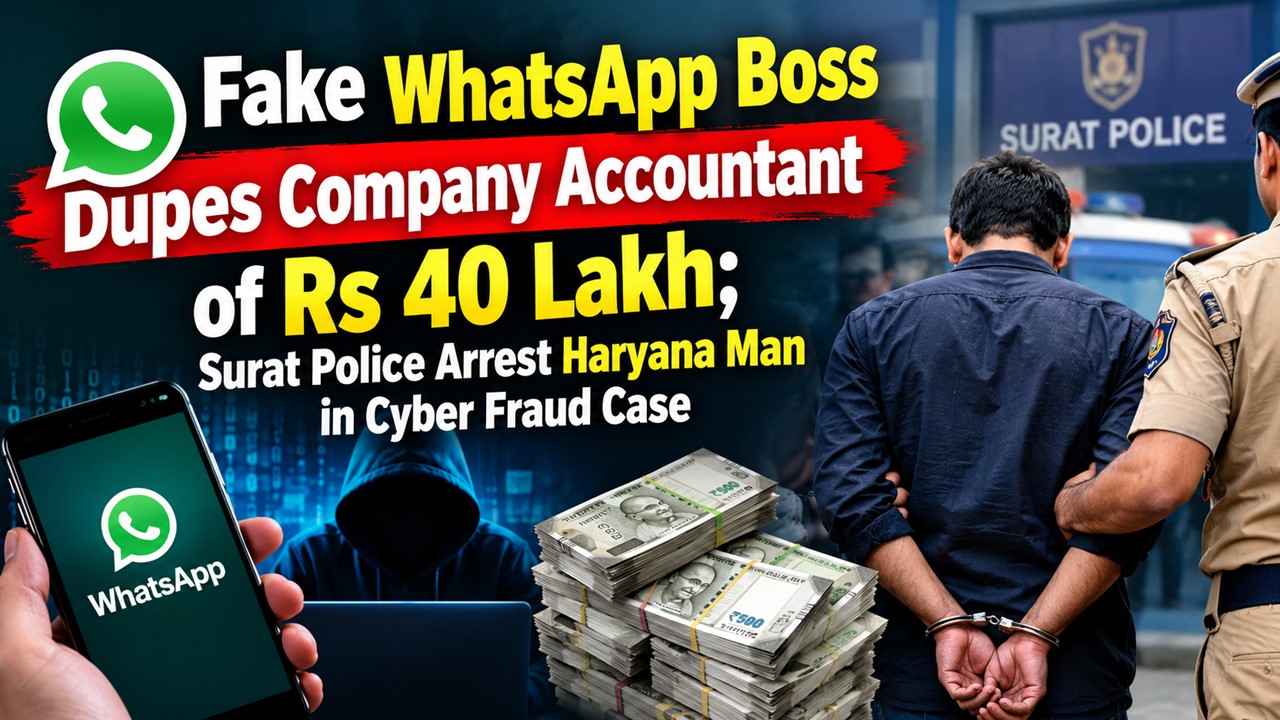
- Fake WhatsApp Boss Dupes Company Accountant of Rs 40 Lakh; Surat Police Arrest Haryana Man in Cyber Fraud Case
- Uttarakhand Tax Department Detects Rs 2.5 Crore Tax Evasion at Ramnagar Resort
- GST Team Raid at Iron Trader’s Shop in Hathras Sparks Major Uproar as Traders Gather and Allegations of Assault Emerge
- CBI Arrests SFIO Deputy Director and Two Others Over Alleged Rs 1 Crore Bribe Demand in DHFL Scam Investigation
Up Next
Loading suggestions…


Recent Posts
All Posts
Recent Posts
All Posts