High Court Orders Fresh Inquiry Into Section 80-IA Deduction Claims:
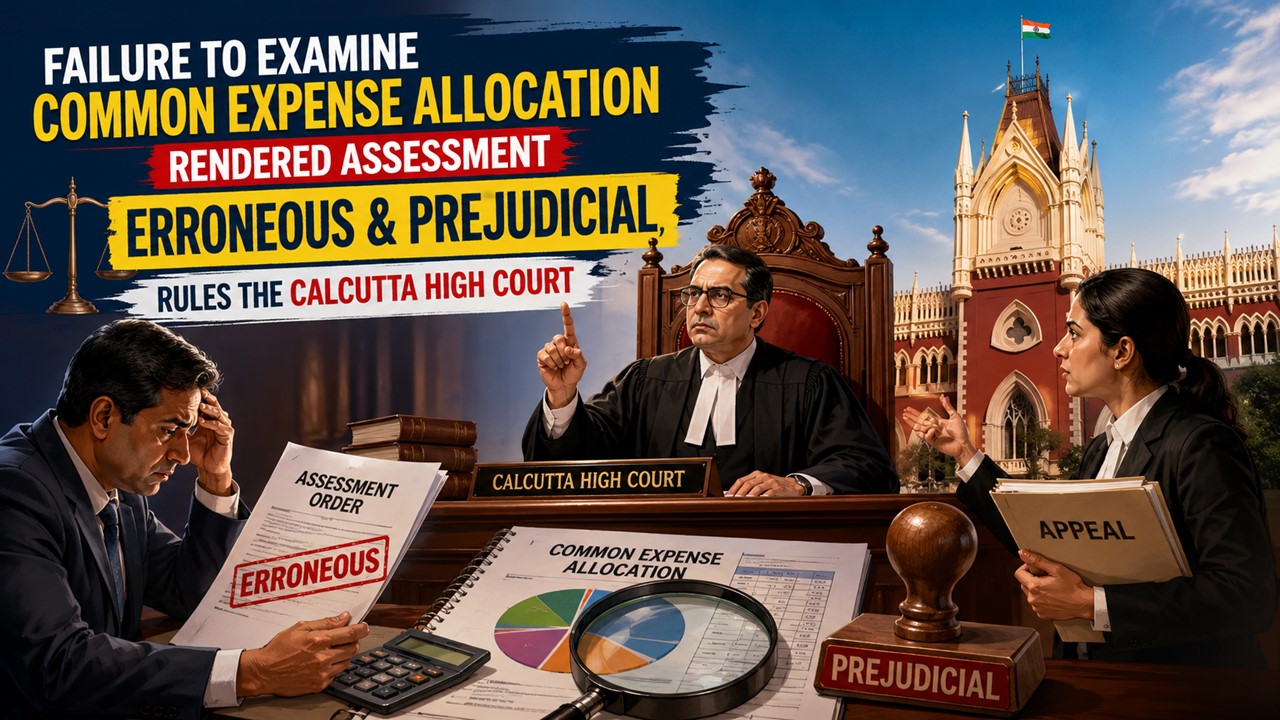
Failure to examine common expense allocation rendered the assessment erroneous and prejudicial, rules the Calcutta High Court.
Revenue Alleged Inflated Eligible Profits Due to Non-Allocation Of Expenses
 Meetu Kumari
 May 12, 2026
The High Court on 7 May upheld the exercise of revisionary jurisdiction under Section 263 of the Income Tax Act, 1961, holding that an assessment order becomes erroneous and prejudicial to the interests of the Revenue where the Assessing Officer fails to conduct a proper inquiry into the allocation of common Head Office expenses while allowing deduction under Section 80-IA. A Division Bench comprising Justice Rajarshi Bharadwaj and Justice Uday Kumar dismissed the appeals filed by Shyam SEL and Power Limited and connected assessees. The court noted a point that
“When a deduction of such magnitude is claimed, adequate inquiry by the Assessing Officer becomes necessary and failure to examine a vital accounting component would render the assessment erroneous.”

The dispute arose after the assessees claimed profit-linked deductions under Section 80-IA in respect of eligible industrial units. During assessment proceedings, the Assessing Officer accepted the computation of eligible profits without examining whether common Head Office expenses such as finance costs, administrative overheads and employee benefit expenses were proportionately allocated to the eligible units.
The Principal Commissioner of Income Tax (PCIT) subsequently invoked powers under Section 263 on the ground that failure to allocate common expenses had artificially inflated the profits of the eligible units, resulting in an excess deduction. The revisionary order was later upheld by the Income Tax Appellate Tribunal.

Before the High Court, the assessees argued that the disputed expenses had a direct nexus only with non-eligible units and therefore no allocation was required. It was contended that the Assessing Officer had already examined the issue during assessment proceedings, and the PCIT could not invoke Section 263 merely because a different view was possible.
The Revenue submitted that there was a complete lack of inquiry by the Assessing Officer on a crucial aspect directly affecting the computation of deduction under Section 80-IA. It argued that the “direct nexus” theory advanced by the assessees was accepted without any verification or examination of records.
The High Court observed that while the Assessing Officer is not expected to conduct a "super-audit", there must be an adequate inquiry where substantial deductions are claimed. The Bench held that acceptance of the assessee’s claim without verification amounted to "lack of inquiry", which squarely justified the invocation of revisionary powers under Section 263. The Court also pointed out that "No inquiry or lack of inquiry into a plausible area of income leakage would justify interference under Section 263.”
Therefore, the Court upheld the orders passed by the PCIT and the ITAT, and directed the Assessing Officer to undertake a fresh assessment limited to the issue of proportionate allocation of Head Office expenses to eligible units after granting adequate opportunity to the assessees.
About Author


Meetu Kumari
Content Manager
 Studycafe
 Jodhpur, Rajasthan, India
 2264
2264My Recent Articles
- ITAT Condones 302-Day Delay, Restores Salary Assessment for Fresh VerificationPremium
- ITAT Condones Delay After Tax Consultant's Death, Restores Appeals for Fresh HearingPremium
- ITAT Remands Salary Addition, Says Taxability Depends on Salary Becoming Due, Not Mere ReceiptPremium
- ITAT Deletes TP Royalty Adjustment, Orders Fresh Review of Commission BenchmarkingPremium
- ITAT Quashes Reassessment Over Unsigned Section 148 Notice Issued to AssesseePremium
Loading suggestions…


Recent Posts
All Posts
Recent Posts
All Posts