ITR Filing for FY 2024-25: Opting Old Tax Regime? Deductions You Must Know Before Filing:
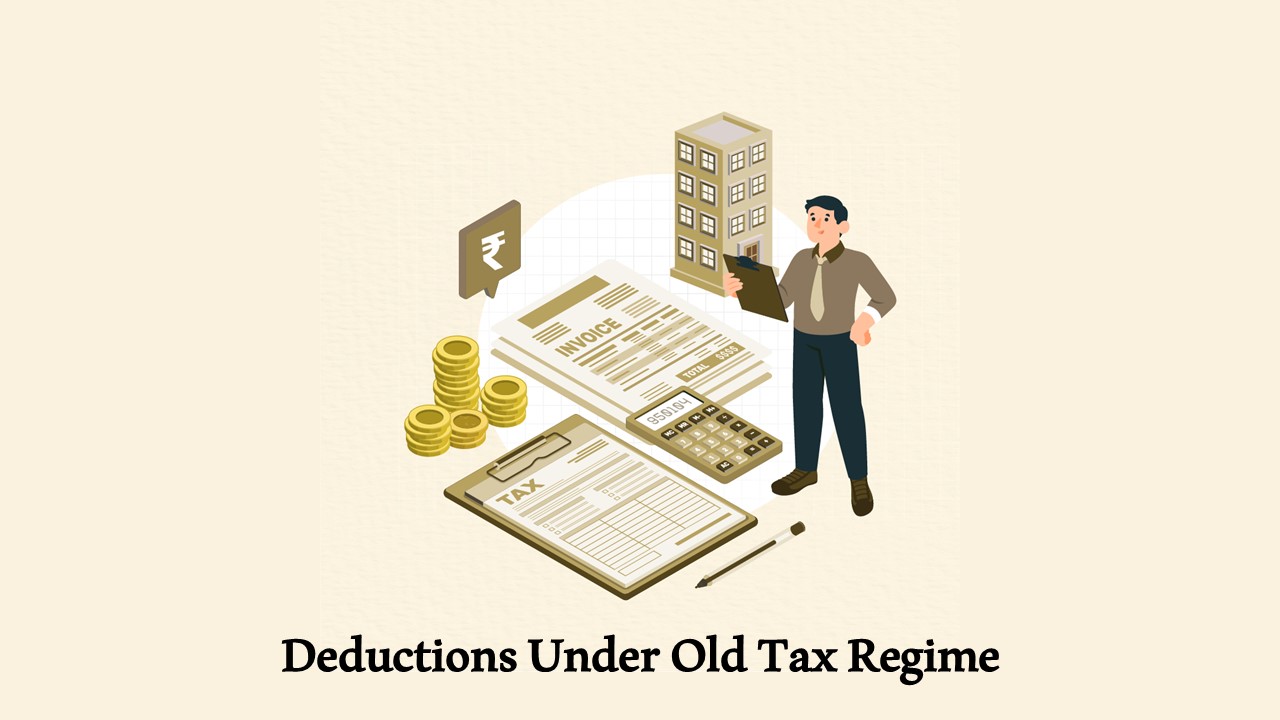
Here's a comprehensive guide to all the deductions and documents you need to know when filing your ITR under the old tax regime for FY 2024-25.
Key Deductions and Documents for Old Tax Regime in FY 2024-25
 Saloni Kumari
 Aug 25, 2025
ITR Filing for FY 2024-25: Opting Old Tax Regime? Deductions You Must Know Before Filing
If you are filing your Income Tax Return (ITR) for the financial year 2024-25 and you are opting for the old tax regime. Then you must be aware of various deductions available under the old tax regime to reduce your taxable income. Below is a list of deductions available under different sections of the Income Tax Act, along with the maximum limits and the documents or details you will need to claim them correctly.
All the deductions listed below can reduce your taxable income and, therefore, your tax payable. But to claim them, you must provide valid documents such as account numbers, PANs, receipts, certificates, and letters. When filing your ITR, make sure these details are handy, whether you are doing it yourself or through a tax professional.
1. Section 80C: Investment-Based Deductions (Max: Rs. 150,000)
This section allows you to claim deductions for investments and expenses like LIC premium, Public Provident Fund (PPF), Equity Linked Savings Scheme (ELSS), National Savings Certificate (NSC), Tuition fees for children, Employee Provident Fund (EPF) and Principal repayment of a home loan.
- Documents: To claim these, you must have details such as Policy number, account number, or investment certificate- Employer’s PF account details if claiming EPF.
- Rs. 25,000 for self and family (below 60 years)
- Rs. 50,000 if the insured person (you or your parents) is a senior citizen (60+)
- Documents: To claim these, you must have details such as Policy number, Name of insurance company and Premium payment receipt.
- Documents: To claim this deduction, you will require documents such as the Loan account number and a Certificate from the bank/NBFC showing the interest paid.
- Documents: To claim this deduction, you will require documents such as a Donation receipt, a Donation reference number and the 80G registration number of the trust/organisation.
- Documents: To claim this deduction, you will require a PRAN (Permanent Retirement Account Number).
- Rs. 75,000 for 40%-79% disability
- Rs. 125,000 for 80% and above
- Documents: To claim this deduction, you will require documents such as Disability certificate number and the Aadhaar/PAN of the dependent (if applicable).
- For regular taxpayers (below 60), a Rs. 10,000 deduction on savings bank interest (Section 80TTA)
- For senior citizens (60+), an Rs. 50,000 deduction, which includes both savings and fixed deposit interest (Section 80TTB)
- Documents: Usually, bank details like account number and IFSC code are auto-filled, but keep them ready.
- Up to Rs. 200,000 for a self-occupied house
- Full interest amount if the house is let out (rented)
- Documents: To claim this deduction, you will require documents such as Lender’s name and PAN, the Loan account number, Interest certificate from the bank or housing finance company (HFC), Property address, etc.
- Documents: To claim this deduction, you will require documents such as Loan account number, Certificate from the bank or HFC showing the principal amount paid and Possession certificate or completion certificate of the house.

- Documents: To claim this deduction, you will require documents such as Loan sanction letter (date and amount), Loan account number and the PAN of the lender.
- Documents: To claim this deduction, you will require documents such as Loan account number, Loan sanction letter and Proof of stamp duty value.
- Documents: To claim this deduction, you will require documents such as Landlord’s name, address, and PAN (PAN is mandatory if annual rent is over Rs. 100,000) and Rent agreement or rent receipts.
About Author


Saloni Kumari
Content Writer
Saloni is a Content Writer with 2+ years of experience at studycafe.in. She writes legal, taxation, and finance related content including GST, Income Tax etc. Skilled in translating complex judicial pronouncements and regulatory developments into clear, and reader-friendly articles. Experienced in covering judgements of ITAT, High Court, GSTAT, and news related to Income Tax, GST, and corporate law. She can be reached at [email protected].
Saloni is a Content Writer with 2+ years of experience at studycafe.in. She writes legal, taxation, and finance related content including GST, Income Tax etc. Skilled in translating complex judicial pronouncements and regulatory developments into clear, and reader-friendly articles. Experienced in covering judgements of ITAT, High Court, GSTAT, and news related to Income Tax, GST, and corporate law. She can be reached at [email protected].
 StudyCafe
 Delhi, Delhi, India
 2919
2919My Recent Articles
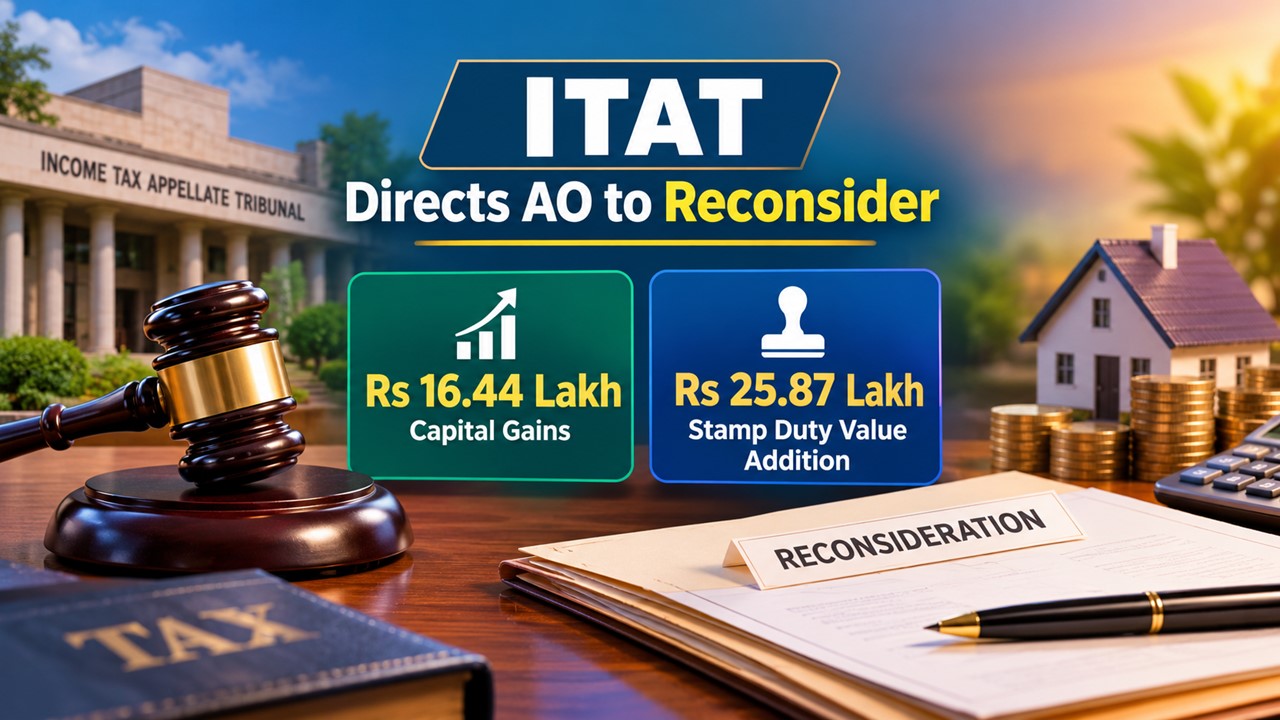
- ITAT Directs AO to Reconsider Rs 16.44 Lakh Capital Gains and Rs 25.87 Lakh Stamp Duty Value Addition
- ITAT Remands Rs 3.33 Crore Demonetisation Cash Deposit Case to AO, Directs Rs 10,000 Relief Fund Payment
- Income Tax Dept Increases Scope for Saksham Nudge Initiative to Further Include Professional Insuring Timely Compliance
- Vedanta Subsidiary ESL Steel Receives GST SCN for Rs. 2.76 Lakh IGST Demand Over Alleged RCM Short Payment
- Good News! ICAI Opens One-Day Window for Submission of MEF Form 2026-27 at meficai.org
Up Next
Loading suggestions…


Recent Posts
All Posts

Tags
No tags yet.
Recent Posts
All Posts
Tags
No tags yet.