No AI in Judgments: Gujarat High Court Issues Strict Usage Policy:

The Gujarat High Court has issued a strict policy stating that AI cannot be used for judicial decision-making or handling evidence.
AI Cannot Decide Cases, Says Gujarat HC
 Vanshika verma
 Apr 4, 2026
No AI in Judgments: Gujarat High Court Issues Strict Usage Policy
The Gujarat High Court has introduced a new policy that restricts how artificial intelligence (AI) can be used by judges and court staff in the State. The main idea is that AI cannot be used to make judicial decisions or help decide cases. Judges and court officials must make all decisions themselves.
The policy stated that "artificial intelligence shall never be employed for any form of decision-making, judicial reasoning, order drafting, judgement preparation, bail/sentencing considerations, or any substantive adjudicatory process".
AI is also not allowed to help in handling evidence. It cannot be used to sort, classify, summarise, or assess evidence, or to judge whether evidence is relevant or credible.
But it can be used in limited and supportive ways. It may be used for legal research, like finding judgements, identifying precedents, extracting legal principles, or helping with statutory interpretation. But any information given by AI must be checked and verified using official legal sources like recognised law reports and government publications.
AI can also be used for administrative and technical work. For example, it may help with IT-related tasks, drafting internal circulars, preparing training materials, or improving the language and structure of draft documents. It can help make writing clearer, but the legal reasoning and final content must entirely belong to the judge.
The policy makes it clear that if a judge or court officer signs a document that contains AI-generated content, they are fully responsible for it. They cannot blame AI for any mistakes. Relying on AI offers no protection against errors, misconduct, or negligence.
Legal assistants and research staff using AI must inform the concerned judge and clearly document their usage. There must be transparency whenever AI assists in preparing research notes or briefs.
The policy says that you must not enter any private or sensitive information into public AI tools, including names of parties, witnesses, or lawyers, as well as financial details, health information, caste details, or any case-related documents.
The policy says that if someone breaks the rules, they can be punished under the policy, and they may also face legal action under Indian laws like the Information Technology Act, 2000 or the Bharatiya Nyay Sanhita, 2023.
Click here to read the Policy on the use of Artificial Intelligence in the Judicial and Court Administration.
About Author


Vanshika verma
Content Writer
Vanshika Verma is a Content Writer with 1+ year of experience at Studycafe.in. A B.Com graduate from Delhi University, She writes articles on Finance, Tax, ICAI, GST, and the latest financial news, with a focus on making complex topics easy for readers and professionals.
Vanshika Verma is a Content Writer with 1+ year of experience at Studycafe.in. A B.Com graduate from Delhi University, She writes articles on Finance, Tax, ICAI, GST, and the latest financial news, with a focus on making complex topics easy for readers and professionals.
 Studycafe
 Delhi, Delhi, India
 2096
2096My Recent Articles
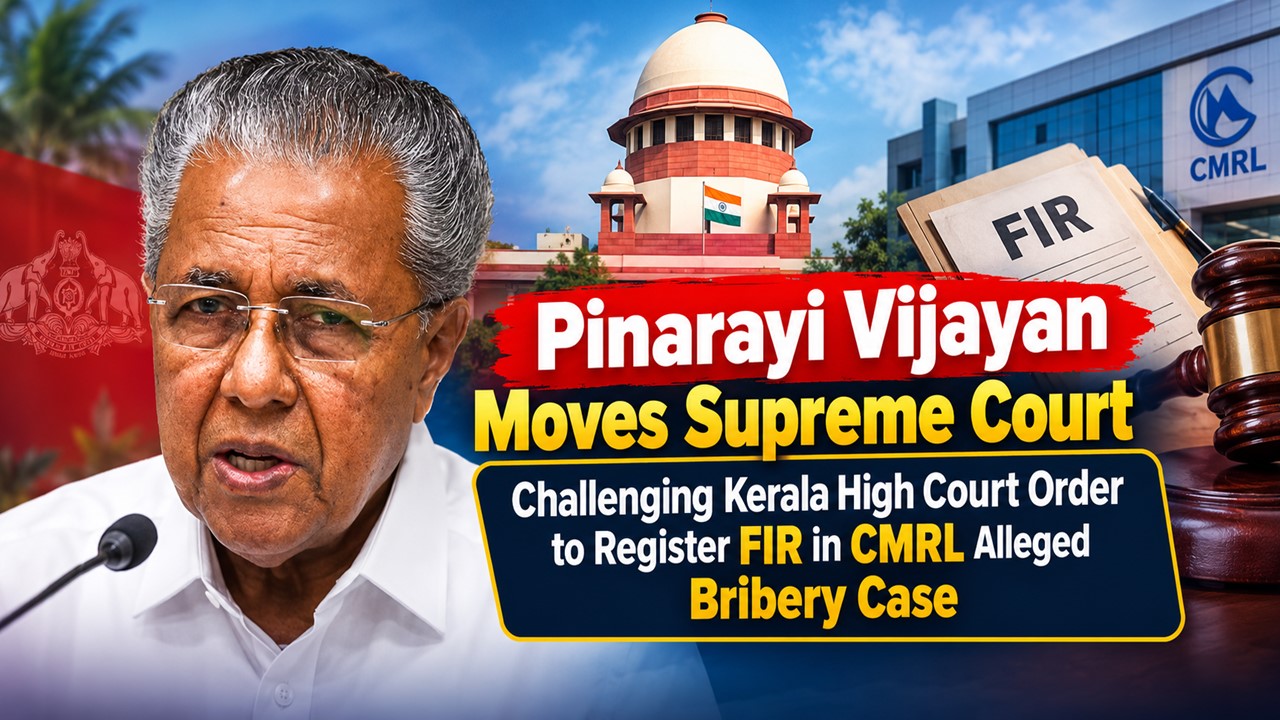
- Pinarayi Vijayan Moves Supreme Court Challenging Kerala High Court Order to Register FIR in CMRL Alleged Bribery Case
- CBI Lays Trap in Srinagar, Arrests SMC Ward Officer Red-Handed While Allegedly Accepting Rs 10,000 Bribe
- NIIT Limited Discloses Income Tax Department’s Appeal Before Delhi ITAT, Says No Adverse Financial Impact Expected
- Fake WhatsApp Boss Dupes Company Accountant of Rs 40 Lakh; Surat Police Arrest Haryana Man in Cyber Fraud Case
- Uttarakhand Tax Department Detects Rs 2.5 Crore Tax Evasion at Ramnagar Resort
Up Next
Loading suggestions…


Recent Posts
All Posts


Recent Posts
All Posts