Supreme Court Examines Legality of STT; Centre Responds to Double Taxation Claim:
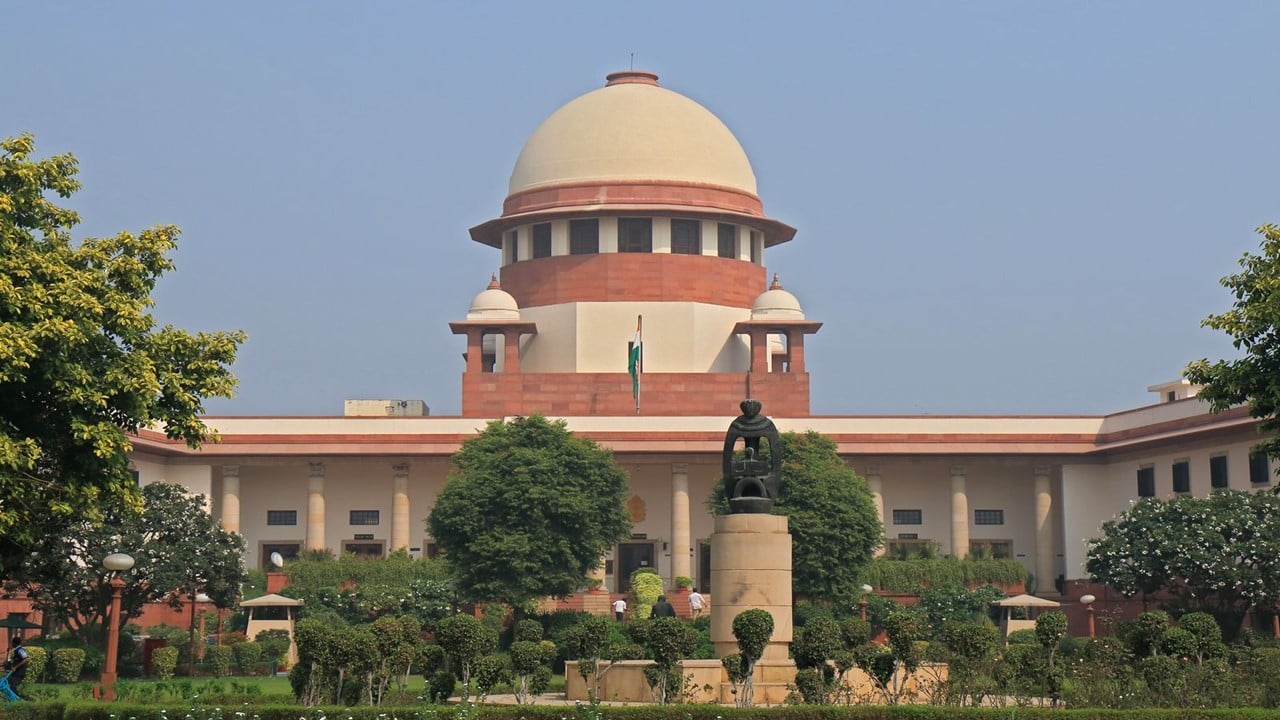
SC will examine constitutionality of Securities Transaction Tax, hearing a petition that claims it amounts to double taxation on traders.
Traders Argue STT Is Punitive And Violates Principle Of Double Taxation
 Vanshika verma
 Oct 8, 2025
Supreme Court Examines Legality of STT; Centre Responds to Double Taxation Claim
The Supreme Court on Monday agreed to hear a petition challenging the Securities Transaction Tax (STT) imposed on stock market participants. The Court asked the Centre to respond to the plea, in which a trader claimed that the tax amounts to double taxation. STT, introduced in 2004, is currently charged at 0.1% on both buying and selling of stocks.
In order to receive a response from the Ministry of Finance, a bench of justices, J. B. Pardiwala and K. V. Viswanathan, issued notice to the Centre on allegations that the Ministry of Finance made on the allegation that STT is illegal and unconstitutional, as it amounts to double taxation and also that a trader is forced to pay tax even in case of financial loss in a transaction. The court was hearing the petition filed by trader Aseem Juneja.
Advocate Siddhartha K Garg, who was appearing for Aseem juneja told the bench that STT was punitive in nature and it discouraged people from stock trading. He pointed out that there is no provision for such a tax in other major financial markets.
STT (Securities Transaction Tax) is the only tax in India that is charged simply for carrying out a profession, regardless of whether a profit is made or not. This makes it one of the most punitive taxes. Unlike other taxes in India, which are based on profits at the end of the year, STT applies even if a stock market trader is operating at a loss. The Securities Transaction Tax was launched to prevent tax evasion in the stock market. For stock market participants, STT is similar to TDS for salaried individuals. However, TDS is refunded or adjusted with income tax at the end of the year, whereas no such provision exists for STT. Traders must pay STT in addition to other taxes. Other major stock markets, such as those in the USA, Germany, Japan, and Singapore, do not have a tax like STT on their transactions.
Garg noted that traders usually pay taxes in the form of Short-Term Capital Gains (STCG) tax on profits from trades held for less than a year and Long-Term Capital Gains (LTCG) tax on profits from trades held for more than a year. STT is charged in addition to these taxes, which is effectively leading to double taxation.
The petition stated that traders are being taxed twice on the same transaction- once through STT on the value of shares bought/sold, and again through STCG or LTCG on the profits. This violates the double taxation principle and further the petition argued that this violates Articles 14, 21, and 19(1)(g) of the Constitution, as it imposes a tax on transactions themselves rather than on actual profits.
About Author


Vanshika verma
Content Writer
Vanshika Verma is a Content Writer with 1+ year of experience at Studycafe.in. A B.Com graduate from Delhi University, She writes articles on Finance, Tax, ICAI, GST, and the latest financial news, with a focus on making complex topics easy for readers and professionals.
Vanshika Verma is a Content Writer with 1+ year of experience at Studycafe.in. A B.Com graduate from Delhi University, She writes articles on Finance, Tax, ICAI, GST, and the latest financial news, with a focus on making complex topics easy for readers and professionals.
 Studycafe
 Delhi, Delhi, India
 2096
2096My Recent Articles
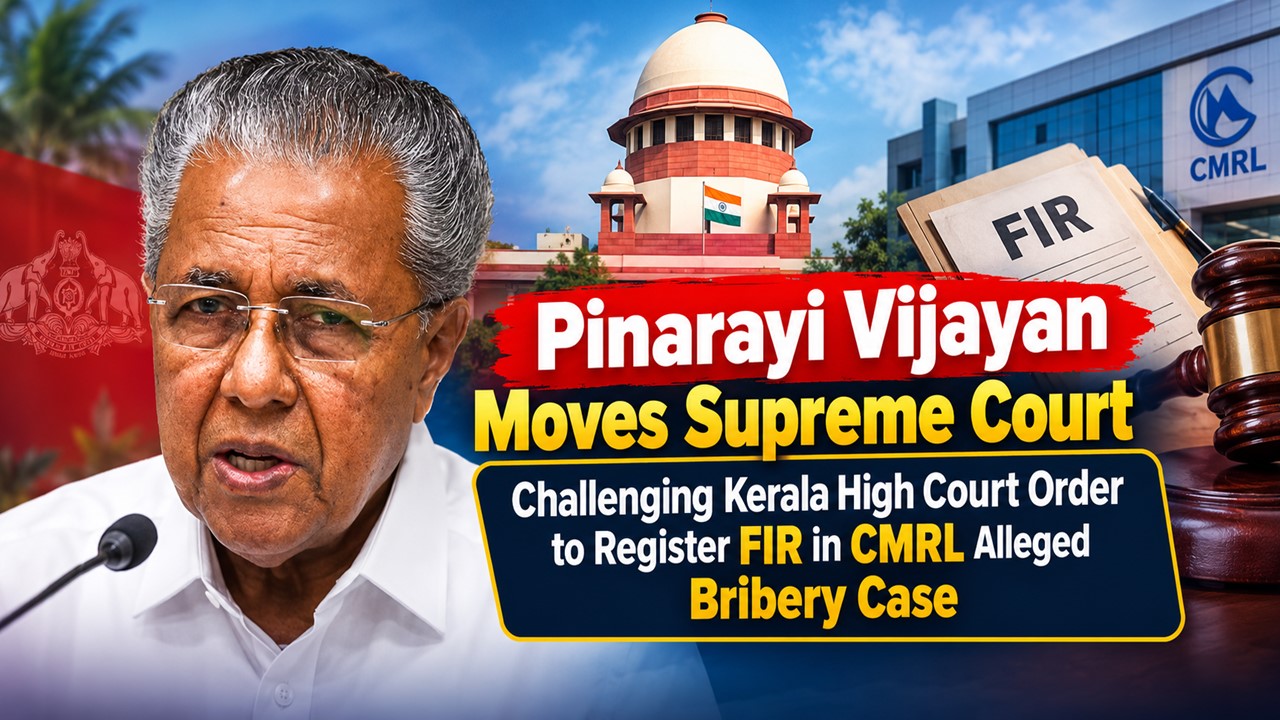
- Pinarayi Vijayan Moves Supreme Court Challenging Kerala High Court Order to Register FIR in CMRL Alleged Bribery Case
- CBI Lays Trap in Srinagar, Arrests SMC Ward Officer Red-Handed While Allegedly Accepting Rs 10,000 Bribe
- NIIT Limited Discloses Income Tax Department’s Appeal Before Delhi ITAT, Says No Adverse Financial Impact Expected
- Fake WhatsApp Boss Dupes Company Accountant of Rs 40 Lakh; Surat Police Arrest Haryana Man in Cyber Fraud Case
- Uttarakhand Tax Department Detects Rs 2.5 Crore Tax Evasion at Ramnagar Resort
Up Next
Loading suggestions…


Recent Posts
All Posts


Tags
Recent Posts
All Posts