Updated Return of Income (ITR-U): Key Guidelines for Taxpayers:
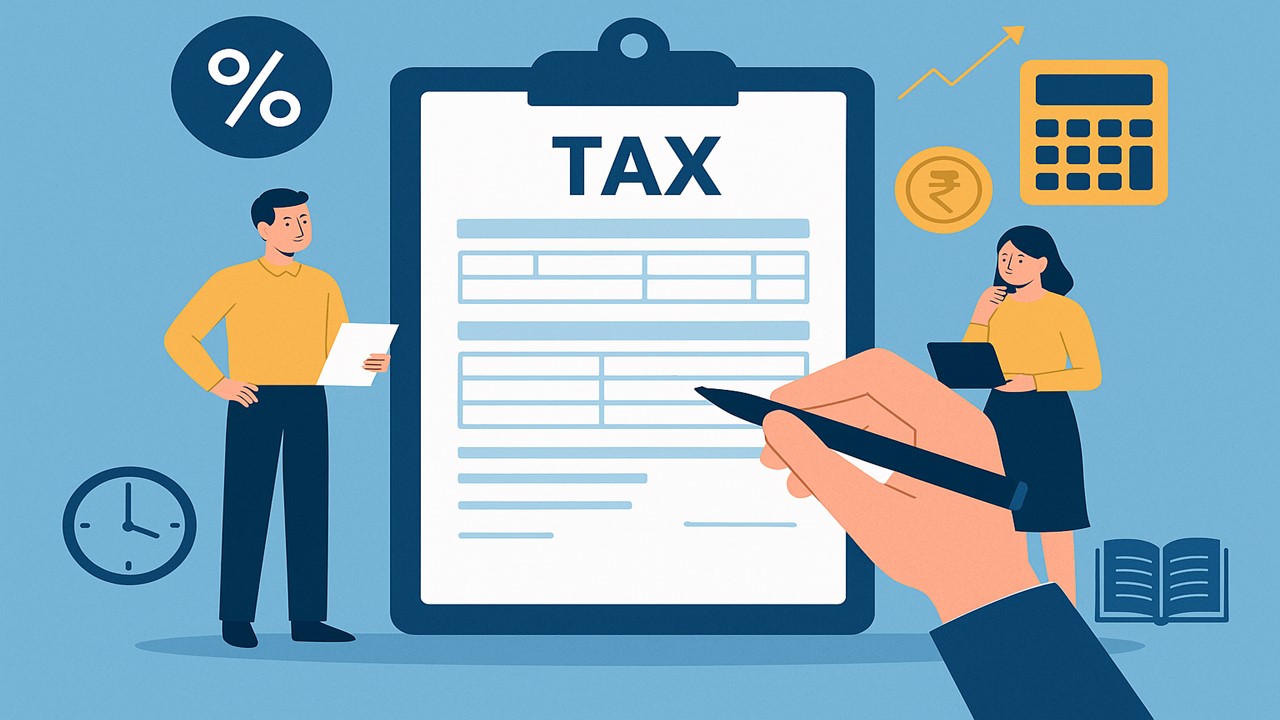
Here's a complete guide on Eligibility, Filing Process, Tax Computation, Interest, Fees, and Key Restrictions for Taxpayers.
Everything You Need to Know About Updated Returns
 Vanshika verma
 Nov 28, 2025
Updated Return of Income (ITR-U): Key Guidelines for Taxpayers
The Updated Return of Income (ITR-U) is a provision under Section 139(8A) of the Indian Income Tax Act that allows taxpayers to rectify errors, add unreported income, or file a return if they missed the original and belated deadlines. This facility promotes voluntary compliance by providing an extended window to correct errors. But, it requires the payment of additional tax.
It can be filed by any person, except in a few situations, no matter if they have earlier filed an original, belated or revised return for the relevant assessment year.
When can an updated return be filed?
You are generally allowed to file an updated return if you later realise that the income tax return you filed earlier was incomplete or had mistakes, or you forgot to report something.
You can file an updated return in most cases, except a few special situations (like if the tax department is already checking your return in detail or if certain legal actions are happening).
The time limit for filing of updated return
The time limit provided for filing an updated return is 48 months from the end of the relevant assessment year. In the financial year 2025-26, a person can file an updated return for AY 2024-25, 2023-24, 2022-23, and 2021-22.
Form for filing an updated return
To file an updated return, the taxpayer must use the same ITR form that normally applies to them, such as ITR-1, ITR-2, etc. However, while filling this form, they also need to complete two additional sections- Schedule Part A Gen_139 (8A), which captures details related to the updated return.
Manner of furnishing an updated return
An updated return will be filed electronically under the Digital Signature Certificate (DSC) in the case of the following taxpayers:
a. Company
b. Political Party
c. Any person
whose accounts are required to be audited under Section 44AB of the Income-tax Act except person filing return in ITR-7. For other taxpayers, the updated return will be filed electronically either under Digital Signature Certificate or under Electronic Verification Code (EVC).
Reporting in ITR while filing an updated return
When a person files an updated return, he has to fill in some extra details in the ITR form. These details are given in two sections: Schedule Part A Gen_139(8A) and Part B ATI. The details that need to be provided include:
- Basic information like PAN, name, and Aadhaar number
- Details of any earlier return filed, such as the section, ITR form used, acknowledgement number, and date of filing
- Confirmation that the person is eligible to file an updated return
- The ITR form chosen for filing the updated return
- The reason for filing the updated return
- Whether the updated return is being filed within 12 months, 12-24 months, 24-36 months, or 36-48 months from the end of the assessment year
- Whether the updated return reduces any carried-forward losses, unabsorbed depreciation, or tax credit, and if yes, which years are affected and whether revised/updated returns were filed for those years
- Details of the extra income being reported now and the tax calculated on it
- Details of tax payments made specifically for the updated return
- Information about advance tax, self-assessment tax, or regular assessment tax paid earlier but not claimed before relief under section 89 if it was missed in the earlier return.

- If an updated return is a return of loss
- If an updated return results in lower tax liability
- An updated return cannot be filed if it results in lowering the tax that was already calculated in your earlier return.
- If an updated return results in an increase in the refund
- If a search is initiated against the assessee
- If books of account or other documents or any assets are requisitioned
- If a survey is conducted against the assessee
- If documents or assets are seized or requisitioned in the case of any other person belonging to the assessee
- any cash, gold, jewellery, or valuable items taken by the tax department during a search on someone else, if those items actually belong to him; or
- any account books or documents taken by the tax department during a search on someone else, if those records or the information in them are connected to him.
- If the updated return has already been filed
- If the assessment is pending or completed
- If AO has information about the assessee under Specified Acts
- Prevention of Money Laundering Act, 2002
- Black Money Act, 2015
- Benami Property Act, 1988
- Smugglers and Foreign Exchange Manipulators Act, 1976
- If AO has information about the assessee under DTAA or TIEA
- If any prosecution proceeding is initiated
- If a show cause notice under section 148A
- In other notified cases
- Curative Updated Return of Subsequent Years
- Computation of tax, interest, and fee on the updated return where no return was filed earlier
- When you file an updated return, interest under Section 234A is calculated on the self-assessment tax for that return.
- The interest is charged from the day after the original return was due until the day you file the updated return.
- However, no interest is charged on the extra (additional) income tax you pay with the updated return.
- When you file an updated return, you may have to pay interest under Section 234B on the tax shown in the updated return (after adjusting TDS, TCS, reliefs, or credits).
- The interest is calculated from April 1 of that assessment year until the date you pay the tax before filing the updated return.
- If you pay the tax in parts, interest is calculated separately for each part for the period it was unpaid.
- Section 234C charges 1% interest per month if you pay less than the required advance tax in each instalment.
- The shortfall is calculated based on the tax on your returned income.
- For an updated return, the income shown in the updated return is treated as the returned income for calculating this interest.
- You have to pay an additional tax equal to 25% of the total tax and interest payable on the updated return.
- If you file an updated return between 12 and 24 months after the end of the tax year, you have to pay an additional tax equal to 50% of the total tax and interest due.
- If you file an updated return between 24 and 36 months after the end of the tax year, you have to pay an additional tax equal to 60% of the total tax and interest due.
- If you file an updated return between 36 and 48 months after the end of the tax year, you have to pay an additional tax equal to 70% of the total tax and interest due.
- Computation of tax, interest and fee on the updated return where a return was filed earlier
- When calculating self-assessment tax for an updated return, you should consider:
- Taxes or credits already used in the earlier return, and
- Taxes or credits not claimed earlier.
- Also, if you received a refund from the earlier return, that amount is added to the tax payable in the updated return.
- If you file an updated return after the due date for a belated or revised return but within 12 months after the end of the tax year, you have to pay an additional tax equal to 25% of the total tax and interest due.
- If you file an updated return between 12 and 24 months after the end of the tax year, you have to pay an additional tax equal to 50% of the total tax and interest due.
- If you file an updated return between 24 and 36 months after the end of the tax year, you have to pay an additional tax equal to 60% of the total tax and interest due.
- If you file an updated return between 36 and 48 months after the end of the tax year, you have to pay an additional tax equal to 70% of the total tax and interest due.
About Author


Vanshika verma
Content Writer
Vanshika Verma is a Content Writer with 1+ year of experience at Studycafe.in. A B.Com graduate from Delhi University, She writes articles on Finance, Tax, ICAI, GST, and the latest financial news, with a focus on making complex topics easy for readers and professionals.
Vanshika Verma is a Content Writer with 1+ year of experience at Studycafe.in. A B.Com graduate from Delhi University, She writes articles on Finance, Tax, ICAI, GST, and the latest financial news, with a focus on making complex topics easy for readers and professionals.
 Studycafe
 Delhi, Delhi, India
 2096
2096My Recent Articles
- Pinarayi Vijayan Moves Supreme Court Challenging Kerala High Court Order to Register FIR in CMRL Alleged Bribery Case
- CBI Lays Trap in Srinagar, Arrests SMC Ward Officer Red-Handed While Allegedly Accepting Rs 10,000 Bribe
- NIIT Limited Discloses Income Tax Department’s Appeal Before Delhi ITAT, Says No Adverse Financial Impact Expected
- Fake WhatsApp Boss Dupes Company Accountant of Rs 40 Lakh; Surat Police Arrest Haryana Man in Cyber Fraud Case
- Uttarakhand Tax Department Detects Rs 2.5 Crore Tax Evasion at Ramnagar Resort
Up Next
Loading suggestions…


Recent Posts


All Posts



Recent Posts
All Posts