Centre Lists Income-tax, MSME Amendment Bills for Monsoon Session:
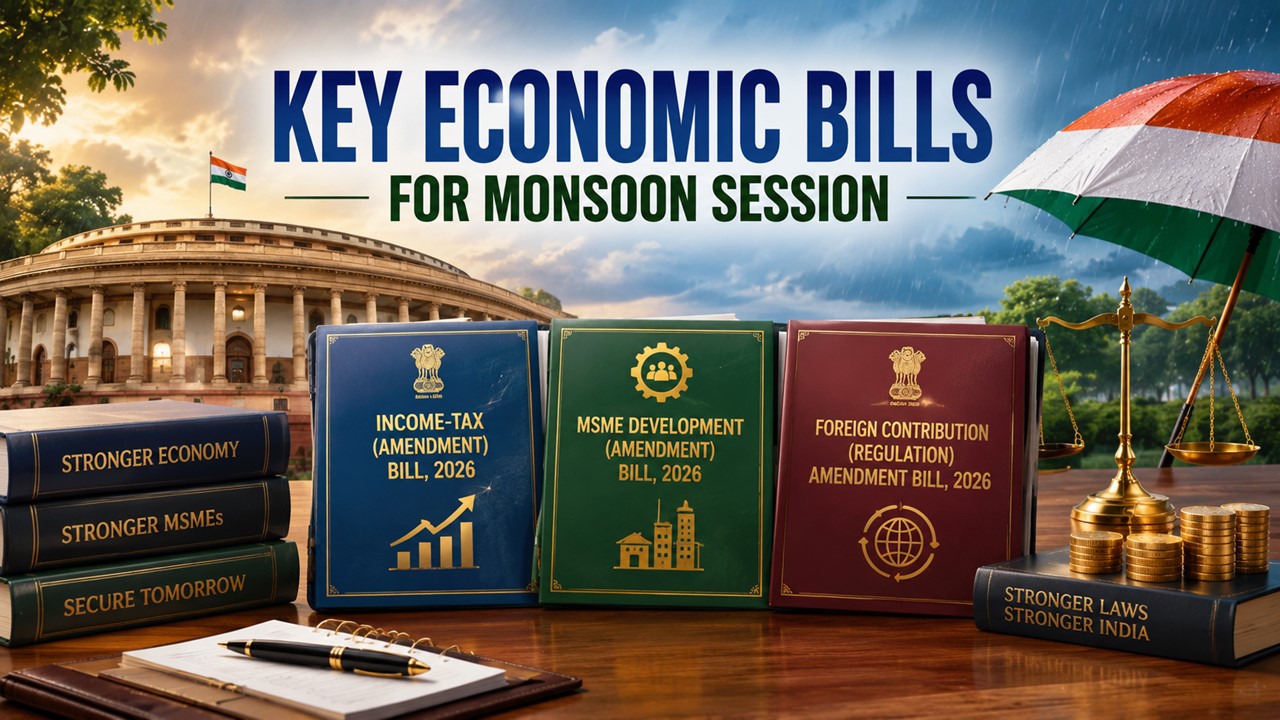
Centre to introduce key Income-tax and MSME reform Bills in Parliament's Monsoon Session.
Key Economic Bills Set for Monsoon Session
 Vanshika verma
 Jul 21, 2026
The Central Government has listed the Income-tax (Amendment) Bill, 2026 and the Micro, Small and Medium Enterprises Development (Amendment) Bill, 2026 among the major economy-related Bills that are expected to be introduced during the Monsoon Session of Parliament, which begins on Monday. This information is part of the tentative legislative and financial business agenda released by the Ministry of Parliamentary Affairs.
The agenda also includes the Foreign Contribution (Regulation) Amendment Bill, 2026, which was introduced in the Lok Sabha on March 25 this year. It has now been listed for consideration and passing during the Monsoon Session.

According to the official document, the Income-tax (Amendment) Bill, 2026, which will replace an Ordinance, "seeks to deepen India's sovereign debt market, attract stable global capital inflows, and enhance liquidity in view of the prevailing global macro-economic environment, marked by significant volatility arising from geopolitical uncertainties, sharp increases in crude oil prices, and disruptions in global supply chains."
In simpler terms, the bill seeks to boost India’s government bond market, attract long-term foreign investment and improve the flow of funds in the financial system. These measures are being proposed at a time when the global economy is facing uncertainty due to geopolitical tensions, rising crude oil prices and supply chain disruptions.
The legislative agenda also states that the Micro, Small and Medium Enterprises Development (Amendment) Bill, 2026 seeks "to align the Micro, Small and Medium Enterprises Development Act, 2006 with the changing MSME landscape, to enhance the Ease of Doing Business and bring trust-based regulations in the MSME ecosystem."

The document further says the Bill proposes "to strengthen the mechanism for addressing delayed payments and provide for enforcement of arbitral awards for the MSEs, and to introduce flexibility and create enabling provisions for States to decide the composition of the Micro and Small Enterprises Facilitation Council (MSEFC), thereby forming more MSEFCs."
That means the proposed changes seek to ease the conduct of business by micro and small enterprises, improve the mechanism for resolution of disputes relating to delayed payments, ensure enforceability of awards of arbitration and enable States to establish more Facilitation Councils for resolution of disputes involving micro and small enterprises.
About Author


Vanshika verma
Content Writer
 Studycafe
 Delhi, Delhi, India
 2029
2029My Recent Articles
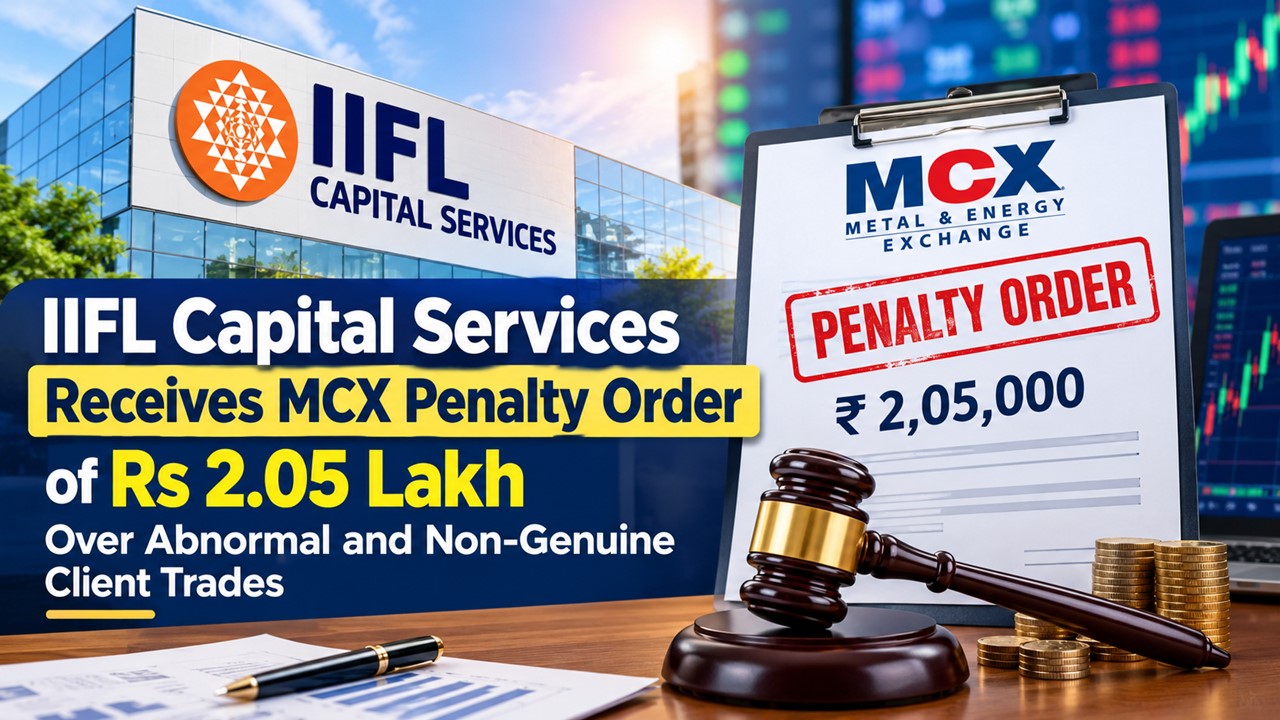
- IIFL Capital Services Receives MCX Penalty Order of Rs 2.05 Lakh Over Abnormal and Non-Genuine Client Trades
- Rakul Preet Singh Breaks Silence on Income Tax Searches, Denies Any Link to Probe and Calls Reports False And Speculative
- CBI Court Jails Ex-Bank Manager 7 Years in Rs 3.61 Crore Loan Fraud Case
- Income Tax Department Imposes Rs 57.74 Crore Penalties on Emcure Pharmaceuticals for Seven Financial Years
- ICAI Releases Revised Handbook on E-Way Bill Under GST, Covering Latest Legal Changes, Portal Updates and Key Judicial Decisions
Loading suggestions…


Recent Posts
All Posts


Tags
Recent Posts
All Posts