Delay Not Deliberate: ITAT Condones 121-Day Delay, Restores Appeal for Fresh Hearing:
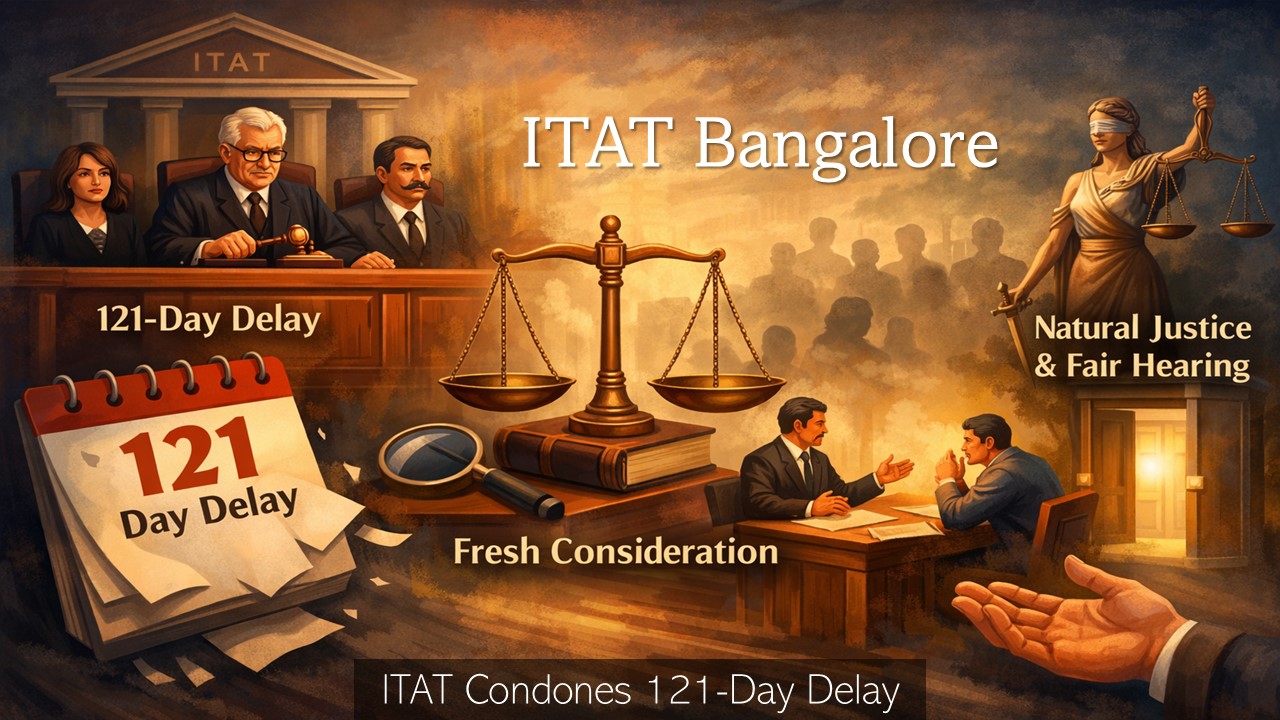
ITAT condoned a 121-day delay as unintentional and remanded the case for fresh consideration, emphasising the principles of natural justice and fair hearing.
Appeal Restored After Unintentional Delay and Procedural Lapse
 Saloni Kumari
 Apr 12, 2026
Delay Not Deliberate: ITAT Condones 121-Day Delay, Restores Appeal for Fresh Hearing
The ITAT Bangalore condoned a delay of 121 days in filing an appeal before the CIT(A)/NFAC, holding that the delay was not deliberately made. Additionally, the assessee was heard before the issuance of the final assessment order, which also reflects the violation of the principles of natural justice. The case is remanded back to the CIT(A)/NFAC for fresh consideration.
The assessee, Gautham Social Cultural and Education Society, claimed that the lower authorities, i.e., CIT(A)/NFAC, had incorrectly dismissed its appeal on the grounds that the appeal was filed 121 days late.
The assessee explained that the delay was unintentional and the notices were sent to the email of their Secretary, who is aged 70 years and does not have computer knowledge. Also, he was not consistently visiting the office during the concerned period because his wife was suffering from several health issues. Therefore, the assessee was not aware of the notices sent. Only became aware of the sent notices when physical copies of the penalty notices were sent to it.
When the tribunal heard the assessee's explanation, it found it a sufficient cause to condone the delay of 121 days in filing the appeal before the ld. CIT(A)/NFAC. Considering the same, the tribunal condoned the delay and sent the case back to the CIT(A)/NFAC Delhi for fresh consideration. Directed the CIT(A)/NFAC to grant the assessee a fair opportunity of hearing. In conclusion, the appeal was partly granted in favour of the assessee.
About Author


Saloni Kumari
Content Writer
Saloni is a Content Writer with 2+ years of experience at studycafe.in. She writes legal, taxation, and finance related content including GST, Income Tax etc. Skilled in translating complex judicial pronouncements and regulatory developments into clear, and reader-friendly articles. Experienced in covering judgements of ITAT, High Court, GSTAT, and news related to Income Tax, GST, and corporate law. She can be reached at [email protected].
Saloni is a Content Writer with 2+ years of experience at studycafe.in. She writes legal, taxation, and finance related content including GST, Income Tax etc. Skilled in translating complex judicial pronouncements and regulatory developments into clear, and reader-friendly articles. Experienced in covering judgements of ITAT, High Court, GSTAT, and news related to Income Tax, GST, and corporate law. She can be reached at [email protected].
 StudyCafe
 Delhi, Delhi, India
 2924
2924My Recent Articles
- Major Relief in Arbitration Case: MCIA Denies Rs 908 Crore Statement Claim Made by Allied Silica Against Tata Chemicals
- MCA and ICSI to Hold User Awareness Session on Form AOC-4 Filing Amid Glitches on MCA-21 Version-3 Portal
- GSTN Introduces New E-Invoicing Facility for Self-Invoices Under Reverse Charge Mechanism
- Flexi Cap vs Multi Cap Funds: What's the Real Difference?
- IBA Recommends Public Sector Banks to Reduce Ambit of Physical Branch Audits to 50% of Total Business
Up Next
Loading suggestions…


Recent Posts
All Posts



Tags
Recent Posts
All Posts