FM Nirmala Sitharaman Highlights Government Measures to Shield Citizens from Rising Fuel Costs:
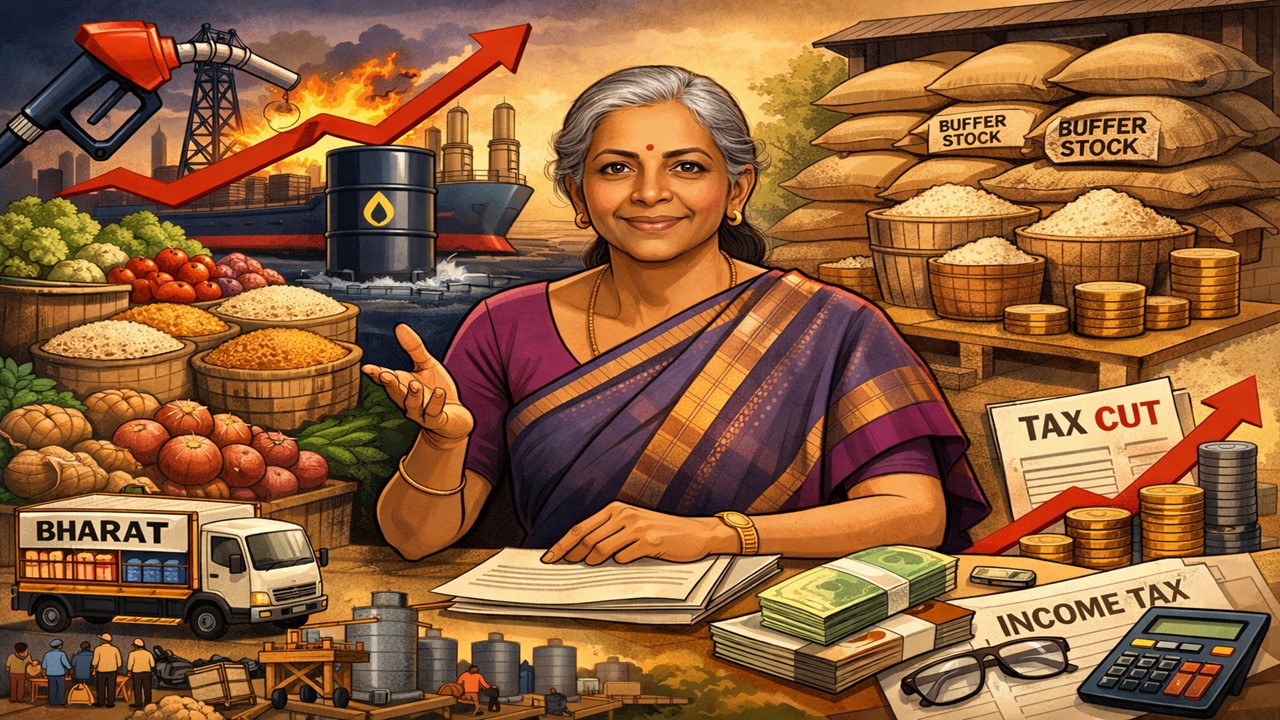
Finance Minister outlines government actions like controlling food prices and cutting fuel taxes to shield citizens from rising global crude oil prices.
Finance Minister Assures Relief for Consumers as Crude Prices Climb Globally
 Vanshika verma
 Mar 9, 2026
FM Nirmala Sitharaman Highlights Government Measures to Shield Citizens from Rising Fuel Costs
Finance Minister Nirmala Sitharaman said that despite recent crude oil price rises, inflation in India remains low, and the government is taking steps like controlling food prices, cutting fuel taxes, and raising income tax limits to help citizens.
In a written response to questions raised in the Lok Sabha regarding rising global crude oil prices on inflation in the country, the Finance Minister, Nirmala Sitharaman, replied on Monday, March 9, 2026.
Here are the questions asked in the Lok Sabha:
"(a) whether the government has reviewed the impact of rising global crude oil prices on inflation in the country and if so, the details thereof,
(b) the details of corrective steps being taken by the Government to manage inflationary pressure, and
(c) whether any fiscal measures are proposed by the Government to provide relief to common consumers and if so, the details thereof?"
Answers Given by Nirmala Sitharaman:
(a) For the past one year, global crude oil prices and the Indian crude oil basket price have been generally decreasing. However, after geopolitical conflicts started in West Asia on February 28, 2026, oil prices began to rise. Between the end of February and March 2, 2026, the price of the crude oil basket increased from $69.01 per barrel to $80.16 per barrel. Even though oil prices increased, India’s inflation is currently close to the lower limit, so the immediate impact on inflation is expected to be small. As per the Monetary Policy Report released in October 2025 by the Reserve Bank of India, if crude oil prices rise by 10% more than expected and the increase is fully passed on to domestic fuel prices, inflation in India could increase by about 30 basis points. However, the long-term effect of higher global crude oil prices on inflation will depend on factors such as exchange rate movements, global demand and supply conditions, how monetary policy works in the economy, the overall inflation situation, and how much of the oil price increase is indirectly passed on to other goods and services.
(b) and (c) Retail inflation measured by the consumer price index declined. It declined from 5.4% in 2023-24 to 4.6% in 2024-25 and further to 1.8% in 2025-26 (April-January). However, in January 2026, inflation was 2.75%, which is close to the lower limit of the Reserve Bank of India’s (RBI) comfort zone of 4% ± 2%.
To manage inflation, the RBI’s Monetary Policy Committee (MPC) has cut interest rates by 125 basis points since February 2025. The government has also taken several steps to control prices and help citizens, such as:
- Increasing buffer stocks of essential food items.
- Selling procured grains in the open market to stabilise prices.
- Allowing imports and restricting exports when supplies are low.
- Setting stock limits so more goods reach the market.
- Selling select food items under the Bharat brand at subsidised rates.
- Intervening in markets for perishable fruits and vegetables.
- Reducing fuel taxes.
- Building better storage facilities.
- Increasing people’s disposable income by raising income tax exemptions to Rs 12 lakh (Rs 12.75 lakh for salaried individuals with a standard deduction).
About Author


Vanshika verma
Content Writer
Vanshika Verma is a Content Writer with 1+ year of experience at Studycafe.in. A B.Com graduate from Delhi University, She writes articles on Finance, Tax, ICAI, GST, and the latest financial news, with a focus on making complex topics easy for readers and professionals.
Vanshika Verma is a Content Writer with 1+ year of experience at Studycafe.in. A B.Com graduate from Delhi University, She writes articles on Finance, Tax, ICAI, GST, and the latest financial news, with a focus on making complex topics easy for readers and professionals.
 Studycafe
 Delhi, Delhi, India
 2094
2094My Recent Articles
- NIIT Limited Discloses Income Tax Department’s Appeal Before Delhi ITAT, Says No Adverse Financial Impact Expected
- Fake WhatsApp Boss Dupes Company Accountant of Rs 40 Lakh; Surat Police Arrest Haryana Man in Cyber Fraud Case
- Uttarakhand Tax Department Detects Rs 2.5 Crore Tax Evasion at Ramnagar Resort
- GST Team Raid at Iron Trader’s Shop in Hathras Sparks Major Uproar as Traders Gather and Allegations of Assault Emerge
- CBI Arrests SFIO Deputy Director and Two Others Over Alleged Rs 1 Crore Bribe Demand in DHFL Scam Investigation
Up Next
Loading suggestions…


Recent Posts

All Posts

Recent Posts
All Posts