ITAT Upholds CIT(A)'s Deletion of Rs. 3.97 Crore Ad Hoc Expense Disallowance in Charitable Trust Case:

ITAT dismissed the tax department’s appeal and upheld the deletion of a Rs. 3.97 crore ad hoc expense disallowance, holding that the AO failed to point out any specific defects.
Ad Hoc Disallowance Unsustainable Without Evidence, Rules ITAT
 Saloni Kumari
 Jan 22, 2026
ITAT Upholds CIT(A)'s Deletion of Rs. 3.97 Crore Ad Hoc Expense Disallowance in Charitable Trust Case
ITAT Ahmedabad upheld the CIT(A)'s order in deleting a Rs. 3.97 crore ad hoc expense disallowance, ruling that the charitable trust had provided proper evidence and the AO failed to point out any specific defects. Dismissed the appeal of the tax department.
The Income Tax Department has filed the current appeal in the ITAT Ahmedabad against Shree Ramkrishna Seva Mandal Anand, challenging an order dated September 16, 2025, passed by the CIT(A)/NFAC under Section 250 of the Income Tax Act, 1961. The case is related to the Assessment Year 2023-24. The impugned order had deleted the Rs. 39,694,712 addition levied on the assessee by the Assessing Officer (AO).
The assessee is a charitable trust that runs educational institutions and is registered under the Bombay Public Trust Act as well as Section 12A of the Income Tax Act. The assessee disclosed consolidated income and total expenditure of approximately Rs. 39.69 crore for all its units. During the assessment, the AO disallowed 10% of the total disclosed expenses on an ad hoc basis and made an addition of the same to the assessee's income.
The aggrieved assessee approached the CIT(A)/NFAC. When the CIT(A) examined the facts of the case, it noted that the assessee had furnished all the relevant documentary evidence explaining its claim of expenses. Out of the total expenditure, Rs. 9.20 crore was capital expenditure, for which no adverse finding was made by the AO. From the remaining Rs. 30.49 crore, a major portion of Rs. 23.59 crore was salary paid to teaching and non-teaching staff. The AO could not flag any specific defect or mismatch in these documents.
In conclusion to these aforementioned findings, the CIT(A) held that once the trust had discharged its responsibility by providing evidence, the burden shifts to the Assessing Officer to point out any defect in them (if any); however, the AO did not comply. Hence, the CIT(A) held the ad hoc disallowance as unjustified.
The Income Tax Department then filed an appeal before the ITAT Ahmedabad. The tribunal, when examining the furnished documents and facts of the case, endorsed the findings of the CIT(A) in the present case. Since the disallowance was made without any solid reason, the Tribunal found no merit in the Revenue’s appeal and dismissed it.
About Author


Saloni Kumari
Content Writer
Saloni is a Content Writer with 2+ years of experience at studycafe.in. She writes legal, taxation, and finance related content including GST, Income Tax etc. Skilled in translating complex judicial pronouncements and regulatory developments into clear, and reader-friendly articles. Experienced in covering judgements of ITAT, High Court, GSTAT, and news related to Income Tax, GST, and corporate law. She can be reached at [email protected].
Saloni is a Content Writer with 2+ years of experience at studycafe.in. She writes legal, taxation, and finance related content including GST, Income Tax etc. Skilled in translating complex judicial pronouncements and regulatory developments into clear, and reader-friendly articles. Experienced in covering judgements of ITAT, High Court, GSTAT, and news related to Income Tax, GST, and corporate law. She can be reached at [email protected].
 StudyCafe
 Delhi, Delhi, India
 2923
2923My Recent Articles
- Major Relief in Arbitration Case: MCIA Denies Rs 908 Crore Statement Claim Made by Allied Silica Against Tata Chemicals
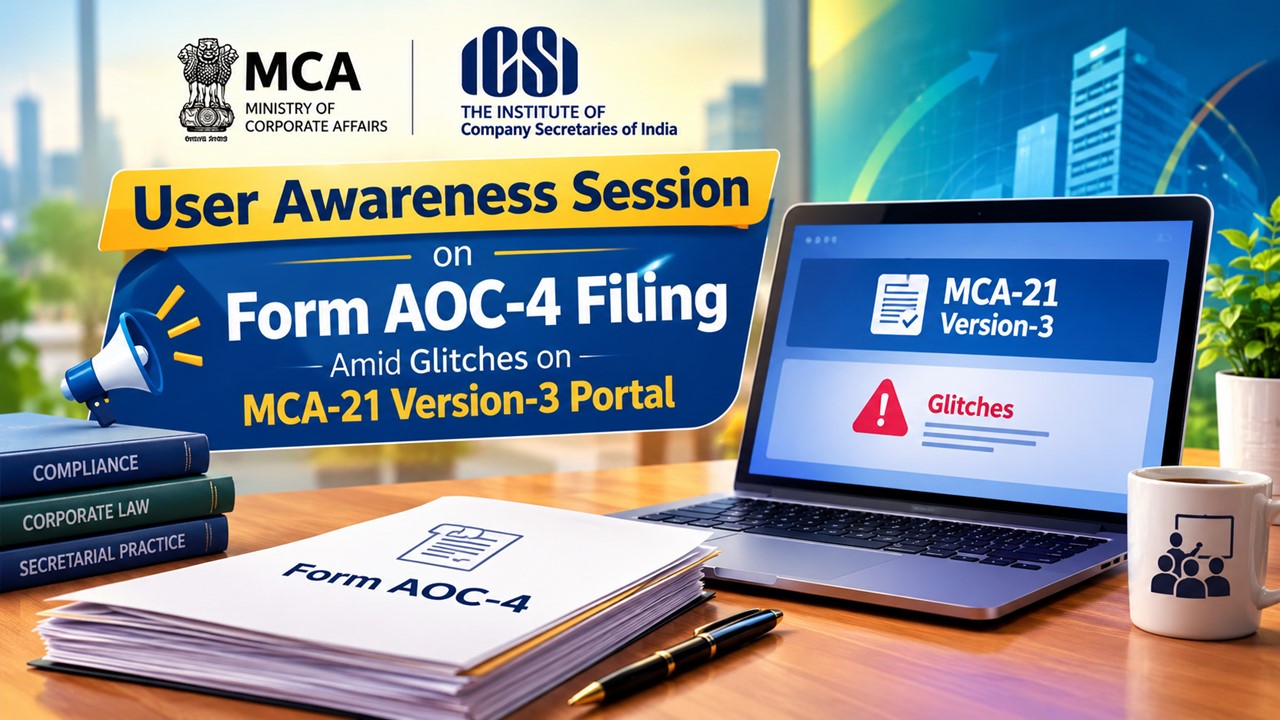
- MCA and ICSI to Hold User Awareness Session on Form AOC-4 Filing Amid Glitches on MCA-21 Version-3 Portal
- GSTN Introduces New E-Invoicing Facility for Self-Invoices Under Reverse Charge Mechanism
- Flexi Cap vs Multi Cap Funds: What's the Real Difference?
- IBA Recommends Public Sector Banks to Reduce Ambit of Physical Branch Audits to 50% of Total Business
Up Next
Loading suggestions…


Recent Posts


All Posts



Tags
Recent Posts
All Posts