ITAT Upholds Rs 1.12 Crore Addition, Rules Cash Payments in Property Sale Not Subject to Section 271D Penalty:
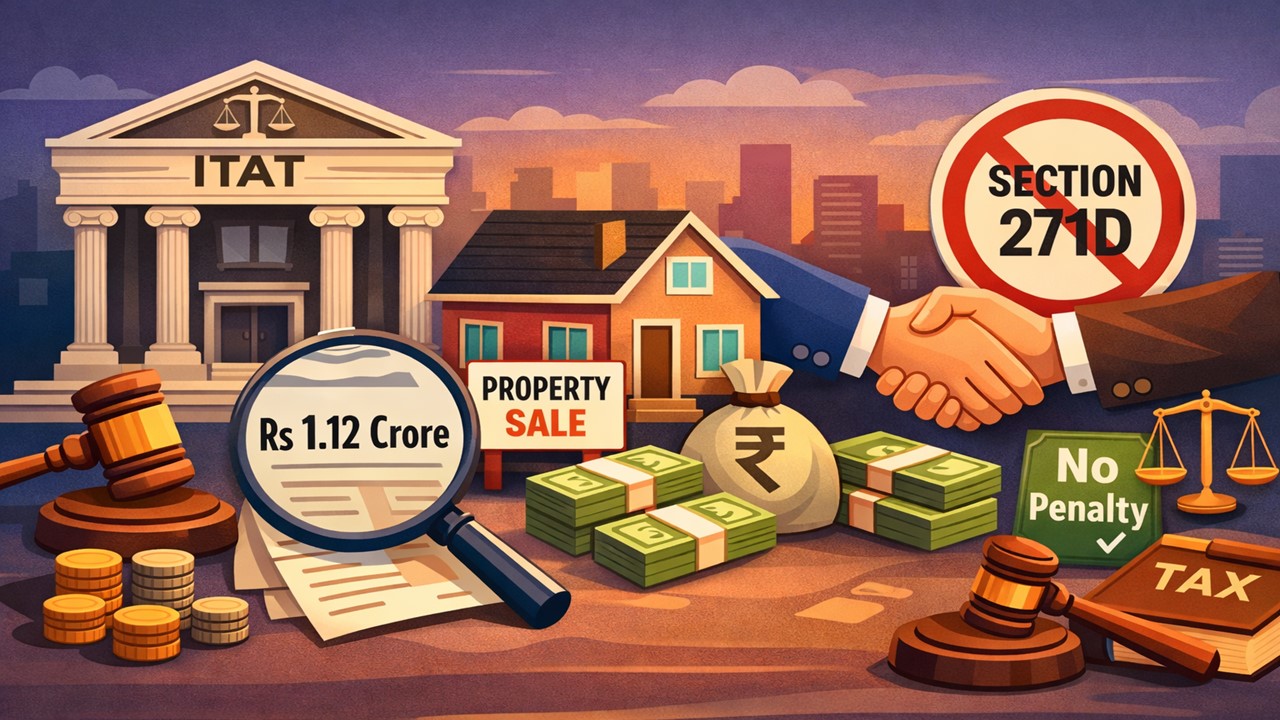
The Tribunal noted that the photocopy of the sale agreement was reliable evidence because it had the signatures of all parties, and the cheque numbers and amounts matched the actual payments.
Photocopy of Sale Agreement Valid Evidence: ITAT
 Nidhi
Nidhi Feb 20, 2026
ITAT Upholds Rs 1.12 Crore Addition, Rules Cash Payments in Property Sale Not Subject to Section 271D Penalty
The Income Tax Appellate Tribunal (ITAT), Delhi, recently upheld the addition made by the assessing officer based on the photocopied documents found during the search and seizure operation. The Tribunal also clarified that cash payments made during registered property sales are not subject to penalties under Section 271D.
The assessee, Vishal Bhutani, filed his Income Tax Return (ITR), declaring an income of Rs 39,11,880. His case was selected after a search and seizure was conducted at Pranjil Batra Group, where the tax authorities found documents showing that the assessee had sold a property and had under-reported the amount received from selling this property. Therefore, the assessing officer added Rs 1,12,00,000, which was the difference between the actual consideration as per the agreement and the amount revealed in the sale deed.
The assessee appealed before the ITAT, arguing that the document showing the sale was only a photocopy and it should not be relied on.
The Tribunal noted that the photocopy of the sale agreement was reliable evidence because it had the signatures of all parties, and the cheque numbers and amounts matched the actual payments. Additionally, the Tribunal noted that the witnesses were the same on both the agreement and the sale deeds.
The Tribunal held that the document in the form of a sales agreement is complete and is enforceable under the law. Therefore, the assessee's argument that it was just a recovered photocopy will not help him. Therefore, the tribunal dismissed this appeal filed by the assessee.
The assessee had also filed another appeal challenging the penalty imposed on him under section 271D of the Income Tax Act. This penalty was invoked due to the cash payments made during the sale of the property. The Tribunal clarified that, as per law and various tribunal decisions, cash paid at the time of a registered sale deed is different from advance payments under Section 269SS. The law targets cash advances to prevent black money and not the final amount paid to the sub-registrar.
Considering these facts, the tribunal held that Section 269SS was not applicable in this case, and the penalty under Section 271D was deleted.
About Author


Nidhi
Content Writer
Nidhi is a skilled content writer specializing in personal finance. She creates clear, engaging articles on mutual funds, investments, insurance, and wealth-building strategies. With a passion for simplifying complex financial topics, Nidhi helps readers make informed money decisions with confidence. She can be reached at [email protected]
Nidhi is a skilled content writer specializing in personal finance. She creates clear, engaging articles on mutual funds, investments, insurance, and wealth-building strategies. With a passion for simplifying complex financial topics, Nidhi helps readers make informed money decisions with confidence. She can be reached at [email protected]
 Studycafe
 New Delhi, Delhi, India
 1832
1832My Recent Articles
- Karnataka High Court Gives Another Chance in GST Matter Due to Lack of Hearing
- Delay Should Be Condoned if Explanation is Unrefuted: ITAT
- Non-Service of Income Tax Notice, Ill health of taxpayer, ITAT condones Appeal filing delay
- Books of Accounts Cannot be Rejected Without Any Specific Defect: ITAT Kolkata
- Karnataka High Court Sends ITC Matter Back to GST Authorities for Reconsideration
Up Next
Loading suggestions…


Recent Posts
All Posts

Tags
Recent Posts
All Posts