ITR-1 (Sahaj) Gets a Simpler Makeover: Big Relief for Small Taxpayers in AY 2026-27:
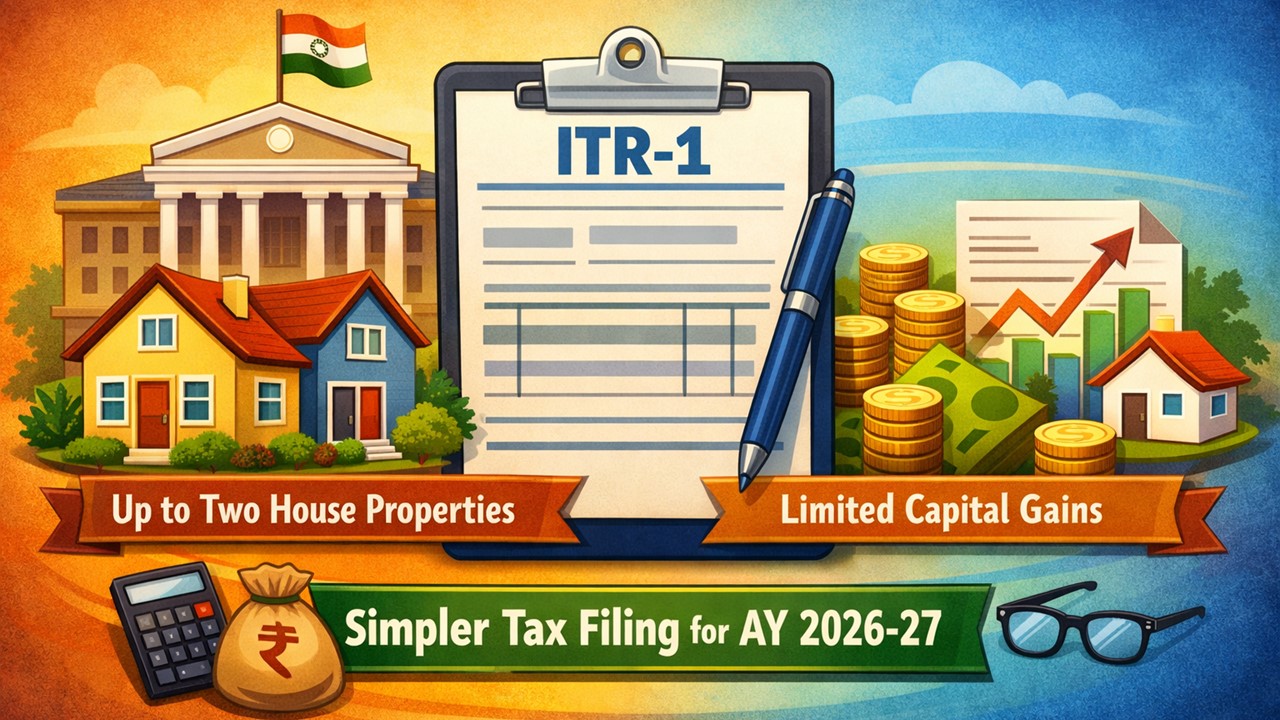
The Government of India has introduced some key changes in Form ITR-1, from AY 2026-27, allowing two house properties and limited capital gains for simpler tax filing.
ITR-1 Now More Flexible Than Ever
 Saloni Kumari
 Apr 9, 2026
ITR-1 (Sahaj) Gets a Simpler Makeover: Big Relief for Small Taxpayers in AY 2026-27
The Government of India has introduced some key changes in Income Tax Return (ITR) forms, effective from Assessment Year 2026-27. Among them, some taxpayer-friendly changes have been made in the ITR-1 (Sahaj) form, making it simpler to understand and comply with and more inclusive for small taxpayers.
1. Taxpayers Having Two Properties Now Allowed to File ITR-1:
Previously, only taxpayers generating income from a single property were allowed to file an Income Tax Return (ITR) Form 1. As per the recent changes in ITR-1, this eligibility has been expanded. Now, taxpayers with income from up to two house properties can also pay their tax liability using ITR-1. This reduces the need to switch to more complex forms for many individuals.
2. Capital Gains Now Allowed under ITR-1:
Another significant update is the inclusion of certain capital gains. Previously, any capital gains made taxpayers ineligible for ITR-1. Now, long-term capital gains (LTCG) from listed shares and equity mutual funds are allowed, as long as the gains do not exceed Rs 1.25 lakh. This is a big relief for small investors, as they can continue using the simpler ITR-1 instead of moving to ITR-2.
3. New LTCG Tax Rates Aligned in ITR-1:
The tax rates for long-term capital gains (LTCG) have been aligned with the latest budget provisions. Taxpayers now have two options: 12.5% tax without indexation or 20% tax with indexation benefits, depending on what is more suitable for their situation.
About Author


Saloni Kumari
Content Writer
Saloni is a Content Writer with 2+ years of experience at studycafe.in. She writes legal, taxation, and finance related content including GST, Income Tax etc. Skilled in translating complex judicial pronouncements and regulatory developments into clear, and reader-friendly articles. Experienced in covering judgements of ITAT, High Court, GSTAT, and news related to Income Tax, GST, and corporate law. She can be reached at [email protected].
Saloni is a Content Writer with 2+ years of experience at studycafe.in. She writes legal, taxation, and finance related content including GST, Income Tax etc. Skilled in translating complex judicial pronouncements and regulatory developments into clear, and reader-friendly articles. Experienced in covering judgements of ITAT, High Court, GSTAT, and news related to Income Tax, GST, and corporate law. She can be reached at [email protected].
 StudyCafe
 Delhi, Delhi, India
 2924
2924My Recent Articles
- Major Relief in Arbitration Case: MCIA Denies Rs 908 Crore Statement Claim Made by Allied Silica Against Tata Chemicals
- MCA and ICSI to Hold User Awareness Session on Form AOC-4 Filing Amid Glitches on MCA-21 Version-3 Portal
- GSTN Introduces New E-Invoicing Facility for Self-Invoices Under Reverse Charge Mechanism
- Flexi Cap vs Multi Cap Funds: What's the Real Difference?
- IBA Recommends Public Sector Banks to Reduce Ambit of Physical Branch Audits to 50% of Total Business
Up Next
Loading suggestions…


Recent Posts


All Posts


Tags
Recent Posts
All Posts